 |
| Duomo di Trani, provincia di Barletta-Andria-Trani, Puglia foto: turismo.puglia.it |
Visualizzazione post con etichetta Puglia. Mostra tutti i post
Visualizzazione post con etichetta Puglia. Mostra tutti i post
domenica 10 settembre 2023
Foto della settimana / Photo of the week

domenica 7 maggio 2023

domenica 30 aprile 2023
Foto della settimana / Photo of the week
 |
| San Nicola, una delle Isole Trèmiti (prov. di Foggia), Puglia Foto: wikipedia |
domenica 13 settembre 2020
La Bellissima Nonna XII

| Che epoca meravigliosa in cui vivere! Nei tempi antichi, se aveste voluto una vecchia ricetta tradizionale, o avreste consultato un libro di cucina, ove la ricetta era complicata da essere irriconoscibile, oppure avreste cercato un italiano che magari ricordava o magari non ricordava gli ingredienti della nonna. (Sicuramente aveva scordato che Nonna usava lo strutto al posto dell’olio d’oliva ...)
Ma oggi! Possiamo andare su YouTube! Dobbiamo guadare attraverso molti Tizi e Cai e Semproni e Pinchi Pallino. Ma poi! Troviamo Nonna! Bellissima Nonna! Non solo una nonna qualsiasi – la nonna che fa ancora le cose alla vecchia maniera. Mi sono portato avanti e vi ho risparmiato la fatica: ho fatto io il guado per voi. Vi presento una serie di video della nonna, mostrandoci le ricette non di oggi ma di ieri. |
What an amazing era to live in! In the olden days, if you wanted an old traditional recipe, either you consulted a cookbook, where the recipe was complicated beyond recognition, or you searched for an Italian who maybe did or maybe didn’t remember Grandma’s ingredients. (Undoubtedly he forgot that Grandma used lard instead of olive oil...)
But today! We can go to YouTube! We have to wade through many Toms and Dicks and Harrys and Joe Schmoes. But then! We find Nonna! Bellissima Nonna! Not just any grandma – the grandma that still does things the old way. I went ahead and saved you the trouble: I have done the wading for you. I present to you a series of videos of Grandma, showing us the recipes not of today but of yesterday. |
LA BELLISSIMA NONNA XII
Autenticissimi tarallini pugliesi!
Very authentic Apulian tarallini!
“Le Ricette Della Nonna Maria”
| Qui la bellissima Nonna Maria, 90 anni (!), ci mostra la ricetta antica e autentica per i tarallini pugliesi! I taralli sono famosi in tutto il Sud Italia. Le ricette variano notevolmente nelle diverse regioni e province. Comunque sicuramente i tarallini pugliesi sono sempre stati i miei preferiti! Adoro quelli ai semi di finocchio, quelli al pepe nero macinato grosso, quelli al peperoncino secco e quelli al gusto pizza. Tutti e quattro sono popolari in Puglia. Tuttavia, l’originale tarallino classico pugliese ha due ingredienti principali: l’olio d’oliva (non lo strutto) e il vino bianco. Gli olii e i vini pugliesi sono assolutamente fuori dal mondo! Non riesco a pensare a uno spuntino migliore al mondo dei tarallini pugliesi con un po’ di formaggio, un po’ di salame, delle fette di finocchio crudo, e una clementina. | Here the beautiful Nonna Maria, age 90 (!), shows us the old, authentic recipe for Apulian tarallini! Taralli are famous throughout Southern Italy. The recipes vary greatly throughout the different regions and provinces. However, certainly the tarallini from Apulia have always been my favorite! I love the ones with fennel seeds, the ones with cracked black pepper, the ones with crushed red pepper, and the ones with pizza flavorings. All four are popular in Apulia. However, the original, classic tarallino pugliese has two principal ingredients: olive oil (not lard) and white wine. The oils and the wines from Apulia are absolutely out of this world! I can think of no greater snack in the world than tarallini pugliese with a little cheese, a little salami, and slices of raw fennel, and a clementine. |
lunedì 18 febbraio 2019
Barilotti
 |
| Foto: Leonardo Ciampa |
| I barilotti sono una forma di pasta che qui in America sta guadagnando popolarità, grazie ai supermercati Wegmans. Anche un’altra catena americana, Dorothy Lane Markets, lo vende. Tuttavia, sembra che entrambe le società americane ottengano il prodotto dal Pastificio di Bari Tarall’oro, un meraviglioso pastificio fondato nel 1982. A differenza di altri produttori di pasta che usano "il miglior grano del mondo" (traduzione: grano dall’estero!), Tarall’oro ottiene tutto il suo grano da Le Murge, un bellissimo altopiano pugliese-lucano. Il Barilotti è una forma casalinga, fatta con il pollice contro un rigagnocchi. In sostanza, sono gnocchi sottili, ovvero gnocchi fatti con l’impasto normale della pasta – acqua, semolino e sale, basta (niente patate, niente ricotta ecc.). La bellezza della seguente ricetta è che, oltre alla pasta, l’unico ingrediente che si deve cuocere è l’aglio. (Teoricamente potreste usare l’aglio crudo ... Ma è qualcosa che si fa raramente nel Sud e mai nel Nord. In questo piatto l’aglio saltato è più saporito e meno potente. Ma, se sia una giornata calda di agosto, e non vogliate accendere i fornelli ... ) Ingredients
|
Barilotti ("little barrels") are a pasta shape that here in America is gaining in popularity, thanks to Wegmans supermarkets. Another American chain, Dorothy Lane Markets, also sells it. However, it appears that both American companies obtain the product from Pastificio di Bari Tarall'oro, a wonderful pasta maker founded in 1982. Unlike other pasta makers who use "the best wheat in the world" (translation: wheat from outside of Italy!), Tarall'oro gets all of its wheat from Le Murge, a beautiful plateau in the regions of Apulia and Basilicata. Barilotti is a homestyle pasta shape, made with the thumb against a gnocchi board. Basically, they are a thin gnocchi, that is gnocchi made with a normal pasta dough – water, semolina, and salt, that's it (no potatoes, no ricotta, etc.). The beauty of the following recipe is that, besides the pasta, the only ingredient that needs to be cooked is the garlic. (Theoretically you could use raw garlic ... But this is something that is done rarely in Southern Italy and never in Northern Italy. In this dish the sauteed garlic is tastier and less overpowering. However, if it is a hot day in August, and you don't want to turn on the stove ... ) Ingredienti
|
 |
| Site: Taralloro.it |
 |
| Rigagnocchi. Notate la somiglianza fra gli gnocchi nella foto e i barilotti più sottili là sopra. Rigagnocchi (gnocchi board). Note the similarity between the gnocchi in the photo and the thinner barilotti above. |
 |
| Foto: Taralloro.it |
 |
| Foto: Taralloro.it |
 |
| Le Murge, bell’altopiano pugliese-lucano ove si ottiene tutto il grano per la pasta Tarall’oro. Le Murge, beautiful plateau in Apulia and Basilicata where Tarall'oro obtains all of its flour. |
giovedì 13 febbraio 2014
Nu pianefforte 'e notte
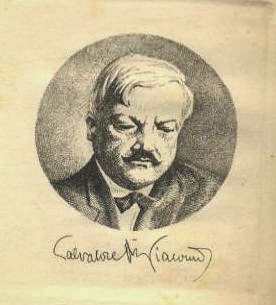
Una poesia dal più grande poeta napoletano, musicata dal più grande tenore leccese, cantata dal compositore!
A poem by the greatest poet from Naples, set to music by the greatest tenor from Lecce, sung by the composer!
NU PIANEFFORTE ’E NOTTE
parole: Salvatore Di Giacomo
musica: Tito Schipa
 Nu pianefforte ’e notte sona, luntanamente, e ’a museca se sente per ll’aria suspirà. È ll’una: dorme ’o vico ncopp’ a sta nonna nonna ’e nu mutivo antico ’e tanto tiempo fa. Dio, quante stelle ’ncielo! Che luna! E c’aria doce! Quanto na bella voce vurria sentì cantà! Ma sulitario e lento more ’o mutivo antico; se fa cchiù cupo ’o vico dint’a ll’oscurità. L’anema mia surtanto rummane a sta fenesta. Aspetta ancòra. E resta, ncantànnose, a penzà. |
 Un pianoforte di notte suona lontanamente e una musica si sente per l’aria sospirar. È l’una: dorme il vico su questa ninna nanna di un motivo antico di tanto tempo fà. Dio, quante stelle in cielo! Che luna! Che aria dolce! Quanto una bella voce vorrei sentir cantar. Ma solitario e lento muore il motivo antico; si fa più cupo il vico nell’oscurità. L’anima mia soltanto rimane a questa finestra. Indugia ancora. E resta, incantandosi, a pensar. |
 At night, a piano is playing far away, and music is heard sighing in the air. That's the one: the alley is sleeping to this lullaby of an old theme from so long ago. God, how many stars are in the sky! What a moon! How sweet is the air! How I would like to hear a beautiful voice sing it. But lonely and slowly dies the old theme; the alley becomes gloomier in the darkness. Only my soul remains at this window. It still hangs around. And it remains, bewitched, thinking. English translation: L.C. |
domenica 9 febbraio 2014
Un momento di poesia pugliese / A moment of Apulian poetry
 |
| Bisceglie Wikipedia |
| Ce nan dòrme pénze Déce ne provèrbie vescegghiase “U léitte se chiame ròse ci nan dòrme repòse”, ma stè ci nan pigghie sòunne e pénze a le déibbete, a ci sta lendane, a la megghière du alte, o còlpe c'òva fò la dè appéirse, o collèghe reffiane, a le terènne, a chire ca te vòlene tenè sòtte a le péide, a la chemmare, o téimbe, a la chennènne chè l'aspétte, a la dé ca òve assé da ngalère, a la penziòne ca nan avaste, a la fatéghe ca nan tròve, a la fertìune ca nan arréve maie, a la spèrenze de guaré, a la vendétte, a quènne òva scettò u velène ci l'à fatte male, ò govèrne ca chènge e chènge, e fòce sémbe la stessa senate. Picche sò chire ca pénzene a fa béne, o munne mbòce, tranguille e serène, e spisse dìcene: “quann'òva ésse?” |
Chi non dorme pensa Dice un proverbio biscegliese “Il letto si chiama rosa chi non dorme riposa”, ma c'è chi non prende sonno e pensa ai debiti, a chi sta lontano, alla moglie dell'altro, al colpo che deve fare il giorno dopo, al collega ruffiano, ai tiranni, a quelli che ti vogliono tenere sotto ai piedi, all'amante, al tempo, alla condanna che l'attende, al giorno che deve uscire dalla galera, alla pensione che non basta, al lavoro che non trova, alla fortuna che non arriva mai, alla speranza di guarire, alla vendetta, a quando possa crepare chi gli ha fatto del male, al governo che cambia e cambia, e fa sempre la stessa suonata. Pochi sono quelli che pensano a fare del bene, al mondo in pace, tranquillo e sereno, e spesso dicono: “Quando sarà?” |
Those who cannot sleep, think In Bisceglie there is a proverb: “The bed is named Rosa. He who does not sleep, rests.” But there are those who cannot sleep. They think about the debts, about those who are far away, about the wife of another, about the hit they must make the next day, about the fellow pimp, about the tyrants, about the ones they want to keep under their feet, about their lover, about time, about the condemnation that awaits, about the day that they get out of jail, about the pension that is not enough, about the work they cannot find, about the fortune that never comes, about the hope for a cure, about revenge, about when those who have done evil will die, about the government that changes and changes, and always plays the same sonata. Few are those who think about doing good, about a world in peace, quiet and serene, and often they say, “When will it be?” English translation: L.C. |
Francesco Palazzo (1920-2000)
Iscriviti a:
Post (Atom)