domenica 11 luglio 2021

Chi era Enrico Caruso? / Who was Enrico Caruso?

Autocaricatura di Enrico Caruso (1919)
Self-caricature of Enrico Caruso (1919)

CHI ERA ENRICO CARUSO?
di Leonardo Ciampa


Tra coloro che sentirono cantare Enrico Caruso, c’è poco (o nessun) disaccordo sul fatto che fosse il più grande tenore operistico che sia mai vissuto. Rosa Ponselle, che cantò con Caruso 34 volte e gli sopravvisse per sei decenni, disse al biografo James Drake: «Caruso era il più grande tenore, il più grande cantante e il più grande artista che abbia mai sentito.»1 Disse al New York Times: «Come posso descrivere la sua voce? “Oro fuso” è probabilmente la cosa più vicina a cui riuscirei a pensare.»2

La prima star discografica della storia, Caruso incise il suo primo disco nel 1902, quando il fonografo era ancora ai suoi primi esordi. Alla fine registrò 247 dischi, vendendo milioni di copie. Queste registrazioni sono studiate ancora oggi da critici, professori e amanti del canto in tutto il mondo.

Non c’è modo di sopravvalutare la supercelebrità di Caruso. Era un eroe per la comunità italoamericana di New York, anche da coloro che non sapevano che stava dando silenziosamente sostegno finanziario a innumerevoli immigrati che cercavano di iniziare una vita nel Nuovo Mondo. Come scrisse Beniamino Gigli nelle sue memorie: «Tutto era eccezionale in lui, non solo la sua voce.»3 Durante la sua ultima malattia, i principali quotidiani pubblicavano aggiornamenti quotidiani sulla salute. La sua messa funebre si tenne presso la Basilica Reale Pontificia di San Francesco di Paola a Napoli – chiesa in cui si erano tenuti solo i funerali dei re. Dopotutto: «C’erano stati molti re, ma un solo Caruso.» 4
   WHO WAS ENRICO CARUSO?
by Leonardo Ciampa


Among those who heard Enrico Caruso sing, there is little (if any) disagreement that he was the greatest operatic tenor who ever lived. Rosa Ponselle, who sang with Caruso 34 times and outlived him by six decades, told biographer James Drake, “Caruso was the greatest tenor, the greatest singer, and the greatest artist I have ever heard.”1 She told the New York Times, “How can I describe his voice? ‘Molten gold’ probably comes closest to anything I could say.”2

History’s first recording star, Caruso made his first disc in 1902, when the phonograph was in its infancy. He would make 247 records, which sold millions of copies. These recordings are still studied today by critics, professors, and lovers of singing the world over.

There is no way to overestimate Caruso’s superstardom. He was a hero to New York’s Italian-American community, even by those who didn’t know that he was quietly giving financial support to innumerable immigrants trying to start a life in the New World. As Beniamino Gigli wrote in his memoirs, “Everything was exceptional in him, not only his voice.”3 During his final illness, major newspapers printed daily health updates. His funeral was held at the Royal Pontifical Basilica of San Francesco di Paola in Naples – a church in which only kings’ funerals had ever been held. After all, “There had been many kings, but only one Caruso.”4

1James A. Drake, Rosa Ponselle: a centenary biography (Portland: Amadeus Press, 1997), p. 116.

2Rosa Ponselle, “The one, the only, the Great Caruso” (New York Times, 25 February 1973), p. 105.

3Beniamino Gigli (trans. Darina Silone), The memoirs of Beniamino Gigli (London: Cassell, 1957), p. 117.

4Dorothy Caruso, Enrico Caruso: his life and death (New York: Simon & Schuster, 1945), p. 273.

mercoledì 7 luglio 2021

Centenario carusiano / Caruso centenary

SEGNATEVI LA DATA!

Giovedì 5 agosto 2021 alle ore 19:30
CONCERTO STRAORDINARIO
per onorare il

Centenario della morte di

ENRICO CARUSO

LEONARDO CIAMPA, compositore & pianista
GIOVANNI FORMISANO, tenore
Mechanics Hall di Worcester (Massachusetts)
Ingresso gratuito
Aperto al pubblico
   SAVE THE DATE!

Thursday, August 5, 2021 at 7:30 p.m.
SPECIAL CONCERT
to honor the

Hundredth anniversary of the death of

ENRICO CARUSO

LEONARDO CIAMPA, composer & pianist
GIOVANNI FORMISANO, tenor
Mechanics Hall in Worcester, Massachusetts
Free admission
Open to the public
  

domenica 16 maggio 2021

La Bellissima Nonna XXXV

Che epoca meravigliosa in cui vivere! Nei tempi antichi, se aveste voluto una vecchia ricetta tradizionale, o avreste consultato un libro di cucina, ove la ricetta era complicata da essere irriconoscibile, oppure avreste cercato un italiano che magari ricordava o magari non ricordava gli ingredienti della nonna. (Sicuramente aveva scordato che Nonna usava lo strutto al posto dell’olio d’oliva ...)

Ma oggi! Possiamo andare su YouTube! Dobbiamo guadare attraverso molti Tizi e Cai e Semproni e Pinchi Pallino. Ma poi! Troviamo Nonna! Bellissima Nonna! Non solo una nonna qualsiasi – la nonna che fa ancora le cose alla vecchia maniera.

Mi sono portato avanti e vi ho risparmiato la fatica: ho fatto io il guado per voi. Vi presento una serie di video della nonna, mostrandoci le ricette non di oggi ma di ieri.
   What an amazing era to live in! In the olden days, if you wanted an old traditional recipe, either you consulted a cookbook, where the recipe was complicated beyond recognition, or you searched for an Italian who maybe did or maybe didn’t remember Grandma’s ingredients. (Undoubtedly he forgot that Grandma used lard instead of olive oil...)

But today! We can go to YouTube! We have to wade through many Toms and Dicks and Harrys and Joe Schmoes. But then! We find Nonna! Bellissima Nonna! Not just any grandma – the grandma that still does things the old way.

I went ahead and saved you the trouble: I have done the wading for you. I present to you a series of videos of Grandma, showing us the recipes not of today but of yesterday.
LA BELLISSIMA NONNA XXXV
Il timballo (antica ricetta pugliese)
Timballo (ancient recipe from Apulia)
“Ricette delle nonne”
Da quando uscì il famoso film Big Night nel 1996 (25 anni fa!), la gente è affascinata dal Timballo. Si potrebbe chiamarla “la pasta al forno sotto steroidi”! Ci sono tante ricette quante sono le stelle nel cielo; ogni famiglia ne ha la sua propria ricetta. Qui Nonna Maria ci mostra una ricetta autentica che la sua famiglia prepara da generazioni.    Since the famous film Big Night was released in 1996 (25 years ago!), people have had a fascination with the Timballo. You might call it, “baked pasta on steroids”! There are as many recipes as there are stars in the sky; every family has its own recipe. Here Nonna Maria shows us an authentic recipe that her family has been making for generations.

domenica 4 aprile 2021

PIZZA CHIENA

4 aprile 2021

Ultimo aggiornamento: 21 aprile 2023

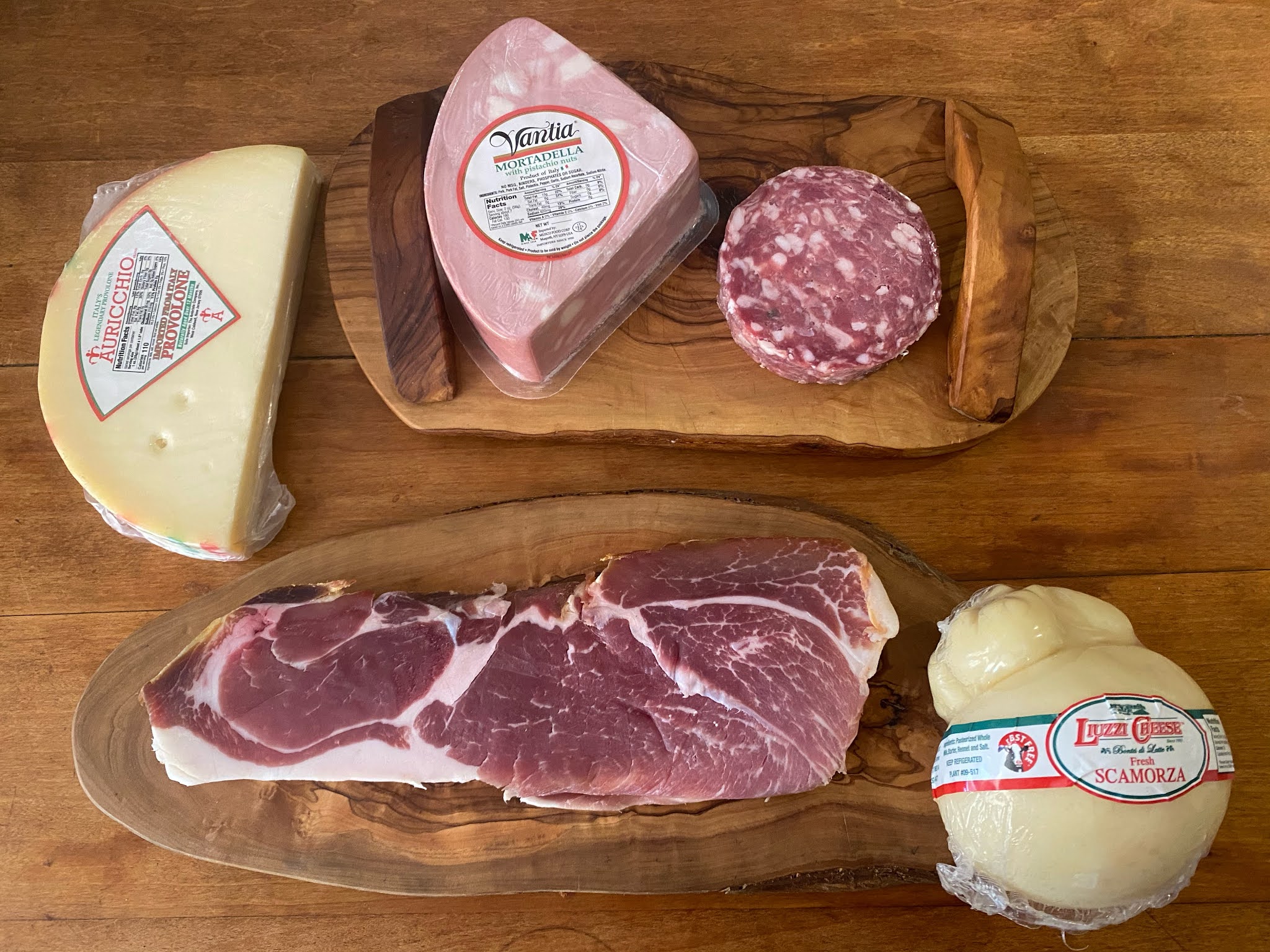
Pizza chiena! Una delle specialità pasquali più amate della casa italoamericana! Il piatto di cui si parla di più in conversazione, magari ancor di più dell’agnello! E quest’anno, a 50 anni, io l’ho preparata per la primissima volta!

Innanzitutto, un po’ di storia. Come già sappiamo, le più grandi ricette del mondo hanno avuto origine dagli avanzi. A Napoli l’antipasto di Pasqua era la fellata, un grande e sontuoso tagliere di salumi – tanto più sontuoso se si pensa che, a quei tempi, i salumi erano FATTI IN CASA.

La Pasquetta (altrimento detto “Lunedì dell’angelo”), gli italiani fanno un bel picnic – una tradizione che, tragicamente, si è persa in America, dove tutti lavorano il lunedì ... Uno dei piatti più famosi per questo picnic è stata la pizza chiena. Chiena è la parola napoletana per “piena”. A volte si chiama anche Pizza rustica. È una torta, ripiena di formaggi, salumi e uova – tutti gli avanzi della fellata, in altre parole.

Poiché in America non facciamo il picnic di Pasquetta, la “pizza ghena” (come la pronunciamo) si mangia proprio a Pasqua. Crescendo io non l’ho avuto spesso, principalmente perché la versione italoamericana è molto costosa! Fare una pizza chiena con il prosciutto domestico invece del prosciutto di Parma era considerato di classe molto bassa – e di classe anche PIÙ bassa usare il salamino piccante! Doveva includere CUBETTI di Parma, o non era la pizza chiena.

Alcune famiglie usano strati di salumi affettati, che ricordano la fellata. Tuttavia la pizza chiena che ricordo io era ricotta, uova sbattute, cubetti di Parma (e nessun altro salume), cubetti di scamorza e tanto pepe nero grossolano (quell’ultimo ingrediente mi ricordo bene). L’impasto è la pasta per la pizza (lo stesso dell’impasto del pane, solo che si batte di più per renderlo più elastico). La parte superiore è spennellata con tuorlo d’uovo per renderla lucida. Questa è la classica pizza chiena che ricordo dalla mia infanzia e che, secondo gli irpini, sia l’unica pizza chiena autentica.

Eppure gli italoamericani usano spesso la pasta frolla. Alcuni usano la pasta brisè (l’impasto usato per una quiche o per il pasticcio di pollo). Alcuni usano anche la pasta sfoglia. Sono queste versioni “non autentiche”?

Non secondo i tre chef napoletani più stimati della storia! Vincenzo Corrado ne Il cuoco galante (1773) propose la pasta sfoglia. Ippolito Cavalcanti in Cucina Teorico-pratica (1837) propose la pasta frolla. Jeanne Caròla Francesconi ne La cucina napoletana (1963) concordò con Cavalcanti.

Storicamente, le torte salate erano già popolari nel Medioevo. Pragmaticamente, in America, la pasta frolla ha molto senso qua. Non facciamo il picnic di Pasquetta, quindi la pizza chiena va servita la domenica di Pasqua. Come incorporare un piatto così ricco in un pranzo già così ricco? Utilizzando la pasta frolla, diventa una “torta salata” che può essere servita verso la fine con la frutta e i dolci.

La fellata napoletana comprendeva anche le uova sode, oltre ai salumi e ai formaggi. In onore di questa tradizione, ho aumentato il rapporto fra uova e ricotta – 3 (non 2) uova per libbra di ricotta. (Normalmente, quando preparo le lasagne, i ravioli, gli ziti al forno, ecc., uso il rapporto di 2 uova per libbra di ricotta.)

Ingredienti (per quattro pizze)

Per il ripieno:

1800 g di ricotta (Purtroppo in America abbiamo solo la ricotta di mucca. In Italia è la ricotta di pecora, che è molto speciale!)
12 uova
450 g di prosciutto di Parma, a cubetti
225 g di mortadella, a cubetti
225 g di soppressata, a cubetti
225 g di provolone Auricchio, a cubetti (stagionata e piccantissima, tanto amata ad Avellino come in America!)
450 g di caciocavallo o scamorza, a cubetti
Pecorino, grattugiato fresco (Non troppo! L’Auricchio è già piccante, e gli affettati sono già ricchi di sodio.)
Noce moscata, grattugiata frescamente
Pepe nero, macinato grossolanamente (una quantità generosa)

Per l’impasto:

O pasta per la pizza, pasta frolla, pasta brisé o pasta sfoglia – come desiderate. (Scrollate fino alla fine della pagina per una spiegazione delle diverse paste.)

Procedura

Unite gli ingredienti del ripieno. Aggiungete all’impasto di vostra scelta. Infornate a 190° per un’ora o fino a quando la pizza sarà dorata. Lasciate riposare per almeno 30 minuti. Servite tiepido o freddo.
  
4 April 2021

Latest update: 21 April 2023

Pizza chiena!  One of the most beloved Easter specialities in the Italian-American home!  The dish that is most talked about in conversation, maybe even more than lamb!  And this year, at age 50, I made it for the very first time!

First, a little history.  As we know, the world’s greatest recipes originated with leftovers.  In Naples, the Easter antipasto was fellata, a large and sumptuous platter of coldcuts – all the more sumptuous when you think that, in those days, the coldcuts were HOMEMADE.

On Easter Monday, called Pasquetta (or sometimes “il lunedì dell’angelo”, “Monday of the angel”), Italians have a wonderful picnic – a tradition which, tragically, has been lost in America, where everyone works on Mondays ... One of the most famous dishes for this picnic was pizza chiena.  Chiena is the Neapolitan word for piena, or “filled.”  It is also sometimes called pizza rustica. It is a pie, filled with cheeses, coldcuts, and eggs – all of the leftovers of the fellata, in other words.  

Because in America we don’t have the Easter Monday picnic, “pizza gayna” (as we pronounce it) is eaten on Easter itself.  I did not have it often growing up – mainly because the Italian-American version in very expensive!  It was considered very low class to make a pizza chiena with domestic prosciutto instead of prosciutto di Parma – and even lower class to use pepperoni!  It had to have CUBES of Parma, or it wasn’t pizza chiena.  

Some families use layers of sliced coldcuts, reminiscent of the fellata.  However the pizza chiena that I remember was ricotta, beaten eggs, cubes of Parma (and no other meats), cubes of scamorza, and lots of cracked black pepper (that last ingredient I remember well).  The crust is pizza dough (the same dough as bread dough, only beaten more to make it more elastic).  The top is brushed with egg yolk to make it shiny.  This is the classic pizza chiena that I remember from my childhood and that, according to the Avellinesi, is the only authentic pizza chiena. 

And yet, Italian-Americans often use pie crust.  Some use shortcrust pastry (the dough used for a quiche or for chicken pot pie).  Some even use puff pastry. Are these versions “unauthentic”?

Not according to history’s three most esteemed Neapolitan chefs! Vincenzo Corrado in Il cuoco galante (1773) suggested puff pastry.  Ippolito Cavalcanti in Cucina Teorico-pratica (1837) suggested pie crust. Jeanne Caròla Francesconi in La cucina napoletana (1963) agreed with Cavalcanti.

Historically, savory pies were already popular in the Middle Ages.  Pragmatically, in America, pie crust makes a lot of sense here. We don’t have the Easter Monday picnic, so the pizza chiena has to be served on Easter Sunday. How do you incorporate such a rich dish into a meal that is already so rich?  By using pie crust, it becomes a “savory pie” that can be served at the end with fruit and desserts.  

The Neapolitan fellata also included hard-boiled eggs, in addition to the meats and cheeses. In honor of this tradition, I increased the ratio of eggs to ricotta – 3 (not 2) eggs per pound of ricotta.  (Normally, when I make lasagne, ravioli, baked ziti, etc., I use the ratio of 2 eggs per pound of ricotta.)

Ingredients (for four pies)

For the filling:

64 oz ricotta (Unfortunately in America we have only cow’s milk ricotta. In Italy it is sheep’s milk ricotta, which is very special!)
12 eggs
1 lb prosciutto di Parma, cubed
1/2 lb mortadella, cubed
1/2 lb soppressata, cubed
1/2 lb Auricchio provolone, cubed (aged and very piccante, as beloved in Avellino as in America!)
1 lb caciocavallo or scamorza, cubed
Pecorino, freshly grated (Not too much! The Auricchio is already piccante, and the coldcuts are already high in sodium.)
Nutmeg, freshly grated
Cracked black pepper (a generous amount)

For the crust:

Either pizza dough, pie crust, shortcrust, or puff pastry – as you wish. (Scroll down to the bottom of the page for an explanation of the different pastry crusts.)

Procedure

Combine the ingredients of the filling. Add to the dough of your choice. Bake at 375° for 1 hour or until the crust is golden brown. Let sit for at least 30 minutes. Serve warm or cold.
C’è confusione intorno al termine inglese “pie crust”, che non si traduce molto facilmente in italiano. In italiano ci sono tre tipi fondamentali di pasta. Solo uno di loro si traduce direttamente.

La pasta sfoglia corrisponde alla “pâte feuilletée” in francese, la “puff pastry” in inglese. Qui non ci sono problemi di traduzione. La pasta sfoglia si prepara con farina, acqua e burro. Si usa sia in ricette dolci che salate, dalla millefoglie ai vol-au-vent.

La pasta brisè ovviamente corrisponde alla “pâte brisée” in francese. È un impasto friabile che non contiene uova. Come la pasta sfoglia, può essere usata per preparazioni salate oppure, opportunamente aromatizzata, per ricette dolci.

La pasta frolla generalmente non viene utilizzato per torte salate. La ricetta base si costituisce di farina, uova, zucchero e burro. Corrisponde alla “pâte sucrée” in francese.

Pertanto, non esiste una traduzione diretta della“pie crust” americana. Generalmente una quiche oppure una torta salata utilizzerebbe la pasta brisè (senza uova). Una torta dolce potrebbe usare quella, oppure una pasta frolla (con uova) oppure un tipo completamente diverso di impasto.
   There is confusion surrounding the English word “pie crust”, which does not translate very easily into Italian. In Italian there are three basic types of pastry crust. Only one of them translates directly.

Pasta sfoglia corresponds to “pâte feuilletée” in French, “puff pastry” in English. Here there are no translation problems. Pasta sfoglia is prepared with flour, water and butter. It is used in both sweet and savory recipes, from millefeuille to vol-au-vent.

Pasta brisè obviously corresponds to “pâte brisée” in French. It is a crumbly dough that does not contain eggs. Like puff pastry, it can be used for either savory or sweet recipes.

Pasta frolla is generally not used for savory pies.  The basic recipe consists of flour, eggs, sugar and butter. It corresponds to “pâte sucrée” in French.

Thus, there is no direct translation of the American “pie crust.” Generally a quiche or a savory pie would use a pasta brisè (without eggs). A sweet pie might use that, or a pasta frolla (with eggs), or a different type of crust entirely.
PARTE II (21 aprile 2023)

Solo ieri ho saputo da mia cugina di primo grado che nostra nonna non usava né l’impasto per il pane né l’impasto per torte. Usava invece l’impasto della pizza ma con l’aggiunta di due uova. In altre parole, un tipo di pasta brioche. (Intendiamoci, in Irpinia l’impasto del pane e quello della pizza sono esattamente la stessa ricetta -- l’unica differenza è che quest’ultimo viene lavorato di più, per renderlo più elastico.)

C’è confusione in America per quanto riguarda i formaggi. Gli italiani di seconda generazione usavano qualcosa che chiamavano “fresh cheese” (“formaggio fresco”). Lo chiamavano anche “basket cheese” (“formaggio da cestino”). Qui sta la confusione. Un “formaggio fresco” sarebbe il formaggio più giovane: un formaggio a base di cagliata fresca che non è stata pressata o stagionata. Si fa il formaggio e si lascia asciugare per un giorno, massimo due. Tuttavia un “formaggio da cestino” è quello che è stato scolato ed essiccato in un cestino; si può vedere la dentellatura del cestino all’esterno del formaggio. Pertanto, ovviamente, un formaggio da cestino sarebbe più stagionato di un formaggio fresco.

Un esempio di formaggio fresco è uno che conoscete benissimo: la ricotta. Quindi una ricetta che preveda la ricotta e anche il formaggio fresco è ridondante!

Un esempio di formaggio da cestino è la ricotta salata, un formaggio semiduro utilizzato in Sicilia per la Pasta alla Norma. Tuttavia in Irpinia il formaggio semiduro più utilizzato nella pizza chiena è il primosale. Primosale è un pecorino ovviamente più giovane e morbido del pecorino che si grattugia. In Italia, una delle cugine di mio padre (ne sono rimaste pochissime!) usa il “formaggio scamosciato,” che è un tipo di primosale.

Alla fine, la pizza chiena contiene una combinazione di formaggi morbidi e formaggi più stagionati.


   PART II (21 April 2023)

Only yesterday, I learned from my first cousin that our grandmother used neither bread dough nor pie dough. She used pizza dough but with the addition of two eggs. In other words, a type of brioche dough. (Mind you, in Avellino bread dough and pizza dough are exactly the same recipe -- the only difference is that the latter is worked more, to make it more elastic.)

There is confusion in America regarding the cheeses. The second-generation Italians used something that they called “fresh cheese.” They also called it “basket cheese.” Therein lies the confusion. A “fresh cheese” would be the youngest cheese: a cheese made from fresh curds that have not been pressed or aged. You make the cheese and you let it dry for a day, two maximum.  However a “basket cheese” is one that has been drained and dried in a basket; you can see the indentations of the basket on the outside of the cheese. Therefore, obviously a basket cheese would be older than a fresh cheese.

An example of a fresh cheese is a cheese that you know very well: ricotta. Therefore, a recipe that calls for ricotta and also fresh cheese is redundant!

An example of basket cheese is ricotta salata, a semisoft cheese used in Sicily for Pasta alla Norma. However in Avellino the semisoft cheese most commonly used in pizza chiena is primosale. Primosale is a pecorino that is obviously younger and softer than the pecorino that you grate. In Italy, one of my father’s cousins (there are very few still remaining!) uses formaggio scamosciato, which is a type of primosale.

At the end of the day, the pizza chiena contains a combination of soft cheeses and harder cheeses.

mercoledì 10 marzo 2021

Ghisa / Cast iron


Photo credit: Amazon.com
Cari amici,

Non avete vissuto finché non avete assaggiato il cibo preparato in ghisa! La differenza di gusto tra una ricetta preparata in inox e la stessa identica ricetta cotta in ghisa è sbalorditiva.

I miei antenati contadini meridionali potrebbero essere stati analfabeti, ma sicuramente erano geni della terra e della cucina. Usarono la ghisa e posso dirvi che non la stagionarono con l’olio. La stagionarono con ... LO STRUTTO (in napoletano ’a sugna, in siciliano la saìmi).

Che cosa significa? Dopo aver ucciso e macellato il maiale, cucinarono in questa padella tutta la pancetta e il guanciale e così via, giorno dopo giorno, settimana dopo settimana, mese dopo mese, anno dopo anno. Dopo anni di tale utilizzo, riuscite a immaginare che sapore avesse un pezzo di cibo cotto in quella padella?!

Ora state pensando: “Intendi dire che effettivamente la padella interagisca con il cibo?” La risposta è “Sì.” Il concetto è il contrario di quel d’inox. Con l’inox, si strofina con lana d’acciaio fino a quando la padella non è lucida come quando l’acquistaste per la prima volta. La ghisa ha i pori, che vengono riempiti durante l’utilizzo. Se stagionata correttamente, la padella diventa effettivamente una superficie antiaderente e molto più sana del teflon. Tuttavia, dopo la cottura, si PULISCE la padella, ma non la si RASCHIA. Questo è un concetto difficilissimo per gli americani che sono abituati a disinfettare tutto in lavastoviglie. Semplicemente non si sentono a proprio agio a meno che qualcosa non venga strofinato con il detersivo. Se siete schizzinosi, non usate la ghisa. Usate l’inox e la lana d’acciaio e raschiate a vostro piacimento. Ho conosciuto persone “istruite” che immergevano la ghisa in acqua saponosa, evidentemente dimenticando il giorno in cui la loro maestra d’asilo insegnò loro che ferro + acqua = ruggine.

Sembra assurdo dover dire alla gente di non usare il sapone sulla ghisa. Usereste il sapone su una griglia all’aperto? O su una caffettiera in alluminio? C’era una volta che lavarsi la bocca con il sapone era una punizione ...

Il modo migliore per prendersi cura della padella in ghisa è il seguente. Dentro la padella, fate cuocere le carni. (Se la padella è nuova, scegliete carni più grasse.) Quando la padella è fredda, usate il sale grosso e uno spazzolino da cucina. Le setole dovrebbero essere abbastanza sode da rimuovere le parti bruciate, ma non così sode da raschiare via la stagionatura. Risciacquate la padella con acqua. Asciugate l’acqua in eccesso con carta assorbente. Se a questo punto la padella è opaca e non lucida, con altra carta assorbente spalmate uno strato molto sottile di strutto o di olio. Mettete la padella sul fuoco, accendete la fiamma e quando la padella inizia a fumare, spegnete il fuoco. (Se l’olio è “maculato,” se lo desideriate, potete prendere la carta assorbente e per un paio di secondi lucidare la padella per uniformarla.) Mettete la padella nel forno freddo per la conservazione. Quest’azione serve non solo per stagionare la padella, ma per renderla completamente asciutta, in modo che non si arrugginisca. Ecco tutto ciò che si deve fare per la manutenzione quotidiana.

In effetti, se usate la padella tutte le volte che l’uso io, non avrete mai bisogno di fare una stagionatura completa in forno! Ma fare la stagionatura completa non è difficile. Strofinate l’intera padella come descritto sopra. Se è arrugginita utilizzate lana d’acciaio; altrimenti, usate il sale grosso e uno spazzolino. Rivestite l’intera padella con strutto o olio, letteralmente l’intera padella, compreso il manico e il fondo. Mettetela in forno caldissimo a faccia in giù su un foglio di alluminio per circa un’ora. La vostra padella è ora perfettamente stagionata.

Per una sorpresa in più: acquistate un pezzo intero di pancetta. Tagliatelo a cubetti. Metteteli nella padella, scogliendone il grasso a fuoco moderatamente basso per mezz’ora o finché i ciccioli non diventano marroni ma non bruciati. Ora avete realizzato tre cose. Avete fatto uno strutto delizioso. Avete stagionato la padella. E avete preparato i ciccioli più gustosi che abbiate mai mangiato!
    Dear friends,

You have not lived until you have tasted food prepared in cast iron! The difference in taste between a recipe cooked in stainless steel and the exact same recipe cooked in cast iron is stunning.

My Italian farmer ancestors may have been illiterate, but they were geniuses of the land and of the kitchen. They used cast iron, and I can tell you that they did not season it with oil. They seasoned it with… LARD  (in Neapolitan ’a sugna, in Sicilian la saìmi). 

What that means is: After killing and preparing the pig, they cooked all of their pancetta and guanciale and so forth in the pan, day in and day out, week after week, month after month, year after year. After years of such seasoning, can you imagine what a piece of food tasted like cooked in that pan?!

Now you are thinking, “You mean that the pan actually interacts with the food?” The answer is, “Yes.” It is the opposite concept of stainless steel. With stainless steel, you scrub with steel wool until the pan is shiny like when you first bought it. Cast iron has pores, which are filled in during seasoning. If seasoned correctly, the pan actually becomes a nonstick surface – and a much healthier one than Teflon. However, after cooking, you CLEAN the pan, but you don’t SCRUB it. And this is a hard concept for Americans who are used to sanitizing everything in the dishwasher. They just don’t feel comfortable unless something is scoured with detergent. If you’re squeamish, don’t use cast iron. Use stainless steel and steel wool and scrub to your heart’s content. I’ve known “educated” people who soaked cast iron in soapy water, evidently forgetting the day their kindergarten teacher taught them that iron + water = rust.

It seems absurd to have to tell people not to use soap on cast iron. Would you use soap on an outdoor grill? Or on an aluminum coffee pot that you use only for coffee? Having your mouth washed out with soap used to be a punishment...

The best way to take care of the cast iron pan is as follows. Cook your meat in it. (If the pan is new, choose fattier meats.) When the pan is cool, use kosher salt and a kitchen brush. The bristles should be firm enough to remove the burn bits but not so firm as to scrape off the seasoning. Rinse the pan with water. Dry the excess water with a paper towel. If at this point the pan is dull and not shiny, with another paper towel, apply a very thin layer of lard or oil. Put the pan on the stove, turn on the flame, and when the pan just begins to smoke, shut off the heat. (If the oil is “spotty,” you may if you wish take a paper towel and quickly buff the pan to even it out.) Put the pan in the cool oven for storage. This not only seasons the pan, but it makes it thoroughly dry, so that it will not rust. This is all you have to do for everyday maintenance. 

In fact, if you use the pans as often as I do, you never have to do a full seasoning! But to do a full season is not difficult. Scrub the entire pan as described above. If it is rusty use steel wool; otherwise, just use the kosher salt and a brush. Coat the entire pan with lard or oil – literally the entire pan, including the handle and the bottom. Put it in a hot oven face down on aluminum foil for about an hour. Your pan is now perfectly seasoned.

For an extra treat: Buy a whole piece of pancetta. Cut it into little cubes. Render the fat in your pan on a moderately low heat for a half hour or until the cracklings become brown but not burnt. You have now achieved three things. You have made delicious lard. You have seasoned your pan. And you have made the tastiest cracklings that you have ever eaten!

domenica 22 novembre 2020

La nave dei Ciampa e dei Caruso / The ship of the Ciampas and the Carusos

Cartolina dalla mia collezione personale.
Postcard from my personal collection.
Ogni tanto, faccio una scoperta genealogica che mi fa venire i brividi lungo la schiena. 

Quest’anno sto pensando molto a Ellis Island. Il 2020 ha segnato il 100° anniversario della nascita di mio zio più grande, Giovanni Ciampa, nonché il 100° anniversario del suo arrivo a Ellis Island (da bambino di sei mesi) con i miei nonni, Carmine e Maria Ciampa. Partirono il porto di Napoli il 1º luglio 1920 e arrivarono a New York tredici giorni dopo, sulla Presidente Wilson

Sto anche pensando, quest’anno, a Enrico Caruso. Il 16 settembre ha segnato il centenario dell’ultimissima registrazione del Grande Tenore. Il prossimo agosto segnerà il centenario della sua prematura scomparsa all’età di 48 anni. 

Ieri in particolare avevo in mente Caruso. Facebook mi ha informato che era il 91° compleanno del Comm. Aldo Mancusi, fondatore e curatore del Museo Enrico Caruso di Brooklyn. Ho iniziato a pensare a Caruso. Ho iniziato a sfogliare la sua biografia, scritta da Enrico Jr. con l’eminente scrittore Andrew Farkas. Intendiamoci, questo è un libro che ho sullo scaffale da quando uscì 30 anni fa.

Negli anni ho visto molte foto (scattate il 28 maggio 1921) di Caruso, sua moglie e loro figlia di cinque mesi, in partenza da Brooklyn Pier 7 per Napoli (dove il tenore sarebbe morto solo due mesi dopo). Ma solo ieri ho letto attentamente questo passaggio alle pagine 309 e 310 della biografia. Rodolfo figlio di Caruso scrive: “Era [qui a Napoli] che il S. S. Presidente Wilson doveva apparire la mattina dopo [9 giugno], riportando nella sua terra natia mio padre, il tenore di fama mondiale, Enrico Caruso.” 

Sono quasi caduto dalla sedia. Solo nove mesi dopo che Carmine, Maria e Giovanni di sei mesi arrivarono a New York con il Presidente Wilson, Enrico, Dorothy e Gloria di cinque mesi partirono da New York SULLA STESSA NAVE!

Non solo ci sono tante foto della partenza (cui ho accennato un attimo fa), ma ce n’è anche un video!
   Every so often, I make a genealogical discovery that sends shivers down my spine. 

This year, I've been thinking a lot about Ellis Island. The year 2020 marked the 100th birthday of my oldest uncle, Giovanni Ciampa, as well as the 100th anniversary of his arrival at Ellis Island (as a six-month-old child) with my grandparents, Carmine & Maria Ciampa. They left the Port of Naples on July 1st, 1920 and arrived in New York thirteen days later, on the S. S. Presidente Wilson. 

I've also been thinking a lot, this year, about Enrico Caruso. September 16 marked the 100th anniversary of Great Tenor's final recording. Next August marks the 100th anniversary of his untimely death at the age of 48.

Yesterday in particular Caruso was on my mind. Facebook informed me that it was the 91st birthday of Commendatore Aldo Mancusi, founder and curator of the Enrico Caruso Museum in Brooklyn. I started thinking about Caruso. I started flipping through Caruso's biography, written by Enrico Jr. with the eminent writer Andrew Farkas. Mind you, this is a book that I've had on my shelf since it came out 30 years ago.

Over the years, I've seen many photos (taken on May 28, 1921) of Caruso, his wife, and their five-month-old daughter, departing Brooklyn Pier 7 for Naples, Italy (where the tenor would die only two months later). But only yesterday did I carefully read this passage on pages 309 and 310 in the biography. Caruso's son Rodolfo writes: "It was [here in Naples] that the S. S. Presidente Wilson was due to appear the next morning [June 9], bringing back to his native land my father, the world-famous tenor, Enrico Caruso."

I almost fell off the chair. Only nine months after Carmine, Maria, and six-month-old Giovanni arrived in New York on the Presidente Wilson, Enrico, Dorothy, and five-month-old Gloria departed New York ON THE SAME SHIP!

Not only are there many photos of the departure (which I mentioned a moment ago), but there is even a video!
Maria & Carmine Ciampa, passport photos
Giovanni Ciampa, c. 1922
Enrico Caruso, Gloria Caruso, & Dorothy Caruso (28 May 1920)