| Lo scorso marzo, per la prima volta in vita mia, ho preparato una variante del “soffritto napoletano”. È diventata all’istante una delle mie ricette preferite di sempre.
Pur essendo semplificata, la mia versione si è rivelata davvero riuscita! (Ed era anche facilissima da preparare.) In una padella di ghisa, fate soffriggere nell’olio extravergine d’oliva della cipolla e dell’aglio tritati, insieme a una generosa quantità di peperoncino rosso tritato. Aggiungete i fegatini di pollo tagliati a pezzetti. (Io ho aggiunto anche un paio di fette di “pepperoni”, cioè di salamino piccante, che mi erano capitate nel congelatore.) Sfumate con del vino rosso. Aggiungete della passata di pomodoro biologica, nella stessa quantità dei fegatini, quindi in proporzione 1:1. Unite le foglie di alloro, il rosmarino, il sale e il pepe, quindi lasciate cuocere finché il tutto non si sarà addensato. Tutto qui! Facilissimo! E il sapore… Le più grandi ricette della storia sono state inventate dai contadini, che cercavano semplicemente di sfamare le loro numerose famiglie. Quegli stessi piatti per i quali oggi pagate cifre oscene nei ristoranti toscani furono inventati secoli prima dai poveri contadini dell’Italia meridionale. (Ora sapete che cosa penso della “Guida Michelin”.) La ricetta originale era decisamente più complessa della mia. Al posto dei fegatini di pollo si utilizzavano varie frattaglie di maiale, che dovevano essere lasciate a bagno in una ciotola d’acqua per diverse ore, cambiando l’acqua periodicamente. Con i fegatini di pollo acquistati al supermercato, che erano perfettamente puliti e pronti all’uso, non ho dovuto fare nulla del genere. Al posto dell’olio d’oliva si usava lo strutto, che ovviamente veniva preparato in casa. Proprio perché non avevo utilizzato alcun prodotto a base di maiale, ho aggiunto qualche fetta di salamino piccante. Preparerò sicuramente di nuovo questa versione semplificata! Nel frattempo, eccovi un video della ricetta autentica, preparata dal maestro in persona: Mimmo Corcione. | Last March, for the very first time in my life, I made a variant of “soffritto napoletano.” It instantaneously became one of my all-time favorite recipes. Though simplified, my version was very effective! (It was also very easy to make). In a cast-iron skillet, sauté chopped onion, garlic, and a healthy amount of crushed red pepper in EVOO. Add chopped chicken livers. (I also added a couple of slices of “pepperoni” (salamino piccante) that I happened to have in the freezer.) Deglaze with red wine. Add organic tomato purée (the same amount as the liver – a 1:1 ratio). Add bayleaves, rosemary, salt, pepper, and cook until it thickens. That’s it! Super easy! And the taste… The greatest recipes in history were invented by paesants who were simply trying to feed their large families. The same dishes for which today you pay obscene amounts of money in Tuscan restaurants, poor southern Italian farmers invented centuries prior. (You now know what I think about the “Michelin guide.”) The original recipe was quite a bit more complex than what I did. Instead of chicken livers, they used various entrails of the pig. They had to soak them in a bowl of water for several hours, changing the water periodically. I didn’t need to do any of that with the supermarket chicken livers, which were perfectly fine. Instead of olive oil, they used pork lard – which obviously would’ve been homemade. Because I used no pork products, this was why I added a few slices of pepperoni. I will make this simplified version again! But in the meantime, here is a video of the authentic recipe, made by the master himself, Mimmo Corcione. |
Diario dell’Esperienza Italoamericana
A Journal of the Italian-American Experience
Visualizzazione post con etichetta Neapolitan cuisine. Mostra tutti i post
domenica 23 agosto 2026
Soffritto finto / Simplified soffritto napoletano
sabato 1 luglio 2023
lunedì 27 marzo 2023
Agnello di Pasqua / Easter lamb
Ecco la ricetta per l’agnello che preparo ogni Pasqua da quasi dieci anni. AGNELLO (O CAPRETTO) AL FORNO Ecco una ricetta classica, amata dai napoletani. Molto semplice, e molto saporita! Dimostra la gloria della cucina contadinesca. Questa ricetta è di Jeanne Carola Francesconi, cui ricettaio è la bibbia della cucina partenopea. Ingredienti 1,8 kg agnello o capretto 50 g strutto [di maiale] 50 g olio [di oliva] 1 spicchio d’aglio abbondante rosmarino sale pepe c. 10 cipolline 1 kg patatine novelle Preparazione Lavate e asciugate la carne; mettetela in un ruoto, cospargetela di strutto a fiocchetti e irroratela di olio; aggiungete il rosmarino, il sale, il pepe, l’aglio e fate cuocere in forno già caldo a calore vivace finché la carne si sarà colorita. Tempo di cottura: da un’ora e un quarto a un’ora e mezzo. Se vi piacesse cuocervi insieme le patatine, aggiungete due fascetti di cipolline fresche tagliate a metà e le patatine, dopo un quarto d’ora di cottura della carne. [Nota dell’editore: io lo cucino in una grande padella di ghisa, in un forno caldo di 230-245°, finché l’interno raggiungerà 60°.] | Here is the lamb recipe that I have prepared every Easter for about ten years. BAKED LAMB (OR KID) This is a classic recipe, beloved by Neapolitans. Very simple, and very tasty! It demonstrates the glory of peasant cooking. This recipe is by Jeanne Caròla Francesconi, whose cookbook is the bible of Neapolitan cuisine. Ingredients 4 lb lamb or kid 50 g (c. 3½ TB) pork lard 50 g (c. 3½ TB) olive oil 1 clove garlic abundant rosemary salt pepper c. 10 baby onions 2¼ lb small, young potatoes Preparation Wash and dry the meat; put it in a ruoto [a large, round pan], spread dabs of lard on it and drizzle oil on it; add the rosemary, salt, pepper, and garlic, and cook in a preheated oven, on rather high heat, until the meat changes color. Cooking time: between 1¼ and 1½ hours. If you’d like to cook the potatoes with the meat: after the meat has been cooking for a quarter of an hour, add two bundles [c. 10] fresh baby onions, halved, and the potatoes. [Editor's note: I cook it in a large cast-iron pan, in a hot oven of 450-475°, until the internal temperature reaches 140°.] |
venerdì 17 settembre 2021
Timpano d' 'o Vesuvio
| Alcune ricette classiche, come l’Amatriciana, hanno un procedimento ben definito; se non viene seguito, il piatto semplicemente non è autentico. Altri piatti, come gli Spaghetti Caruso, possono fare riferimento a diverse ricette differenti e non correlate, e per nessuna di esse esiste una versione autentica (una con i fegatini, una con le zucchine, una con la besciamella...).
Timpano d’ ’o Vesuvio rientra nella seconda categoria. Ho cercato tra molte ricette. Ciascuna di loro era differente. Alcune usavano l’impasto della pizza. Altre usavano la pasta frolla. Alcune avevano un “cratere” in alto. Altre non avevano un’apertura. Alcune erano solide come un frittata di pasta e venivano servite a fette pulite. Altre non includevano uova o altri ingredienti leganti e il contenuto sfuso veniva scavato con un cucchiaio da portata. Alcune contenevano verdure. Altre no. Alcune contenevano gli spaghetti o i bucatini. Altri contenevano pasta corta. Tutte queste ricette diversissime erano tutte chiamate “Timpano d’ ’o Vesuvio.” Avevano qualcosa in comune? Be’, tutte erano coperte da una crosta superiore (o l’impasto per pizza o la pasta frolla). E tutte contenevano i ripieni che vi aspettereste di vedere in una pasta al forno nel Sud Italia. Onestamente, questi erano gli unici due denominatori comuni. Pertanto non ho esitato a creare il mio proprio tributo a questo amato vulcano. Volevo che fosse tre cose: terroso, focoso e fumoso. Per la terra, i portobellini (cremini). Per il fuoco, la carne delle salsicce piccanti. Per il fumo, la pancetta affumicata. INGREDIENTI PER DUE “VULCANI” PER IL SUGO 2 scatole (1600 g) di pomodori pelati italiani, passati EVO (non troppo) 2 strisce di pancetta affumicata, tagliate a quadretti con le forbici 450 g della carne di salsiccia piccante (senza budello) 1/2 cipolla piccola, tritata 2 spicchi d’aglio, affettati sale & pepe basilico fresco (aggiunto solo alla fine) 6 portobellini (cremini), affettati (saltati separatamente nel burro, sale e pepe, aggiunti al sugo solo alla fine) PER IL RIPIENO 1 kg di bucatini o perciatelli 1 kg di ricotta 4 grandi uova pecorino, grattugiato fresco un po’ di scamorza grattugiata noce moscata, grattugiata fresca prezzemolo, tritato fresco sale & pepe PER LA CROSTA Per ciascun timpano, un gran disco di pasta frolla per il fondo, un disco più grande di pasta frolla per la superficie (quindi 4 dischi). PROCEDURA Per il sugo: soffriggete l’olio, la pancetta, l’aglio e la cipolla. Aggiungete la carne della salsiccia, mescolando continuamente. Quando la maggior parte del colore rosa è sparita, aggiungete i pomodori, lavando le scatole con acqua o con vino rosso. Fate cuocere per diverse ore. Aggiungete il basilico e i funghi solo alla fine. Per il ripieno: unite tutti gli ingredienti del ripieno tranne i bucatini. Per la pasta frolla: utilizzate la tua ricetta preferita. (Per una maggiore autenticità, usate lo strutto di maiale casereccio invece del burro.) Usate le tortiere rotonde al diametro di 23 cm. Posizionate il disco più piccolo d’impasto sul fondo. Fate un buco al centro del disco più grande. Cercate di avere tutto quanto sopra pronto per il montaggio quando i bucatini sono pronti. Per i bucatini: In una pentola capiente fate bollire abbondante acqua salata. Quando raggiunge il bollore, aggiungete i bucatini, mescolate bene e, quando riprende il bollore, fate cuocere per solo cinque minuti. Scolate e sciacquate immediatamente con acqua fredda per un paio di minuti. (N.B.: normalmente non sciacquerei MAI la pasta. Lo faccio solo per la pasta al forno o per le lasagne.) Scolate, mettete in una grande ciotola o pentola, e subitissimo mescolate con uno o due mestoli di sugo (cosicché i bucatini non si attacchino). Ai bucatini, mettete il composto di ricotta e abbastanza sugo per creare un bel colore rosa. Mescolate bene. Riempite le tortiere, facendo una cupola o “montagna.” Completate con una mestolata di sugo al centro. Coprite con il disco più grande. Sigillate bene il perimetro! Infornate a 190° per c.60 minuti o fino a quando la crosta sarà dorata e il ripieno inizierà a bollire leggermente. Sfornate, lasciate riposare per 15 minuti, versate un po’ di sugo caldo sul cratere per una presentazione drammatica, poi affettate e servite! (Dovrebbe essere rimasto molto sugo, da servire sopra le fette.) |
Some classic recipes, such as Amatriciana, have a very clearly defined procedure; if it is not followed, the dish is simply not authentic. Other dishes, such as Spaghetti Caruso, can refer to several different and unrelated recipes, and there is no authentic version for any of them (one with chicken livers, one with zucchini, one with béchamel...). Timpano d’ ’o Vesuvio falls into the latter category. I searched through many recipes. Every one of them was different. Some used pizza dough. Others used pie crust. Some had a “crater” at the top. Others didn’t have a hole. Some were solid like a pasta pie, and were served in clean slices. Others did not include eggs or any other binding ingredient, and the loose contents were scooped out with a serving spoon. Some contained vegetables. Others did not. Some contained spaghetti or bucatini. Others contained short pasta. All of these very different recipes were all called “Timpano d’ ’o Vesuvio.” Did they have anything in common? Well, all of them were covered by a top crust (either pizza dough or pie crust). And all of them contained fillings that you would expect to see in a baked pasta in Southern Italy. Honestly, these were the only two common denominators. Therefore I felt no hesitation to create my own tribute to this beloved volcano. I wanted it to be three things: earthy, fiery, and smoky. For the earth, baby bella mushrooms. For the fire, hot sausage meat. For the smoke, bacon. INGREDIENTS FOR TWO “VOLCANOES” FOR THE SUGO 2 cans (1600 g) Italian peeled tomatoes, puréed EVOO (not too much) 2 strips bacon, cut in squares with scissors 1 lb (450 g) hot sausage meat (without casings) 1/2 small onion, chopped 2 garlic cloves, sliced salt & pepper fresh basil (added only at the end) 6 baby bellas, sliced (sautéed separately in butter, salt, and pepper, added to the sugo only at the end) FOR THE FILLING 2 lbs bucatini or perciatelli 2 lbs ricotta 4 eggs pecorino, freshly grated a little shredded scamorza nutmeg, freshly grated parsley, freshly chopped salt & pepper FOR THE PIE CRUST For each timpano, one large disk of dough for the bottom, one larger disk of dough for the top (therefore 4 disks). PROCEDURE For the sugo: sauté the oil, bacon, garlic, and onion. Add the sausage meat, stirring constantly. When most of the pink color has gone away, add the tomatoes, washing the cans either with water or red wine. Cook for several hours. Add the basil and mushrooms only at the end. For the filling: combine all of the filling ingredients except the pasta. For the pie crust: use your favorite recipe. (For more authenticity, use homemade pork lard instead of butter.) Use round pie pans 9” in diameter. Place the smaller disk of dough on the bottom. Cut a hole in the middle of the larger disk. Try to have all of the above ready for assembly when the pasta is ready. For the pasta: In a large pot, boil abundant salted water. When it reaches a boil, add the pasta, stir well, and when it returns to a boil, cook for ONLY five minutes (NOT the cooking time suggested on the box). Strain, and immediately rinse with cold water for a couple of minutes. (Note: normally I would NEVER rinse pasta. I do it only for baked pasta or lasagne.) Strain, put in a large bowl or pot, and immediately mix with one or two ladles of sauce (so that the bucatini do not stick together). Into the bucatini, put the ricotta mixture, and enough sauce to create a nice pink color. Stir well. Fill the pie pans, making a dome or “mountain.” Top with one ladle full of sauce in the middle. Cover with the larger disk. Seal the perimeter well! Bake at 375° for c.60 minutes or until the crust is golden brown and the filling starts to bubble somewhat. Remove from oven, let set for 15 minutes, poor a little hot sugo over the crater for a dramatic presentation, then slice, and serve! (There should be plenty of sauce left over, to serve on top of the slices.) |
![]() |
| Cartolina dalla mia collezione personale. Postcard from my personal collection. |
domenica 29 agosto 2021
'O pagnottiello! (Panini napoletani)
| Una delle mie foodblogger preferite è Antonietta Polcaro. Be’, ne sono un po’ di parte, perché Antonietta ha vissuto gran parte della sua vita a Montefalcione, paese dei miei antenati. Ogni tanto fa la sua comparsa in cucina il cognato Angelo (che vive ancora a Montefalcione). Spesso propongono ricette che erano molto conosciute ai miei nonni, bisnonni, trisnonni ... La ricetta che oggi ha attirato la mia attenzione non è irpina ma napoletana. (Napoli è solo un’ora a ovest di Avellino.) Il panino napoletano – altrimenti noto come ’o pagnottiello – è una delle glorie della cucina napoletana: cibo inventato dalla gente comune che non poteva permettersi di buttare nulla via. Non è forse vero che i piatti più grandi e “di alta classe” di oggi sono quelli inventati dai nostri poveri antenati analfabeti? |
One of my favorite foodbloggers is Antonietta Polcaro. Of course, I am a little biased, because Antonietta has lived most of her life in Montefalcione, the town of my ancestors. Every so often, her brother-in-law Angelo (who still lives in Montefalcione) makes an appearance in the kitchen. Often they offer recipes that were well-known to my grandparents, great-grandparents, great-great-grandparents ...
The recipe that grabbed my attention today was not Avellinese but Neapolitan. (Naples is only an hour west of Avellino.) The panino napoletano – otherwise known as ’o pagnottiello – is one of the glories of Neapolitan cuisine: food invented by the common folk who could not afford to throw anything away. Is it not true that the greatest and most “high-class” dishes of today are the ones invented by our impoverished, illiterate ancestors? |
’O Pagnottiello (Panini Napoletani)
Neapolitan sandwiches
Ricetta dal blog Il mondo di Antonietta Polcaro, tradotta in inglese da Leonardo Ciampa.
Recipe from the blog Il mondo di Antonietta Polcaro, translated into English by Leonardo Ciampa.
The recipe is not mine. The story of how I came into possession of it I tell in the video.
It is an excellent dough: double rising, very little yeast, spread without a rolling pin, baked at a very high temperature.
Pasquale, my virtual friend, makes pizzas and more. He knows what he’s doing! He sent me several photos of his recipes.
In the dough of the sandwiches he advised me not to replace the oil with lard. I agreed: in this way the recipe is even more “summery” [i.e. “lighter”].
In this regard, I did some research and read that lard can be used in the dough, as well as in the casatiello dough. However, the amount of yeast must be increased significantly.
Ingredients for approx. 20-24 sandwiches:
For the dough:
1 kg flour*
500-520 ml of water [i.e., half a litre, or somewhat more]
5 g fresh yeast**
25 g salt
50 g extra-virgin olive oil
For the filling:
400 g cold cuts
(e.g., prosciutto, salame napoletano, pancetta)
500 g mixed cheeses
(e.g., regular or smoked scamorza, mild provolone)
100 g pecorino and grated parmigiano
pepper
hard boiled eggs, cut into small pieces
* You can use stronger 00 flour, 0 flour, or if you want, also type 1 or 2 flour (but you’d have to increase the ratio of water a little).
** Instead of fresh yeast, you can use 2 g of dry yeast. Or you can use 200 g of sourdough starter [a.k.a. “mother”].
The coldcuts for the filling are just a suggestion. You can use whatever charcuterie you like best.
Preparation:
Work the dough until it becomes smooth and homogeneous.
In a planetary mixer, put all the flour in the bowl and add more than half of the water in which you have already have dissolved the yeast. Knead a little with the hook. Then add the rest of the water in which you have already dissolved the salt. Knead until the gluten network is firm, then add the oil gradually.
Divide the dough into two loaves of equal weight (so it will be easier to roll out without a rolling pin). Let rise in lightly greased bowls until doubled in volume (about 3 hours).
Roll out each piece into a rectangle, possibly without using a rolling pin. Top with the filling, roll up loosely. Cut sandwiches of approx. 7 cm in width. Lay them on a baking sheet covered with parchment paper. Cover with plastic wrap and let it rise for an hour.
Preheat a very hot oven (250° C [480° F]), preferably ventilated. Brush the top of the sandwiches with egg yolk. Bake for about 20 minutes.
![]() |
| Foto: www.antoniettapolcaro.it |
martedì 24 agosto 2021
La storia inverosimile della parmigiana di pollo / The improbable history of chicken parmigiana
| La storia inverosimile della parmigiana di pollo di Leonardo Ciampa L’immensa popolarità della parmigiana di pollo (“Chicken parm”) negli Stati Uniti è pienamente giustificata. È uno dei piatti più deliziosi e uno dei miei preferiti personali. In un momento in cui cerco il “comfort food”, questo è il piatto a cui mi rivolgo più spesso di qualsiasi altro. E io dubito che perfino il gourmet italiano più snob possa trovare un legittimo difetto nella troika di una buona cotoletta impanata, una buona salsa e un buon formaggio. Ma dove nacque questo piatto? La storia è molto interessante e molto complessa. Una cosa che sappiamo con certezza concreta è che la preparazione che oggi chiamiamo “parmigiana” è originaria della Sicilia. La stratificazione delle melanzane con salsa di pomodoro e formaggio non ha niente, assolutamente niente, a che fare con Parma o con il formaggio parmigiano. Nientissimo. In Italia le finestre hanno spesso le persiane in legno. La parola siciliana per persiana è parmiciana. Così, quando i siciliani impilavano strati di melanzane, salsa e formaggio, la chiamavano parmiciana. Durante l’occupazione borbonica dell’Italia meridionale (1735-1861), nel Regno delle Due Sicilie, i napoletani corruppero la parola parmiciana in parmisciana. Ulteriori corruzioni lo portarono in parmigiana. In questo periodo furono pubblicati in Italia due libri di cucina molto importanti: Il cuoco galante (1773) di Corrado e Cucina teorico-pratica (1837) di Cavalcanti. Cavalcanti diede la prima ricetta conosciuta della “Molignane a la parmisciana”: fette di melanzane fritte (ma non impanate) e condite con formaggio grattugiato, foglie di basilico e ragù oppure salsa di pomodoro senza carne. Corrado diede ricette di vari piatti che chiamò “parmegiana”. L’unica cosa che queste diverse ricette hanno in comune è che includono il formaggio parmigiano. Altrimenti, i piatti sono completamente diversi. E nessuno di loro ha niente a che fare con la procedura “parmigiana” di oggi. Ma non è la fine della storia ... A pagina 36 si legge un’affascinante ricetta. In questa ricetta Corrado lessa le orecchie di vitello, le scola e le passa nella farina, poi nell’uovo, poi in un impasto di pangrattato e parmigiano. (Niente salsa, niente stratificazione.) Cotte lesse le Orecchie del Vitello, e fatte poi freddare, s’infarinano, si tuffino nelle uova, e nel pane e parmegiano grattato s’involtino: e così in istrutto si friggono per servirle calde con petrosemolo intorno. Ah! Questa è la prima apparizione nota in un libro di cucina non solo di vitello fritto e impanato, ma è il primo esempio conosciuto del procedimento farina-uova-pangrattato. Oggi i francesi sono famosi per questo procedimento. Tuttavia la sua prima apparizione non fu in un libro di cucina francese, ma in uno italiano! Ma come siamo passati dalla parmigiana di melanzane non impanata alla parmigiana di vitello impanata? Ci voleva un po’ prima che il vitello trovasse la strada per la Sicilia. Storicamente i siciliani mangiavano così poca carne che, fino all’anno 1500 circa, non c’era alcuna parola in lingua siciliana per carne commestibile. È vero questo – la parola proprio non esisteva! Le parole càmmaru, scàmmaru e cammaràrisi – e infatti le parole napoletane càmmaro, scàmmaro e cammarà – non risalgono a più del 1500. La Sicilia alla fine scoprì il vitello. Le “cotolette alla palermitana” sono cotolette di vitello impanate. Comunque il pangrattato viene attaccato alla carne non con l’uovo ma con l’olio d’oliva. E le cotolette sono cotte in forno, non fritte. D’altronde, il pangrattato in senso generale ha un posto più prominente nella cucina siciliana che non in quella milanese, o addirittura napoletana. Originari della Sicilia sono i famosi spaghetti con la mollica di pane o gli ancora più famosi anelli di calamari impanati. Quindi, è ovvio che la Sicilia ci portò l’amore per i cibi impanati e che Napoli (non la Francia) ci portò la procedura farina-uovo-pangrattato. E mentre ci possono essere dubbi sulla provenienza della “parmigiana,” non c’è dubbio che Napoli ci abbia portato la “pizzaiola,” l’irresistibile abitudine di condire la carne con salsa e formaggio. Ma perché tutti i libri e i sito web presumono che le cotolette di vitello discendano da Milano o da Vienna? Sicuramente la Cotoletta alla Milanese e la Wiener Schnitzel hanno molto in comune. Entrambe sono composte da carne di vitello. Entrambe utilizzano il procedimento farina-uovo-pangrattato. Entrambe sono fritte. Tuttavia, c’era pochissima immigrazione negli Stati Uniti da Vienna o da Milano. Come sarebbero arrivate qui entrambe le ricette? Possiamo eliminare Vienna: gli storici sono tutti d’accordo sul fatto che le cotolette di vitello impanate viaggiassero da Milano a Vienna, non viceversa. Esistevano infatti a Milano secoli prima che gli Asburgo li scoprissero. Ci sono in realtà due cotolette alla milanese distinte. C’è la buonissima braciola di vitello, un taglio di carne più spesso, con l’osso. Poi c’è quello che viene chiamato “orecchia d’elefante,” una cotoletta disossata che viene battute fino a renderla sottile. Ovviamente la Wiener Schnitzel è una discendente della seconda. Se è vero che a Milano le cotolette di vitello impanate esistano da secoli (forse fin dal Medioevo), non c’è una spiegazione plausibile perché la parmigiana di vitello sia arrivata negli Stati Uniti da Milano. Infatti, a meno che qualcuno non scopra una ricetta farina-uovo-pangrattato in un ricettario milanese precedente a Corrado, l’unica conclusione che possiamo trarre è che i milanesi hanno imparato a fare le loro cotolette dai napoletani. Infatti, non capita spesso che la cucina milanese e quella napoletana vengano citate nella stessa frase! Comunque questa è la transizione perfetta verso lo straordinario racconto di un piatto che si chiama “Cotolette alla Napoletana,” che (inverosimilmente) nacque in Argentina (!) e (ancora più inverosimilmente) fu chiamato “Milanese alla Napoletana”! Secondo la leggenda argentina, negli anni Quaranta nel quartiere Palermo di Buenos Aires, il Ristorante Nápoli era posseduto e gestito da tale Jorge La Grotta. Un giorno, un cliente abituale entrò e ordinò la sua solita milanesa. Il cuoco, però, aveva terminato il suo turno e a provvedere fu un suo aiutante. Quest’aiutante aveva più entusiasmo che talento; bruciò un lato della cotoletta. Per rimediare al pasticcio decise di coprire la “ferita” con pomodoro, prosciutto e mozzarella, per poi passarla nel forno al fine di cuocere e fondere gli ingredienti “intrusi.” Il racconto narra che la novità piacque all’avventore e divenne una specialità del Ristorante Nápoli. Le fu dato il nome “Milanesa a la Nápoli.” Divenne il fiore all’occhiello del ristorante che a fine anni ’40, inizio anni ’50 fu il piatto più amato e richiesto. La popolarità del piatto si diffuse in tutta l’Argentina e il nome fu corrotto in “Milanese alla Napoletana”. (Questo aveva quasi senso, siccome la combinazione di salsa e formaggio ricordava una pizza.) Ora per la parte più inverosimile della storia: questa ricetta arrivò a Napoli e si affermò come un piatto popolare di nome “Cotoletta alla Napoletana”! Qui negli Stati Uniti, la parmigiana di vitello è ancora consumata in America con una certa frequenza. Comunque, è facile capire le ragioni per cui il pollo è diventato più popolare: la ragione finanziaria, la ragione dietetica e l’opposizione alla crudeltà sugli animali. Mi piace mangiare la parmigiana di pollo in un cuzzutiello, stile napoletano. Per essere chiari, a Napoli non si fa: laggiù ’o cuzzutiello si riempie con le polpette e il sugo di pummarola. Però riempito con la parmigiano di pollo, credimi è stupendo! In America ’o cuzzitiello non esiste proprio. Si usa il panino “sottomarino,” un panino cilindrico diviso longitudinalmente. A Boston questo pane si chiama “spuckie” (pronunciato “spachi”), da “spaccatella”. In ogni caso, io certamente non condono l’abitudine americana di servire la parmigiana (o la marsala, o la piccata) sopra un letto di pasta. Chiunque abbia pensato a quella stupidaggine, non posso dirvi. |
The improbable history of chicken parmigiana by Leonardo Ciampa The immense popularity of Chicken parmigiana (“Chicken parm”) in the United States is fully justified. It is one of the most delicious dishes, and one of my personal favorites. In a moment when I am seeking “comfort food,” this is the dish to which I turn more often than any other. And I doubt that even the snobbiest Italian gourmet could find legitimate fault with the troika of a good breaded cutlet topped, a good sauce, and good cheese. But where on earth did this dish originate? The history is very interesting, and very complex. One thing we know with concrete certainty is that the preparation which we today call “parmigiana” originated in Sicily. Layering eggplant with tomato sauce and cheese has nothing – absolutely nothing – to do with Parma or Parmesan cheese. NOTHING. In Italy, windows often have wooden shutters called persiane. The Sicilian word for persiana is parmiciana. Thus, when Sicilians stacked layers of eggplant, sauce, and cheese, they called it “parmiciana.” During the French occupation of Southern Italy (1735-1861), in the Kingdom of the Two Sicilies, the Neapolitans corrupted the word “parmiciana” to “parmisciana.” Future corruptions brought it to “parmigiana.” There were two very important cookbooks published in Italy during this era: Corrado’s Il cuoco galante (1773) and Cavalcanti’s Cucina teorico-pratica (1837). Cavalcanti gives the first known recipe for “Eggplant parmisciana”: slices of eggplant, fried (but not breaded) and layered with grated cheese, basil leaves, and either a meat ragù or a meatless tomato sauce. Corrado gives recipes for various dishes that he calls “parmegiana.” The only thing any of them have in common is that they include parmesan cheese. Otherwise, the dishes are completely different. And none of them has anything to do today’s parmigiana. But that’s not the end of the story … On page 36 there is a fascinating recipe. In this recipe, Corrado boils veal’s ears, drains them, and dips them in flour, then egg, then a mixture of breadcrumbs and parmesan cheese. (No sauce, no layering.) Veal ears cooked, drained, and then cooled, floured, dipped in egg, and rolled in bread and grated Parmegiano; they are fried in lard and served hot, garnished with parsley. Aha! This is the first known appearance in a cookbook not only of fried and breaded veal, but it is the first known example of the flour-egg-breadcrumb procedure. Today the French are famous for this procedure. However its first appearance was not in a French cookbook, but in an Italian one! However, how did we get from unbreaded eggplant parm to the breaded veal parm? It took a while for veal to find its way to Sicily. Historically the Sicilians ate so little meat that, until around the year 1500, there was no word in the Sicilian language for edible meat. This is true – the word literally didn’t exist! The words càmmaru (edible meat), scàmmaru (food without meat) e cammaràrisi (to eat meat) – as well as the Neapolitan equivalents càmmaro, scàmmaro and cammarà – do not date back further than 1500. Sicily eventually discovered veal. Cotolette alla Palermitana are breaded veal cutlets. However, the breadcrumbs are stuck to the meat not with egg but with olive oil. And the cutlets are baked, not fried. Then again, breadcrumbs in a general sense are featured more prominently in Sicilian cuisine than than of Milan, or even of Naples. The famous spaghetti with breadcrumbs, or the even-more-famous breaded calamari rings, both originated in Sicily. Thus, it stands to reason that Sicily brought us the love of breaded foods, and Naples (not France) brought us the flour-egg-breadcrumb procedure. And while there may be doubts about the provenance of “parmigiana,” there is zero doubt that Naples brought us “pizzaiola,” the irresistible procedure of topping meat with sauce and cheese. But why do all the books and website assume that veal cutlets descended from either Milan or Vienna? Certainly Cotoletta alla Milanese and Wiener Schnitzel do have much in common. Both consist of veal. Both use the flour-egg-breadcrumb procedure. Both are fried. However, there was very little immigration to the United States from either Vienna or Milan. How would either recipe have arrived here? We can eliminate Vienna: historians all agree that breaded veal cutlets traveled from Milan to Vienna, not the other way around. In fact, they existed in Milan centuries before the Habsburgs discovered them. There are actually two distinct Milanese cutlets. There is the delicious veal chop, a thicker cut of meat, with the bone. Then there is what is called the “orecchia d’elefante” (“elephant’s ear”), a boneless cutlet which is pounded until thin. Obviously the Wiener Schnitzel is a descendant of the latter. While it is true that breaded veal cutlets have existed in Milan for centuries (possibly since the Middle Ages), there is no plausible explanation why veal parm would have come to the United States from Milan. In fact, unless someone discovers a flour-egg-breadcrumb recipe in a Milanese cookbook that predates Corrado, the only conclusion we can draw is that the Milanese learned to make their cutlets from the Neapolitans. Indeed, it is not often that the cuisines of Milan and Naples are mentioned in the same sentence! However that is the perfect segue to the remarkable story of a dish called “Cotolette alla Napoletana,” (“Neapolitan cutlets”), which (improbably) originated in Argentina (!), and (even more improbably) was named “Milanese alla Napoletana”! According to Argentine legend, in the 1940s, in the Palermo district of Buenos Aires, the Ristorante Nápoli was owned and operated by a certain Jorge La Grotta. One day, a regular customer entered and ordered his usual Milanese. The cook, however, had finished his shift. The Milanese was prepared by an underling. This underling had more enthusiasm than talent. He burned one side of the cutlet. To remedy the “wound,” he decided to cover it with tomato sauce, ham and mozzarella, then put it in the oven for a couple of minutes, in order to blend the added ingredients. The story goes that this new dish pleased the customer so much that it became a specialty of Nápoli Restaurant. It was called “Milanesa a la Nápoli.” It became the flagship of the restaurant and, in the late 40s, early 50s, was the most loved and requested dish. The dish’s popularity spread throughout Argentina, and the name became corrupted to “Milanese alla Napoletana.” (This almost made sense, whereas the sauce-and-cheese combination was reminiscent of a pizza.) Now for the most improbable part of the story: this recipe found its way to Naples and established itself as a popular dish called “Cotoletta alla Napoletana”! Here in the United States, Veal parm is still consumed in America with some frequency. However, it is easy to understand the reasons why chicken has become more popular: the financial reason, the dietary reason, and the opposition to animal cruelty. I like to eat chicken parmigiana in a cuzzutiello, a small loaf of crusty Neapolitan bread, excavated and filled. To be clear, in Naples, they do not do this. Over there, the cuzzutiello is filled with meatballs and sauce. However, believe me that filled with chicken Parm it is stupendous! In America the cuzzutiello does not exist. We use a submarine bread roll or sub. This role is called different things in different cities. In Boston it’s called a spuckie (from the Italian word spaccatella — spaccare means to break or split open). In any case, I certainly do not condone the American habit of serving chicken parmigiana (or Marsala, or piccata) on top of a bed of pasta. Whoever thought of that nonsense, I couldn’t tell you. |
domenica 4 aprile 2021
PIZZA CHIENA
|
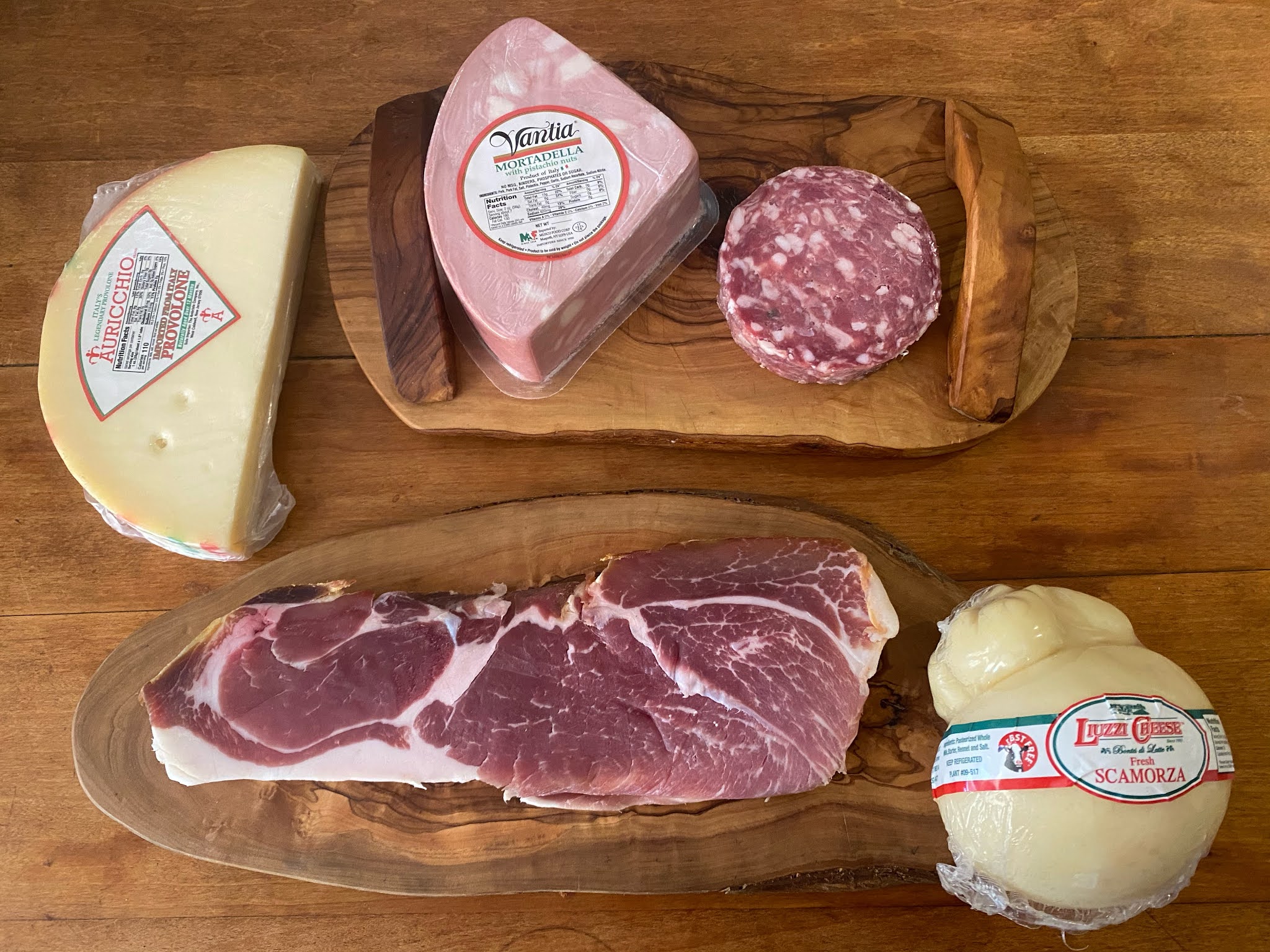
4 aprile 2021 Ultimo aggiornamento: 21 aprile 2023 Pizza chiena! Una delle specialità pasquali più amate della casa italoamericana! Il piatto di cui si parla di più in conversazione, magari ancor di più dell’agnello! E quest’anno, a 50 anni, io l’ho preparata per la primissima volta! Innanzitutto, un po’ di storia. Come già sappiamo, le più grandi ricette del mondo hanno avuto origine dagli avanzi. A Napoli l’antipasto di Pasqua era la fellata, un grande e sontuoso tagliere di salumi – tanto più sontuoso se si pensa che, a quei tempi, i salumi erano FATTI IN CASA. La Pasquetta (altrimento detto “Lunedì dell’angelo”), gli italiani fanno un bel picnic – una tradizione che, tragicamente, si è persa in America, dove tutti lavorano il lunedì ... Uno dei piatti più famosi per questo picnic è stata la pizza chiena. Chiena è la parola napoletana per “piena”. A volte si chiama anche Pizza rustica. È una torta, ripiena di formaggi, salumi e uova – tutti gli avanzi della fellata, in altre parole. Poiché in America non facciamo il picnic di Pasquetta, la “pizza ghena” (come la pronunciamo) si mangia proprio a Pasqua. Crescendo io non l’ho avuto spesso, principalmente perché la versione italoamericana è molto costosa! Fare una pizza chiena con il prosciutto domestico invece del prosciutto di Parma era considerato di classe molto bassa – e di classe anche PIÙ bassa usare il salamino piccante! Doveva includere CUBETTI di Parma, o non era la pizza chiena. Alcune famiglie usano strati di salumi affettati, che ricordano la fellata. Tuttavia la pizza chiena che ricordo io era ricotta, uova sbattute, cubetti di Parma (e nessun altro salume), cubetti di scamorza e tanto pepe nero grossolano (quell’ultimo ingrediente mi ricordo bene). L’impasto è la pasta per la pizza (lo stesso dell’impasto del pane, solo che si batte di più per renderlo più elastico). La parte superiore è spennellata con tuorlo d’uovo per renderla lucida. Questa è la classica pizza chiena che ricordo dalla mia infanzia e che, secondo gli irpini, sia l’unica pizza chiena autentica. Eppure gli italoamericani usano spesso la pasta frolla. Alcuni usano la pasta brisè (l’impasto usato per una quiche o per il pasticcio di pollo). Alcuni usano anche la pasta sfoglia. Sono queste versioni “non autentiche”? Non secondo i tre chef napoletani più stimati della storia! Vincenzo Corrado ne Il cuoco galante (1773) propose la pasta sfoglia. Ippolito Cavalcanti in Cucina Teorico-pratica (1837) propose la pasta frolla. Jeanne Caròla Francesconi ne La cucina napoletana (1963) concordò con Cavalcanti. Storicamente, le torte salate erano già popolari nel Medioevo. Pragmaticamente, in America, la pasta frolla ha molto senso qua. Non facciamo il picnic di Pasquetta, quindi la pizza chiena va servita la domenica di Pasqua. Come incorporare un piatto così ricco in un pranzo già così ricco? Utilizzando la pasta frolla, diventa una “torta salata” che può essere servita verso la fine con la frutta e i dolci. La fellata napoletana comprendeva anche le uova sode, oltre ai salumi e ai formaggi. In onore di questa tradizione, ho aumentato il rapporto fra uova e ricotta – 3 (non 2) uova per libbra di ricotta. (Normalmente, quando preparo le lasagne, i ravioli, gli ziti al forno, ecc., uso il rapporto di 2 uova per libbra di ricotta.) Ingredienti (per quattro pizze) Per il ripieno: 1800 g di ricotta (Purtroppo in America abbiamo solo la ricotta di mucca. In Italia è la ricotta di pecora, che è molto speciale!) 12 uova 450 g di prosciutto di Parma, a cubetti 225 g di mortadella, a cubetti 225 g di soppressata, a cubetti 225 g di provolone Auricchio, a cubetti (stagionata e piccantissima, tanto amata ad Avellino come in America!) 450 g di caciocavallo o scamorza, a cubetti Pecorino, grattugiato fresco (Non troppo! L’Auricchio è già piccante, e gli affettati sono già ricchi di sodio.) Noce moscata, grattugiata frescamente Pepe nero, macinato grossolanamente (una quantità generosa) Per l’impasto: O pasta per la pizza, pasta frolla, pasta brisé o pasta sfoglia – come desiderate. (Scrollate fino alla fine della pagina per una spiegazione delle diverse paste.) Procedura Unite gli ingredienti del ripieno. Aggiungete all’impasto di vostra scelta. Infornate a 190° per un’ora o fino a quando la pizza sarà dorata. Lasciate riposare per almeno 30 minuti. Servite tiepido o freddo. |
4 April 2021 Latest update: 21 April 2023 Pizza chiena! One of the most beloved Easter specialities in the Italian-American home! The dish that is most talked about in conversation, maybe even more than lamb! And this year, at age 50, I made it for the very first time! First, a little history. As we know, the world’s greatest recipes originated with leftovers. In Naples, the Easter antipasto was fellata, a large and sumptuous platter of coldcuts – all the more sumptuous when you think that, in those days, the coldcuts were HOMEMADE. On Easter Monday, called Pasquetta (or sometimes “il lunedì dell’angelo”, “Monday of the angel”), Italians have a wonderful picnic – a tradition which, tragically, has been lost in America, where everyone works on Mondays ... One of the most famous dishes for this picnic was pizza chiena. Chiena is the Neapolitan word for piena, or “filled.” It is also sometimes called pizza rustica. It is a pie, filled with cheeses, coldcuts, and eggs – all of the leftovers of the fellata, in other words. Because in America we don’t have the Easter Monday picnic, “pizza gayna” (as we pronounce it) is eaten on Easter itself. I did not have it often growing up – mainly because the Italian-American version in very expensive! It was considered very low class to make a pizza chiena with domestic prosciutto instead of prosciutto di Parma – and even lower class to use pepperoni! It had to have CUBES of Parma, or it wasn’t pizza chiena. Some families use layers of sliced coldcuts, reminiscent of the fellata. However the pizza chiena that I remember was ricotta, beaten eggs, cubes of Parma (and no other meats), cubes of scamorza, and lots of cracked black pepper (that last ingredient I remember well). The crust is pizza dough (the same dough as bread dough, only beaten more to make it more elastic). The top is brushed with egg yolk to make it shiny. This is the classic pizza chiena that I remember from my childhood and that, according to the Avellinesi, is the only authentic pizza chiena. And yet, Italian-Americans often use pie crust. Some use shortcrust pastry (the dough used for a quiche or for chicken pot pie). Some even use puff pastry. Are these versions “unauthentic”? Not according to history’s three most esteemed Neapolitan chefs! Vincenzo Corrado in Il cuoco galante (1773) suggested puff pastry. Ippolito Cavalcanti in Cucina Teorico-pratica (1837) suggested pie crust. Jeanne Caròla Francesconi in La cucina napoletana (1963) agreed with Cavalcanti. Historically, savory pies were already popular in the Middle Ages. Pragmatically, in America, pie crust makes a lot of sense here. We don’t have the Easter Monday picnic, so the pizza chiena has to be served on Easter Sunday. How do you incorporate such a rich dish into a meal that is already so rich? By using pie crust, it becomes a “savory pie” that can be served at the end with fruit and desserts. The Neapolitan fellata also included hard-boiled eggs, in addition to the meats and cheeses. In honor of this tradition, I increased the ratio of eggs to ricotta – 3 (not 2) eggs per pound of ricotta. (Normally, when I make lasagne, ravioli, baked ziti, etc., I use the ratio of 2 eggs per pound of ricotta.) Ingredients (for four pies) For the filling: 64 oz ricotta (Unfortunately in America we have only cow’s milk ricotta. In Italy it is sheep’s milk ricotta, which is very special!) 12 eggs 1 lb prosciutto di Parma, cubed 1/2 lb mortadella, cubed 1/2 lb soppressata, cubed 1/2 lb Auricchio provolone, cubed (aged and very piccante, as beloved in Avellino as in America!) 1 lb caciocavallo or scamorza, cubed Pecorino, freshly grated (Not too much! The Auricchio is already piccante, and the coldcuts are already high in sodium.) Nutmeg, freshly grated Cracked black pepper (a generous amount) For the crust: Either pizza dough, pie crust, shortcrust, or puff pastry – as you wish. (Scroll down to the bottom of the page for an explanation of the different pastry crusts.) Procedure Combine the ingredients of the filling. Add to the dough of your choice. Bake at 375° for 1 hour or until the crust is golden brown. Let sit for at least 30 minutes. Serve warm or cold. |
| C’è confusione intorno al termine inglese “pie crust”, che non si traduce molto facilmente in italiano. In italiano ci sono tre tipi fondamentali di pasta. Solo uno di loro si traduce direttamente.
La pasta sfoglia corrisponde alla “pâte feuilletée” in francese, la “puff pastry” in inglese. Qui non ci sono problemi di traduzione. La pasta sfoglia si prepara con farina, acqua e burro. Si usa sia in ricette dolci che salate, dalla millefoglie ai vol-au-vent. La pasta brisè ovviamente corrisponde alla “pâte brisée” in francese. È un impasto friabile che non contiene uova. Come la pasta sfoglia, può essere usata per preparazioni salate oppure, opportunamente aromatizzata, per ricette dolci. La pasta frolla generalmente non viene utilizzato per torte salate. La ricetta base si costituisce di farina, uova, zucchero e burro. Corrisponde alla “pâte sucrée” in francese. Pertanto, non esiste una traduzione diretta della“pie crust” americana. Generalmente una quiche oppure una torta salata utilizzerebbe la pasta brisè (senza uova). Una torta dolce potrebbe usare quella, oppure una pasta frolla (con uova) oppure un tipo completamente diverso di impasto. | There is confusion surrounding the English word “pie crust”, which does not translate very easily into Italian. In Italian there are three basic types of pastry crust. Only one of them translates directly.
Pasta sfoglia corresponds to “pâte feuilletée” in French, “puff pastry” in English. Here there are no translation problems. Pasta sfoglia is prepared with flour, water and butter. It is used in both sweet and savory recipes, from millefeuille to vol-au-vent. Pasta brisè obviously corresponds to “pâte brisée” in French. It is a crumbly dough that does not contain eggs. Like puff pastry, it can be used for either savory or sweet recipes. Pasta frolla is generally not used for savory pies. The basic recipe consists of flour, eggs, sugar and butter. It corresponds to “pâte sucrée” in French. Thus, there is no direct translation of the American “pie crust.” Generally a quiche or a savory pie would use a pasta brisè (without eggs). A sweet pie might use that, or a pasta frolla (with eggs), or a different type of crust entirely. |
| PARTE II (21 aprile 2023)
Solo ieri ho saputo da mia cugina di primo grado che nostra nonna non usava né l’impasto per il pane né l’impasto per torte. Usava invece l’impasto della pizza ma con l’aggiunta di due uova. In altre parole, un tipo di pasta brioche. (Intendiamoci, in Irpinia l’impasto del pane e quello della pizza sono esattamente la stessa ricetta -- l’unica differenza è che quest’ultimo viene lavorato di più, per renderlo più elastico.) C’è confusione in America per quanto riguarda i formaggi. Gli italiani di seconda generazione usavano qualcosa che chiamavano “fresh cheese” (“formaggio fresco”). Lo chiamavano anche “basket cheese” (“formaggio da cestino”). Qui sta la confusione. Un “formaggio fresco” sarebbe il formaggio più giovane: un formaggio a base di cagliata fresca che non è stata pressata o stagionata. Si fa il formaggio e si lascia asciugare per un giorno, massimo due. Tuttavia un “formaggio da cestino” è quello che è stato scolato ed essiccato in un cestino; si può vedere la dentellatura del cestino all’esterno del formaggio. Pertanto, ovviamente, un formaggio da cestino sarebbe più stagionato di un formaggio fresco. Un esempio di formaggio fresco è uno che conoscete benissimo: la ricotta. Quindi una ricetta che preveda la ricotta e anche il formaggio fresco è ridondante! Un esempio di formaggio da cestino è la ricotta salata, un formaggio semiduro utilizzato in Sicilia per la Pasta alla Norma. Tuttavia in Irpinia il formaggio semiduro più utilizzato nella pizza chiena è il primosale. Primosale è un pecorino ovviamente più giovane e morbido del pecorino che si grattugia. In Italia, una delle cugine di mio padre (ne sono rimaste pochissime!) usa il “formaggio scamosciato,” che è un tipo di primosale. Alla fine, la pizza chiena contiene una combinazione di formaggi morbidi e formaggi più stagionati. |
PART II (21 April 2023)
Only yesterday, I learned from my first cousin that our grandmother used neither bread dough nor pie dough. She used pizza dough but with the addition of two eggs. In other words, a type of brioche dough. (Mind you, in Avellino bread dough and pizza dough are exactly the same recipe -- the only difference is that the latter is worked more, to make it more elastic.) There is confusion in America regarding the cheeses. The second-generation Italians used something that they called “fresh cheese.” They also called it “basket cheese.” Therein lies the confusion. A “fresh cheese” would be the youngest cheese: a cheese made from fresh curds that have not been pressed or aged. You make the cheese and you let it dry for a day, two maximum. However a “basket cheese” is one that has been drained and dried in a basket; you can see the indentations of the basket on the outside of the cheese. Therefore, obviously a basket cheese would be older than a fresh cheese. An example of a fresh cheese is a cheese that you know very well: ricotta. Therefore, a recipe that calls for ricotta and also fresh cheese is redundant! An example of basket cheese is ricotta salata, a semisoft cheese used in Sicily for Pasta alla Norma. However in Avellino the semisoft cheese most commonly used in pizza chiena is primosale. Primosale is a pecorino that is obviously younger and softer than the pecorino that you grate. In Italy, one of my father’s cousins (there are very few still remaining!) uses formaggio scamosciato, which is a type of primosale. At the end of the day, the pizza chiena contains a combination of soft cheeses and harder cheeses. |
mercoledì 16 settembre 2020
La Bellissima Nonna XXIII
| Che epoca meravigliosa in cui vivere! Nei tempi antichi, se aveste voluto una vecchia ricetta tradizionale, o avreste consultato un libro di cucina, ove la ricetta era complicata da essere irriconoscibile, oppure avreste cercato un italiano che magari ricordava o magari non ricordava gli ingredienti della nonna. (Sicuramente aveva scordato che Nonna usava lo strutto al posto dell’olio d’oliva ...)
Ma oggi! Possiamo andare su YouTube! Dobbiamo guadare attraverso molti Tizi e Cai e Semproni e Pinchi Pallino. Ma poi! Troviamo Nonna! Bellissima Nonna! Non solo una nonna qualsiasi – la nonna che fa ancora le cose alla vecchia maniera. Mi sono portato avanti e vi ho risparmiato la fatica: ho fatto io il guado per voi. Vi presento una serie di video della nonna, mostrandoci le ricette non di oggi ma di ieri. |
What an amazing era to live in! In the olden days, if you wanted an old traditional recipe, either you consulted a cookbook, where the recipe was complicated beyond recognition, or you searched for an Italian who maybe did or maybe didn’t remember Grandma’s ingredients. (Undoubtedly he forgot that Grandma used lard instead of olive oil...)
But today! We can go to YouTube! We have to wade through many Toms and Dicks and Harrys and Joe Schmoes. But then! We find Nonna! Bellissima Nonna! Not just any grandma – the grandma that still does things the old way. I went ahead and saved you the trouble: I have done the wading for you. I present to you a series of videos of Grandma, showing us the recipes not of today but of yesterday. |
LA BELLISSIMA NONNA XXIII
Calamari ripieni!
Stuffed calamari!
“Laura in the Kitchen”
| Mi sarebbe piaciuto di più questo video se la nipote Laura parlasse di meno e la nonna Laura parlasse di più. Tuttavia non si può negare il forte legame tra queste due donne. La vecchia Laura era l’ispirazione per la giovane Laura a diventare uno chef. (La giovane ora ha il suo proprio programma sulla Cooking Network!) Ho cercato per molte ma molte ricette di calamari ripieni. Per me, quella di Nonna Laura vince il Primo Premio. Il video è stato realizzato nella cucina propria di Nonna al comune di Bacoli, nella parte ovest della Città Metropolitana di Napoli (pochissimi chilometri ovest della città. | I would have liked this video more if granddaughter Laura talked less and grandmother Laura talked more. However, there is no denying the strong bond between these two women. Old Laura was the inspiration for young Laura to become a chef. (Young Laura now has her own program on the Cooking Network!) I searched through many, many stuffed calamari recipes. For me, Nonna Laura’s wins First Prize. The video was made in Nonna’s own kitchen in town of Bacoli, in the western part of the Metropolitan City of Naples (only a few miles west of the city). |
sabato 12 settembre 2020
La Bellissima Nonna IV
| Che epoca meravigliosa in cui vivere! Nei tempi antichi, se aveste voluto una vecchia ricetta tradizionale, o avreste consultato un libro di cucina, ove la ricetta era complicata da essere irriconoscibile, oppure avreste cercato un italiano che magari ricordava o magari non ricordava gli ingredienti della nonna. (Sicuramente aveva scordato che Nonna usava lo strutto al posto dell’olio d’oliva ...)
Ma oggi! Possiamo andare su YouTube! Dobbiamo guadare attraverso molti Tizi e Cai e Semproni e Pinchi Pallino. Ma poi! Troviamo Nonna! Bellissima Nonna! Non solo una nonna qualsiasi – la nonna che fa ancora le cose alla vecchia maniera. Mi sono portato avanti e vi ho risparmiato la fatica: ho fatto io il guado per voi. Vi presento una serie di video della nonna, mostrandoci le ricette non di oggi ma di ieri. |
What an amazing era to live in! In the olden days, if you wanted an old traditional recipe, either you consulted a cookbook, where the recipe was complicated beyond recognition, or you searched for an Italian who maybe did or maybe didn’t remember Grandma’s ingredients. (Undoubtedly he forgot that Grandma used lard instead of olive oil...)
But today! We can go to YouTube! We have to wade through many Toms and Dicks and Harrys and Joe Schmoes. But then! We find Nonna! Bellissima Nonna! Not just any grandma – the grandma that still does things the old way. I went ahead and saved you the trouble: I have done the wading for you. I present to you a series of videos of Grandma, showing us the recipes not of today but of yesterday. |
LA BELLISSIMA NONNA IV
Genovese
“Pasta Grannies”
| Nonostante il nome, la genovese è una delle ricette emblematiche di Napoli. Nessuno è sicuro dell’origine del nome; l’affermazione che il piatto sia “genovese” non è mai stata provata. Una caratteristica insolita della ricetta è l’inclusione di una generosa quantità di parmigiano (non pecorino). Gli storici dicono che il parmigiano ne sia un’aggiunta “recente”, che risale alla metà del 1800! Questo vi dà un’idea dell’età di questa ricetta! Ci sono versioni più complicate là fuori, con l’aggiunta del maiale, del salame napoletano e ovviamente dello strutto. Tuttavia, la ricetta di Anna Maria ha l’autenticità di qualcosa che una persona normale mangerebbe in una casa normale di Napoli. | Despite its name, Genovese is one of the signature recipes of Naples. No one is sure of the origin of the name; the claim that the dish is “from Genoa” has never been proven. One unusual feature of the recipe is the inclusion of a generous quantity of parmigiano (not pecorino). Historians say that the parmigiano is a “newer” addition, dating back to the mid-1800s! That gives you an idea of the age of this recipe! There are more complicated versions out there, with the addition of pork, Neapolitan salame, and of course lard. However, Anna Maria’s recipe has the authenticity of something that a real person would eat in a real home in Naples. |
martedì 3 dicembre 2019
Babà (di Francesconi) / Neapolitan rum cake (recipe by Francesconi)
Jeanne Caròla Francesconi (1903-c.1995)
fu la decana della cucina napoletana. Il suo ricettario, La cucina napoletana (1965), è ampiamente considerato la Bibbia della cucina napoletana. Stranamente, al momento in cui scrivo (3 dicembre 2019), la sua ricetta per il dolce più pregiato di Napoli, il Babà (oppure Babbà), non si può trovare su Internet. Grazie ai pulsanti taglia-e-incolla, sicuramente questo fatto cambierà velocemente! Tuttavia, qui per la primissima volta in Internet, i Babà di Francesconi, tradotta dal sottoscritto. Ingredienti per 10 persone Per la pasta: farina, g 300 burro, g 70 uova, 3 sale, 1 pizzico patate, g 125 lievito, 1 dado (g 20) zucchero, 1 cucchiaio tavola latte (se occurre), poco Per lo sciroppo: zucchero, g 450 rhum della Giamaica di buona qualita, ½ bicchiere (o anche più) 450 g [recte: ml] acqua stampo liscio e rotondo con il buco (diam. 27 cm e altezza 10 o 12 cm)
"È questa una speciale ricetta semplificata e più economica di
quella del babà prescritta dall'alta cucina, ma vi assicuro che il
risultato è quasi perfetto." — J. C. Francesconi
Un paio di ore prima di fare la pasta, togliete dal frigorifero le uova, il lievito e il burro. Sciogliete il lievito in una tazzina con poca acqua tiepida (attenzione che non sia troppo calda ma nemmeno troppo fredda), impastatelo in una scodella con 50 grammi di farina e la poca acqua che occorre, e lasciatelo poi lievitare, coperto, in luogo tiepido. Lessate le patate, sbucciatele e passatele, ancora bollenti, due volte attraverso il tritatutto. In una capace terrina preparate la rimanente farina, le patate passate, il burro ammorbidito, lo zucchero e il sale. Impastate tutto, poi aggiungete una alla volta le uova e infine il panetto lievitato quando avrà raddioppiato il suo volume. Se la pasta non risultasse molto morbida, aggiungete poco latte e in ogni caso lavoratela energicamente, battendola con la mano, tanto da farla staccare in un solo pezzo dalla terrina. Ungete molto bene e completamente lo stampo; sistematevi dentro, pareggiandola, la pasta; coprite e, sempre in luogo tiepido, lasciate che raddoppi di volume. Va precisato che non è possibile stabilire con esattezza il tempo di lievitazione; esso oscilla, a seconda della temperatura, del luogo e della lavorazione, da una sola a parecchie ore. Sarà quindi bene fare riferimento alla propria esperienza, e in ogni caso, se si tratta di un babà da mangiare freddo, di lavorarlo più tempo possibile. Quando la pasta avrà raddoppiato il volume e toccandola con un dito la sentirete morbidissima e molto spugnosa, introducete lo stampo nel forno che avrete portato a buon calore e, dopo una ventina di minuti, diminuite la temperatura. Il babà dovrà cuocere, in tutto, circa tre quarti d'ora; dovrà apparire colorito in superficie e sarà pronto quando, infilandovi uno stecchino, questo ne uscirà asciutto. Allora toglietelo dal forno e avvolgetelo subito in un panno pulito e in una coperta di lana nella quale lo lascerete almeno per un'ora. Nel frattempo preparate lo sciroppo: fate bollire per un minuto l'acqua e lo zucchero, aspettate che quest'ultimo sia sciolto e aggiungete il rhum che lascerete intiepidire prima di utilizzarlo. Senza toglierlo dallo stampo, e con l'aiuto di un cucchiaio, cominciate a versare sopra e lateralmente al babà, pazientemente e il più regolarmente possibile, lo sciroppo ancora caldo. Per meglio aiutarvi a far penetrare dovunque il liquido, bucherellatene con uno stecchino la parte superiore. Trascorsi 10 minuti da quando avrete terminato di «bagnarlo», sformate il babà in un piatto rotondo nel quale entri comodamente. Se preferite, riempite il buco del babà con della crema gialla mista ad una macedonia di frutta sciroppata* e guarnita con ciliegine candite: otterrete così un dolce adatto per un pranzo elegante o per una cena in piedi. Inutile aggiungere che, invece di uno stampo col buco, se ne potrà usare uno lavorato, e che al posto di un babà grande se ne potranno fare alcuni piccoli negli speciali stampi di forma cilindrica. * = Nota del traduttore: Naturalmente la Francesconi non immaginava un cocktail di frutta in scatola! Per preparare la macedonia sciroppata, tritate della frutta fresca, mettetela in una ciotola, spruzzate di sopra un po' del succo di limone (per evitare l'ossidazione), mettetela in una pentola e fate bollire in acqua per 5 minuti, poi aggiungete dello zucchero e cuocete fino a quando lo zucchero non si è disciolto. |
Jeanne Caròla Francesconi (1903-c.1995)
was the doyenne of Neapolitan cuisine. Her cookbook, La cucina napoletana (1965), is widely considered the Bible of Neapolitan cookery. Oddly enough, as of this writing (3 December 2019), her recipe for Naples's most prized dessert, Babà (or Babbà), cannot be found on the Internet. Thanks to the cut-and-paste buttons, that fact is sure to change quickly! However, here for the very first time on the Internet, Francesconi's Babà recipe, translated into English by Yours Truly. Ingredients for 10 people For the dough: 300 g flour 70 g butter 3 eggs 1 pinch salt 125 g potatoes 1 cube (20 g) of yeast 1 TB sugar a little milk (if needed) For the syrup: 450 g sugar good quality Jamaican rum, ½ glass (or even more) 450 ml water
"This is a special simplified and cheaper recipe than the babà prescribed by the haute cuisine, but I assure you that the result is
almost perfect." — J. C. Francesconi
A couple of hours before making the dough, remove the eggs, baking powder and butter from the refrigerator. Dissolve the yeast in a cup with a little warm water (make sure it is not too hot but not too cold), knead it in a soup bowl with 50 grams of flour and the least amount of water that you need. Then let it rise, covered, in a warm place. Boil the potatoes, peel them and, while they're still hot, purée them twice in a chopper [food processor]. In a large bowl prepare the remaining flour, mashed potatoes, softened butter, sugar and salt. Knead everything, then mix in the eggs one at a time. Finally, [knead in] the leavened dough when it has doubled in volume. If the dough is not very soft, add a little milk. In either case, work it vigorously, beating it with your hand, so that it comes away from the bowl in a single piece. Grease the mold completely. Settle the dough inside, leveling it. Cover and, always in a warm place, let it double in volume. It should be noted that it is not possible to establish the rising time with accuracy. It fluctuates, depending on the temperature, on the place and on the kneading. [It can be anywhere] from one to several hours. Therefore it's best to refer to your own experience. In any case, if it is a babà to be eaten cold, [it's best] to knead it as long as possible. When the dough has doubled in volume and is very soft and very spongy when you touch it with your finger, put the mold in the oven which has been preheated to a high temperature. After about twenty minutes, reduce the temperature. The babà will have to cook, in total, about three quarters of an hour. It is ready when the surface has a nice color, and when a toothpick that you stick into it comes out dry. Then remove it from the oven and wrap it immediately in a clean cloth and a woolen cover, in which you will leave it for at least an hour. In the meantime, prepare the syrup: Boil the water and the sugar for a minute, until the sugar dissolves. Then add the rum, and let cool [somewhat — it should not be hot, but it should still be warm]. Without removing the babà from the mold, take a toothpick and riddle the surface with holes. Using a spoon, pour the [warm but not hot] syrup on the surface of the babà. Be patient, so as to let the syrup penetrate evenly. Ten minutes after you've finished "bathing" the babà, unmold it onto a round plate that is big enough to hold it. If you prefer, fill the hole of the babà with yellow pastry cream, fruit cocktail in syrup*, and candied cherry garnish. You will get a cake suitable for an elegant lunch or a buffet. Needless to say, instead of a [smooth] mold with a hole, you can use one that is "worked" [i.e., not smooth, e.g., a decorative cake mold or Bundt pan]. And instead of one large big babà, you can make many small ones in special cylindrical molds. * = Translator's note: Naturally Francesconi was not imagining canned fruit cocktail! To make macedonia sciroppata, chop some fresh fruit, place in a bowl, squeeze some lemon juice on top (to prevent oxydation), place in a pan and boil in water for 5 minutes, then add sugar and cook until the sugar has dissolved. English translation: Leonardo Ciampa |
![]() |
| Jeanne Caròla Francesconi nel 1986 (all'età di 83 anni). Foto: Augusto De Luca Jeanne Caròla Francesconi in 1986 (age 83). Photo by Augusto De Luca |
domenica 22 settembre 2019
’O rraù
![]() |
| Cucchiaio.it |
![]() ’O rraù ca me piace a me m’ ‘o ffaceva sulo mammà. A che m’aggio spusato a te, ne parlammo pe’ ne parlà. Io nun songo difficultuso; ma luvàmmel’ ‘a miezo st’uso. Sì, va buono: cumme vuò tu. Mò ce avèssem’ appiccecà? Tu che dice? chest’è rraù? E io m’ ‘o magno pè m’ ‘o mangià… M’ ‘a faje dicere na parola?… Chesta è carne c’ ‘a pummarola. Edoardo De Filippo |
![]() Il ragù che piace a me me lo cucinava solo Mamma. Da quando ti ho sposato, ne parliamo tanto per parlare. Io non sono difficile; ma perdiamo quest'abitudine. Si, va bene: come vuoi tu. Ora vorremmo pure litigare? Tu che dici? Questa è ragù? E io lo mangio tanto per mangiare qualcosa... Ma me la fai dire una cosa? Questa è carne con il pomodoro. Traduzione italiana: Leonardo Ciampa |
![]() The only ragù that I like is the one that Mamma cooked. Since you and I got married, we talk about it, for something to talk about. I’m not difficult; but let’s get rid of this habit. Yes, OK, whatever you say. Now you want to argue about it? What are you trying to say? That this is ragù? Can I tell you something? All this is is meat with tomatoes. English translation: Leonardo Ciampa |
Labels:
Cucina napoletana,
Cultura napoletana,
Naples,
Napoli,
Neapolitan cuisine,
Neapolitan culture,
Neapolitan poetry,
Poesia,
Poesia napoletana,
Poetry
giovedì 27 giugno 2019
'O spaghetto d' 'o puveriello / Pauper's spaghetti
![]() |
| Foto: YouTube |
| Miei cari lettori e lettrici sanno un paio di cose su di me. Sanno che Mimmo Corcione è il mio eroe culinario numero uno al mondo. Sanno anche che, ogni tanto, incontro una ricetta che mi porta in un luogo di distrazione totale - una trance che posso rompere solo bloggandone!
Mimmo ci racconta che ’o spaghetto d’ ’o puveriello “[e]ra un piatto che nelle case si faceva spesso: del resto il nome la dice lunga.” Anche la mamma di Mimmo ce li preparava molto spesso la sera. Nonostante la globalizzazione e la modernizzazione che stanno lentamente distruggendo la cultura italiana, che miracolo straordinario è che, in questo scritto (2019), ci sono trattorie a Napoli che servono gli autentici piatti contadini come ’o spaghetto d’ ’o puveriello. Mimmo consiglia uno di questi locali, La Casa di Ninetta (lacasadininetta.it), situato in Via Niccolò Tommaseo, a pochi passi dal Golfo di Napoli. Ingredienti per una persona 100 g spaghetti un uovo un cucchiaio di sugna (strutto di maiale) formaggio pecorino grattugiato pepe nero macinato al momento sale Preparazione Cuocete la pasta molto al dente. Intanto preparate l’uovo fritto sul tegamino (aggiungendo un pizzico di sale). L’uovo deve cuocere pochissimo, soltanto la parte bianca deve indurirsi. Il tuorlo deve essere lasciato abbastanza morbido. Versate la pasta nel piatto, sopra del quale trasferite delicatamente l’uovo fritto. Una spruzzata di pepe a piacere. Guarnite con il pecorino. |
My dear readers know a couple of things about me. They know that Mimmo Corcione is my number one culinary hero in the world. They also know that, every so often, I encounter a recipe that brings me to a place of total distraction -- a trance that I can break only through blogging about it!
Mimmo tells us that ’ o spaghetto d’ ’o puveriello “was a dish that was often made in people’s homes: after all, the name says a lot.” Mimmo’s mother also used to make it very often for dinner. Despite the globalization and modernization which are slowly destroying Italian culture, what an extraordinary miracle that, at this writing (2019), there are trattorias in Naples which serve authentic peasant dishes such as ’ o spaghetto d’ ’o puveriello. Mimmo recommends one such place, La Casa di Ninetta (lacasadininetta.it), located on Via Niccolò Tommaseo, only a few steps from the Bay of Naples. Ingredients for one person 100 g spaghetti 1 egg 1 TB pork lard grated pecorino cheese freshly ground black pepper salt Preparation Cook the pasta al dente. Meanwhile, in a skillet fry the egg (adding a pinch of salt). The egg must cook very little, only the white part should harden. The yolk should remain quite soft. Pour the pasta into the dish, on top of which gently transfer the fried egg. Add fresh ground black pepper to taste. Top with the pecorino. |
![]() |
| Foto: YouTube |
![]() |
| La Casa di Ninetta, Napoli Foto: The Fork |
Ecco ’o maist’!
Iscriviti a:
Post (Atom)