Visualizzazione post con etichetta Contest. Mostra tutti i post

martedì 25 giugno 2013

Le Ricette delle Nonne


Il 24 giugno è stato il 79esimo anniversario del matrimonio, a East Boston, dei miei nonni materni, Leonardo Antonino Maggio (“Tony”) & Grazia Siracusa (“Grace”) — lui di Salemi (TP), lei di Mineo (CT).

In onore di questa speciale data, ho creato questa piccola raccolta di ricette autentiche delle nostre nonne.

È possibile che voi in Italia non capiate il pieno significato della nonna italiana per noi italoamericani.  Queste nonne dischiusero a noi un altro mondo, il mondo completamente diverso che si trova al di là dell’Atlantico.  Queste nonne erano un’ispirazione costante, rammentandoci che c’esistano le bellezze oltre alle cose mondane che vedevamo intorno a noi, ogni giorno, al di qua.
IL MENÙ DEL GIORNO

Antipasto
FRITTELLE DI NONNA LUCIA
ricetta siracusana
di Veronica, “Dolci Armonie” 
(http://dolciarmonie.blogspot.com)

Primo
TIELLA DI PATATE, COZZE, E RISO
ricetta barese
di Fernanda, “Un soffio di polvere di cannella”
(http://unsoffiodipolveredicannella.wordpress.com)

Secondo
BRACIOLE DI MANZO
ricetta Monsù
del Sottoscritto

Dolce
BISCOTTI DELLA NONNA
ricetta campana
di Laura, “Matematica e Cucina”
(http://matematicaecucina.blogspot.com)


* * *

FRITTELLE DI NONNA LUCIA
di Veronica

Oggi vi propongo una ricetta che ho fatto ieri e che a me sta tanto a cuore perchè mi è stata tramandata dalla nonna Lucia, Siracusana DOC e del 1923, che ora non c’è più e alla quale ero legatissima. Ricordo ancora quando si stava in villa al mare, i miei genitori partivano per la settimana di vacanza e la mia nonna doveva badare a 5 ragazzine scatenate, ma ci metteva in riga !!! e così una sera in quella settimana senza genitori la dedicavamo alle “FRITTELLE.” Non sapevamo quale giorno della settimana la nonna sceglieva per prepararle, era sempre una sorpresa e ogni pomeriggio chiedevamo, “Nonna, stasera le frittelle?”, e lei, “No, stasira no.” Quando dopo il terzo giorno smettevamo di chiedere, lei veniva e ci diceva, “Stasira facemo i Frittelli,” e come si divertiva a vedere le nostre facce contente. 

Provatele, deliziose nella loro semplicità, proprio come Nonna Lucia.  Nonna, mi mancano le tue risate.  

Ingredienti per circa 15 frittelle:
500 g di farina 00 Molino Chiavazza
500 g di farina di grano duro Molino Chiavazza
1 cubetto di lievito di birra fresco
mezzo cucchiaino di zucchero
1 cucchiaino di sale
1 cucchiaino di olio evo
acqua per impastare

Per il ripieno:

500 g di mozzarella 
250 g di prosciutto cotto 
10 olive
olio di semi di mais per friggere.

Preparazione
 
Disponete la farina a fontana su un piano da lavoro, aggiungete al centro il lievito sbriciolato, lo zucchero, il sale e l’olio evo, amalgamate un po’ gli ingredienti, versate poco alla volta l’acqua tiepida e impastate fino ad ottenere un panetto liscio e sodo. Dividete l’impasto in 15 palline e ponetele distanziate su una tovaglia da tavola infarinata, copritele bene e fatele lievitare per un’ora. Passato il periodo di lievitazione stendete le palline con un mattarello sul piano infarinato e ponete sopra del prosciutto a pezzetti e due fettine di mozzarella oppure la mozzarella e 3 olive snocciolate e tagliate a metà. Ripiegate su se stessa la pasta e chiudete i bordi a mo di calzone (vedi foto).  

                       
Versate in una padella abbondante olio di mais e friggete le frittelle circa 3-4 minuti per lato, fino a doratura. Sgocciolate su carta assorbente e gustate calde.  


***

LE RICETTE DI FAMIGLIA: LA “TIELLA” DI PATATE, COZZE, E RISO
di Fernanda

Ci sono ricette capaci di risvegliare i ricordi della tua infanzia, proprio come le soffici madeleines ridestarono i ricordi della giovinezza di Marcel Proust nella sua opera “Alla ricerca del tempo perduto.”

Oggi un tuffo nel passato, quando la domenica mattina mi soffermavo incantata davanti al tavolo della cucina ad osservare con quanta maestria e meticolosa precisione nonna Maria preparava gli ingredienti e poi assemblava la “tiella” di patate cozze e riso.


E se ora posso dire che se sono riuscita ad imparare questo meraviglioso piatto della tradizione barese è stato proprio per quelle mattinate passate con la nonna a tagliare patate, a sistemare le cozze una vicina all’altra e a distribuire i chicchi di riso nell’enorme teglia di alluminio.

Ogni famiglia ha la sua ricetta e anche all’interno della stessa famiglia ci sono delle lievi variazioni, in particolare riguardo alle rondelle di zucchina (nonna le metteva sullo strato superiore, mentre una zia sullo strato inferiore e l’altra zia sopra il riso; altre famiglie le omettono del tutto) o al liquido di cottura (semplice acqua o liquido delle cozze accuratamente filtrato).

La ricetta calcola dimensioni quasi industriali, tenendo presente che non la mangiamo mai in meno di 5/6 persone e quando ne avanza un po’, la consumiamo o a cena o al pranzo del giorno successivo (che a detta di tutti è ancora più buona, perchè i sapori hanno modo di legarsi meglio).

È un piatto piuttosto elaborato da preparare, ma il segreto è preparare in anticipo tutti gli ingredienti (tagliati o puliti), per poi assemblare il tutto nel giro di pochi minuti.

Ingredienti per una teglia di 34cm di diametro

1,100 – 1,200kg di patate a pasta gialla
1,5kg di cozze
400gr di riso parboiled
3 zucchine medie
300gr circa di polpa di pomodoro (meglio se finissima)
formaggio grattugiato q.b.
olio extravergine di oliva
1 grossa cipolla
sale
prezzemolo tritato q.b.
pangrattato q.b.

Preparazione

Pulire il guscio delle cozze con una retina (da usare ogni volta solo per questa operazione) per eliminare la “barba” e aprirle a mezzo guscio con l’aiuto dell’apposito coltellino.  In una ciotola, conservare il liquido da parte perchè servirà per la cottura.

Sbucciare le patate e tagliarle a fette (anche con la mandolina) ad uno spessore di circa 3mm e tenerle in una ciotola coperte di acqua fredda.

Sbucciare e sminuzzare la cipolla.

Affettare le zucchine a rondelle.

In una ciotola versare il riso e coprirlo di acqua fredda.


Iniziamo ad assemblare il tutto.

Condire il fondo della teglia con sale, olio, prezzemolo, cipolle, polpa di pomodoro e formaggio grattugiato.

Sistemare metà delle fettine patate una accanto all’altra (non sovrapporle così verranno ben condite e la cottura sarà più facile ed uniforme) e condirle come sopra.

Preparare il secondo strato con le cozze sempre disposte ordinatamente, una accanto all’altra.

Distribuire in maniera uniforme il riso messo a mollo e sgocciolato e condirlo sempre con sale, olio, prezzemolo, cipolla, polpa di pomodoro e formaggio grattugiato.

Terminare con il secondo strato di patate condite sempre allo stesso modo e uno strato di zucchine a rondelle sistemate una accanto all’altra.

Preparare in una ciotola il liquido per la cottura: si può scegliere tra la sola acqua oppure il liquido delle cozze (filtrato attraverso un setaccino rivestito con 2-3 garzine di cotone per eliminare tutti i residui) +  un po’ di acqua per arrivare a circa 500ml; aggiungere il sale e mescolare per bene finchè risulterà tutto sciolto. La misura dell’acqua è orientativa: se ne dovesse servire altra durante la cottura, si farà sempre in tempo a salarne un altro po’ e ad aggiungerla.

Coprire la teglia con un coperchio e metterlo sul gas finchè prende il bollore (questa operazione serve un po’ ad accelerare i tempi di cottura; io l’ho tenuta circa un quarto d’ora e ho avuto cura di ruotare la teglia sulla fiamma in modo da distribuire il calore uniformemente).

Nel frattempo accendere il forno a 200° e preparare un composto di pangrattato e formaggio grattugiato.

Allontanare la teglia dal fuoco, togliere il coperchio, distribuirvi una spolverata di pangrattato e formaggio e completare con un giro d’olio.

Cuocere in forno caldo, nella parte medio bassa per circa una ventina di minuti (i tempi sono sempre orientativi e dipendono dalla qualità del riso e delle patate; controllare sempre il livello dell’acqua, nel caso aggiungerne altra).

Una volta cotto, sfornare la teglia, farla riposare per almeno 10 minuti e impiattare.

   
***
 
BRACIOLE DI MANZO
di Leonardo Ciampa

La domenica, Nonna faceva il sugo.  E in ogni sugo metteva le polpette, il carré delle costole di maiale, e un grosso pezzo di controfiletto.  Qualche volta metteva pure le salsicce.

Il sugo natalizio e il sugo pasquale seguivano la stessa ricetta di ogni domenica, con una sola differenza: l’aggiunta delle braciole.

Non potevo capire perché tante ricette per le braciole napoletane erano quasi identiche a quella di mia nonna siciliana. Ne ho fatto un po’ di ricerca. E ho scoperto che l’invenzione delle braciole si attribuisca al Cav. Sig. Ippolito Cavalcanti, Duca di Buonvicino. Il Duca fu l’autore di un libro culinario importantissimo, Cucina Teorico-Pratica. E il momento che ho visto l’anno di pubblicazione di questo volume — 1837 — ho capito subito.  Cade nettamente dentro gli anni del Regno delle Due Sicilie (1816-1861), quando l’Italia meridionale era sotto il dominio borbone, quindi francese.

Questa stessa epoca generò la cucina dei monsù.  La parola “monsù” (scritta anche “monzù”) è una deformazione di monsieur. Si riferisce ai cuochi di quest’epoca, come il buon Duca, ch’erano influenzati dalla cucina francese. E molte ricette dei monsù erano similissime nel Regno di Napoli e nel Regno di Sicilia. (Un buonissimo esempio è il sartù di riso.)

Chi sapeva che questa preparazione dei miei nonni campagnoli fosse un piatto così nobile!

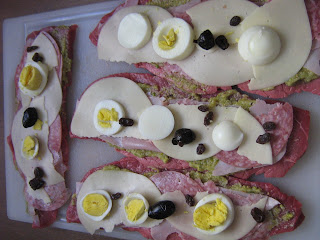
Nonna era una persona abitudinaria.  Raramente esperimentava o improvvisava nella cucina; ripeteva le stesse ricette e procedure ogni anno.  Le braciole non ne facevano eccezione.  Nonna usava sempre bistecche sottili del controgirello.  (Anche se siano sottili, si devono battere col batticarne e la carta cerata.)
Le bistecche prima d’esser battute.

Poi, il ripieno di Nonna era sempre:
  • fette di prosciutto (o prosciutto cotto)
  • fette di salame o soppressata
  • fette di provolone dolce
  • prezzemolo fresco
  • pecorino grattugiato (Nonna non usava mai il parmigiano. Il parmigiano non faceva parte della cucina degli agricoltori meridionali di una volta.)
  • uova sode
  • uvette (Certe ricette dicono di farle ammorbidire in anticipo in acqua.)
  • pinoli (Io preferisco i pistacchi, che sono meno cari, più deliziosi, e più siciliani! Anche se i nostri siano californiani, sono eccellenti. Li potreste dimezzare se vogliate; ve ne servono solo 6 o 12.)
  • del pangrattato (non figura nelle foto)*
  • un’oliva nera conservata sott’olio (In frigo, Nonna aveva sempre un barattolo di queste olive spiegazzate. Ne metterebbe una in certi piatti, e.g., la pizza, o la calzone di spinaci e manzo macinato. Io direi di provare altre olive; le kalamata e le grandi olive verdi siciliane sarebbero perfette.  Ma dico questo con esitazione, poiché quest’oliva nera sott’olio era per Nonna una specie di trademark.)
* = Addendum (settembre 2016): Il mese scorso esaminai un fascicolo di vecchie ricette ingiallite. Trovai un foglietto di carta su cui avevo annotato la ricetta di mia nonna delle braciole. Avevo completamente dimenticato che io e lei l’avessimo mai discusso. Come c’era da aspettarsi, c’era più dettaglio del fissare delle braciole che c’era della loro cottura! (Lei era sarta!) Per fortuna, in questo post (che scrissi a memoria), ne ricordai tutto, tranne un solo ingrediente: lei aggiungeva un po’ di pangrattato. Certamente un tocco siciliano. Tuttavia, se l’aggiungiate, siate sicuri d’inumidirlo con un po’ d'olio, di latte, o d’acqua.

Qua confesserò di aver trovato qualche volta le braciole di Nonna un pochissimo secche. Ho visto una ricetta che suggeriva di spalmare un po’ di strutto oppure olio d’oliva sopra la carne. Mi è venuta l’idea di fare un impasto. Ho spesso lo strutto casereccio in frigo, ma oggi no. E avevo poco prezzemolo in giardino ma abbastanza timo. Timo essendo un meraviglioso complemento al manzo, ho scelto quello. Dunque, nel robot ho messo olio, timo, pecorino, pepe nero, e ho aggiunto uno spicchio d’aglio. Un tal impasto fa miracoli in molti tipi d’involtino di carne.


Poi, ho fatto un piccolo sbaglio. Ho deciso di aggiungere pure i pistacchi al robot. L’impasto era fantastico e interessantissimo.  Ma alla fine, quando mangiavo le braciole finite, non mi potevo affondare i denti nei pistacchi, che facciano un contrasto importante alle uvette dolci.


Allora, come si legano le braciole? Nella memoria mia, Nonna usava solo gli spilli d’acciaio. Comunque, mia mamma dice che prima, Nonna usasse lo spago da cucina. Non so perché cangiò metodo.

Poi, Nonna faceva rosolare le braciole. Nella padella più grande che aveva, metteva olio d’oliva, cipolla affettata, sale e pepe. (Non mettereste aglio se già ci stia nelle braciole.) A turno, lei faceva rosolare in questa padella non solo le braciole, ma tutte le carni che andavano nel sugo. Il grosso pezzo di controfiletto ... il carré delle costole di maiale ... le salsicce se le usasse (ma a volte le metteva crude direttamente nel sugo) ... e le famose polpette ... 


Poi, come si diglassa questa padella, con tutti i sapori del Paradiso?

Nonna non metteva mai nè vino nè brodo nel sugo. Lei, per diglassare questa padella, metteva una scatola di 170 gr. di concentrato di pomodoro e due scatolate di acqua (c. 350 mL). Questo sughetto saporito andava nella grande pentola che già conteneva il resto del sugo.

(Una piccola digressione sulle polpette. Mettere l’aglio o non mettere l’aglio? Se mettiate l’aglio crudo, sarebbe troppo forte. Senza nessun aglio, ci manca una piccola qualcosa. Cosa facevano i miei nonni? Quante volte sono stato testimone a questa procedura. Loro conservavano le fette di vecchio pane nel forno freddo. Dopo un paio di giorni diventavano ben rafferme. Nonno prendeva uno spicchio d’aglio nelle sue dita e strusciava l’aglio contro il pane duro. Poi, metteva questo pane aromatico nella grattugia palmare — tipo che si usa oggi per il parmigiano, eccetto che in quei tempi le grattugie fossero di acciaio. Così, faceva il pangrattato casereccio che poi si usava nelle polpette. Figuratevi il profumo!)

In totale il sugo di Nonna cuoceva per parecchie ore. Le polpette rosolate ci andavano solo 30 minuti prima della fine. Ciascuna delle altre carni avevano i loro propri tempi di cottura. Le braciole Nonna metteva un’ora prima della fine. (E a proposito, Nonna metteva il basilico solo 5 minuti prima della fine!)
A questo punto, mi devo discostare dalla cucina di Nonna, che non faceva mai le braciole separatamente da un gran sugo.

Voi sicuramente avrete opportunità di fare solo le braciole, senza un sugone.  Infatti, le originali braciole ottocentesche erano così, con il loro proprio sughetto.

Dopo di far rosolare le braciole, diglassate la padella. Io ho usato la semplice acqua. Vino rosso sarebbe delizioso, specialmente se usiate Nero d’Avola oppure Lacryma Christi del Vesuvio. Per carità non usare Chianti o un altro vino che si scontra con la cucina meridionale. (Ironicamente, due vini dell’estremo Nord si concordano benissimo con la salsa rossa: l’audace Barbera e il mite Dolcetta d’Alba.)

Se non usiate vino, potreste usare il brodo casereccio di manzo o di maiale. Ma l’acqua funziona benissimo. E le braciole già contengono un assortimento complesso di sapori. Non esitare di usare la semplice acqua, come ho fatto io.

Alla padella diglassata, mettete i pomodori pelati che in anticipo avete già passato nel frullatore. (Non usare nè i pomodori già passati nè il concentrato.) Aggiungete un po’ di sale e pepe, ma non aggiungere mai lo zucchero al sugo. Nonna usava qualche uvetta e un pezzo di carota. Fareste bene aggiungendo un terzo ingrediente: qualche pomodoro secco al sole. (Non li ho mai visti nella cucina di Nonna, ma lei parlava nostalgicamente nei pomodori secchi al sole, che ricoprivano un ruolo importante della cucina di mamma sua. Mica potevano permettersi molta carne! Ecco uno dei vantaggi di aver sposato mio nonno macellaio!)

Fate cucinare lentamente il sughetto per un’ora. Durante la cottura, potete aggiungere un po’ d’acqua quando necessario. Ma non si aggiunge mai il vino o il brodo dopo il diglassare iniziale. Non volete sopraffare il gusto dei pomodori.  

Io non ho rimosso mai le braciole dalla padella, perfino durante il diglassare; le ho fatte cucinare una mezz’ora al lato. Per una cottura più corta, potete far rosolare le braciole, rimuoverle dalla padella, diglassare la padella, far cuocere il sughetto per 30 minuti, poi tornarci le braciole e farle cuocere 15 minuti al lato. Il tempo totale di cottura rimane 60 minuti.

Potete vedere, io ero così ansioso di sezionarne una che non mi preoccupassi di tagliare lo spago prima!  Se mettiate gli avanzi nel frigo e le riscaldiate leggermente il prossimo giorno, si tagliano nette e belle.  Ma perché ne avreste gli avanzi?
Come alcune ricette dei monsù (e.g., l’Agglassato), il sughetto fa un accompagnamento fenomenale alla pasta.  Così, potete preparare il primo e il secondo simultaneamente.  Ho fatto così io, scegliendo come pasta le campanelle.  Secondo me, è la pasta perfetta per questo sughetto; non vi posso dare una ragione logica perché. 


* * *

BISCOTTI DELLA NONNA
di Laura Tulimiero

Ecco la ricetta di questi biscotti “buoni buoni,” il cui sapore mi ricorda quelli che mangiavo al paese, da piccola, nel periodo pasquale.

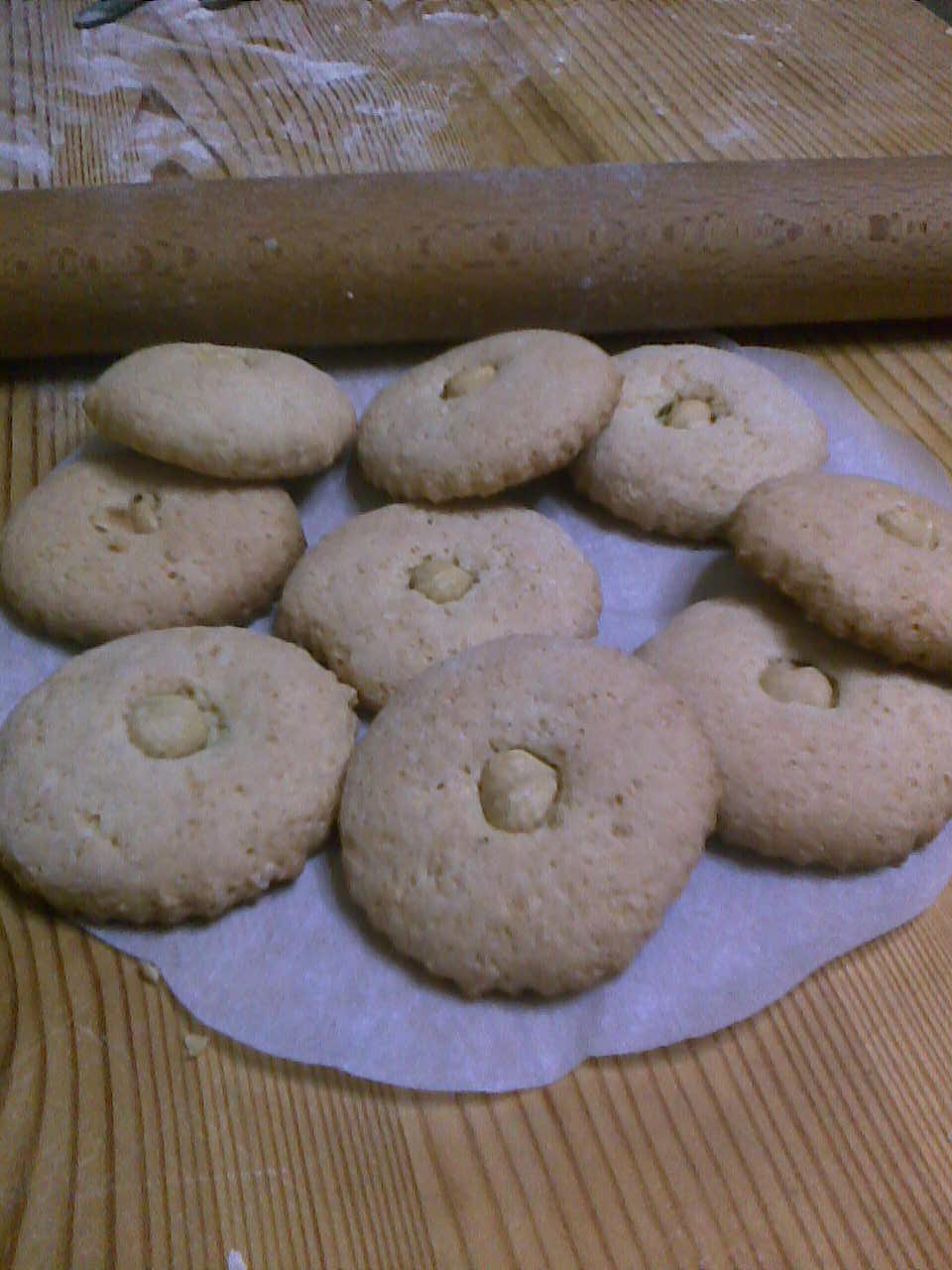
Ho cominciato a prepararli quando in un supermercato (al banco dei prodotti per dolci dove vado sempre a curiosare!!!), ho visto le bustine di Bicarbonato di Ammoniaca indicato proprio come lievito per pasticceria secca da tè. Dietro la bustina c’era anche la ricetta per realizzare dei biscotti senza grassi e, quindi, ho acquistato il lievito e provato a farli. Di solito, come per quasi tutti i biscotti, faccio dei panetti da infornare e poi da tagliare a fette, questa volta ho tirato una sfoglia e ritagliato i dolcetti che ho guarnito con una nocciola tostata. Il sapore migliora dopo uno o due giorni, provate ad aspettare se resistete a non mangiarli!


Ingredienti: per circa 25 biscotti

250 g di farina
2 uova grandi
150 g di zucchero
1/4 di bustina di ammoniaca per dolci
latte se occorre.

Preparazione
 
Sulla spianatoia impastate tutti gli ingredienti. Tirate una sfoglia dello spessore di quattro, cinque mm, ritagliate i dolcetti con uno stampino e guarniteli con una nocciola. Mettete i biscotti sulla placca da forno rivestita di cartaforno e infornate a 180° per circa 15 minuti.

Toglieteli dal forno, fateli raffreddare e conservateli in una biscottiera, si manterranno fragranti anche per una settimana.
***

Sentite grazie alle contributrici. E, basti dire: Buon Appetito!

sabato 12 gennaio 2013

Winner of the Contest!

La versione italiana di questo post è imminente. 
The Italian version of this post is forthcoming. 

The winner of our Contest, Il Sugo Domenicale, has been announced!  


And the winner is ...
FAF Avatar

So impressed was I by Frank's recipe, and by his blog in general, that I awarded him the only prize.

When any two cultures merge, they form a third culture — a new culture with traits of each but with its own identity and individuality.  Frank has a keen understanding and appreciation of all three cultures, and no other blog that I have ever discovered better depicts the unique Italian-American tradition, in all its culinary glory, than Memorie di Angelina. 

As I wrote in the prologue to the contest:

It's true that many Italian-Americans know little about Italian culture. But the reverse is also true. The immigrants that arrived at Ellis Island between 1892 and 1924 were poor in material wealth but rich in values. And their virtuosity in the garden and in the kitchen is the stuff of legend!

It amazes me that the Southern Italians performed such culinary miracles in a climate so different from the Mediterranean. Boston and New York did not offer the arid sun, the mild winter, the volcanic soil. On the other hand, our humid summer produced a basil which was (can I say it?) superior. And meat, especially beef, we had in profusion.


Yes, the typical Italian-American cuisine is very limited compared to the vast repertoire of cuisines in Italy. But the "melting pot" of the Southern Italians of different places of origin created a very interesting amalgamation of flavors and methods. The tomato sauce from Naples, the pepperoni from Calabria, the ricotta from Sicily, the method of breading also from Sicily — prized elements of different provinces, all coming together into one culture. For example, our Chicken "Parmesan" is hardly a dish from Parma. It comes instead from the Sicilian predilection for breading cutlets and filets of meat and fish. And if our lasagna is inauthentically Bolognese, it is authentically Sicilian, for the Sicilian of 1892 knew ricotta but did not know béchamel sauce.


Then, the crowning glory of Italian-American cuisine:
the Sunday sugo.

It is impossible to convey the "religious" aspect of the Sunday sugo, the masterpiece of our beautiful grandmothers. Miss Mass, and something doesn't quite feel right. Miss the sugo, and something REALLY doesn't feel right!


Frank's sauce (some might say gravy) is the one that captures it — so well, in fact, that as soon as I read it, I considered closing the contest immediately.

About Frank Fariello (in his own words)
(The following is from “Memorie di Angelina”(http://memoriediangelina.com). 
Text and photos are © Frank Fariello & Memorie di Angelina.)
Dear reader,

Welcome! I’m Frank. I’m an international lawyer by day, but when I get home at night, there’s nothing I like better to do than cook. I’ve always loved to cook, ever since I was barely tall enough to peer over the top of a stove. Cooking is the best way I know to unwind from a stressful day’s work. And sharing the dishes I make is a profound way to connect with friends and loved ones.
Where did this passion for cooking and eating come from? Like so many Italian-Americans I learned the importance of good food at those leisurely Sunday dinners at my grandmother’s house, the kind that would start with nibbles just after noontime and last well into the evening.
Apice
Memorie di Angelina—which means ‘Memories of Angelina’—is my tribute to the home cooking of my nonna Angelina, a native of a small hilltop town in the Campania region of Italy called Apice. She came to America in the 1920s along with millions of other southern Italian immigrants and settled in the Arthur Avenue neighborhood in the Bronx, which was (and is) a true ‘little Italy’. She was poor and, like most women of her class and time, only semi-literate. She never did learn to speak proper English. She married my grandfather Lorenzo, who made a modest salary as a projectionist at a local movie theater and, to help pay expenses, she sewed button holes for lady’s dresses at 5 cents a pop. She was the humblest person I have ever known.

She also cooked the most delicious food I’ve ever eaten.
Il ragù della domenica (Sunday Sauce)
Sunday dinner
I was born and raised in the US, but have spent most of my adult life abroad. After some years in Paris and Vienna, I finally wound up living in Rome, where I spent ten more memorable years. I spent my time in Italy soaking up the food culture and enjoying cooking and eating as never before. After some years in the historical center of town, we moved out to a beautiful area off the via Ardeatina just south of town, an area that is still rural, among vineyards and pastures, the Alban hills looming in the distance. I grew my own fruits and vegetables, and even kept chickens for the eggs.  Our wine came from the vineyards down the road, the cheese from the sheep that grazed in the fields outside our house, the olive oil from a local frantoio (press). And, of course, I traveled extensively, eating and asking everywhere I went about the local cuisine. I came back to the US in 2005 for work reasons, and now lead a fairly ordinary suburban life—except that, if I dare say so myself, in our house we eat very, very well…
OLYMPUS DIGITAL CAMERA
I started Memorie di Angelina in June 2009 as a way of keeping this rich culinary heritage alive and sharing it with my friends and  family. But from those modest beginnings, and despite the fact that writing about your grandmother’s cooking has become the ultimate blogging cliché, the site has grown in popularity and is now one of the better known Italian food blogs on the web.I like to think it’s because Memorie di Angelina offers up something that many other blogs do not—a real focus on technique and the actual experience of cooking, presented in a way that strives to both educate and entertain. After reading one of my recipes, I want you to feel confident that you can make it, too. That makes the posts on the site a lot longer than on most blogs—I regularly violate the ‘rule of thumb’ that blog posts shouldn’t exceed 250 words by several orders of magnitude—but I think you’ll find it’s worth your extra time.

In fact, I hope you’ll think of this website as something more than just a blog, as an online resource. Over the course of the years, I’ve have built up a collection of about 350 recipes at last count. You’ll find Angelina’s specialities here, of course, plus many of the classic dishes I got to know during my years in Italy. I put special emphasis on the regional cuisines of Rome and Naples, which I know best, but I do set out on the occasional jaunt into points north or further south. You’ll also find articles with essential background and techniques for making authentic Italian food, in-depth information on the Italian Pantry and food culture, and tips and tricks, like how to choose the best canned tomatoes.
There is much here to explore and the database just keeps growing. The universe of Italian cooking is truly immense, so I look forward to keep this going for quite some time!
Angelina and me
Angelina & her grandson, Frank Fariello
While I like to feature an Italian-American dish every Columbus Day, as well as the occasional American or other ‘foreign’ dish, the focus here is on showing you how to make authentic, traditional Italian home cookery, the kind of Italian food you will find in countless homes in Italy itself.
What you won’t find here are rants about my personal problems. Nor will you find advertisements, promotions, give-aways, contest entries or any other kind of competitive or commercial activity. This blog is a pure labor of love.

I hope you enjoy reading this blog as much as I do writing it. And if you have any questions, comments or recipe requests, or just want to say hello, feel free to drop me a line. And if you like what  you see, don’t forget to follow us on Facebook, Twitter or Networked Blogs!

Frank

And now!  Frank's winning recipe!*
*=What, you expected measurements?  What are you, some sort of AMATEUR?! — L.C.

Il ragù della domenica (Sunday Sauce)


On this Columbus Day, for some reason I started thinking about my childhood. My passion for food began early, and most of my culinary Ur-memories lead me back to Sunday dinners at nonna Angelina’s place. About noontime, after Sunday Mass, the family would congregate around the enormous table (or so it seemed to my young eyes) that took up most of the main room of my grandparents’ New York apartment. The men and boys would sit around the table, talk, watch TV and play cards—my favorite card game was called scopa (literally, ‘broom’, but we called it ‘sweep’ in English)—while we nibbled on fried vegetables, sharp provolone and the ring-shaped, lard-laced ‘Ansonia’ bread, and sipped a little sweet vermouth. Meanwhile, Angelina and the other womenfolk would be putting the finishing touches on the food in the kitchen.

Then, just as I would be getting really antsy for the ‘real’ food, out came the pasta—sometimes a large bowl of pastasciutta but more often than not a sprawling baking dish filled with lasagne di carnevale, followed by a leisurely parade of courses: mixed meats from the ragù, then another meat course like chicken roasted with potatoes and onions, then a green salad—served as a separate course after the meats in the Italian-American fashion—then fruit—which usually included a fennel bulb, my personal favorite ‘fruit’—and, in the Fall and Winter, a bowl of nuts in their shells. We would drink very rough homemade wine—never knew who made the stuff—which Angelina and the other older ladies would ‘cut’ with 7-Up. Finally, out came pastries—cannoli, sfogliatelle, babà al rum and that Italian-American favorite, ‘rainbow cookies’ made with marzipan, raspberry jam and chocolate. Dinner would end around 6 pm with coffee, served both ‘black’ (espresso) and ‘American’, along with small cordial glasses of Anisette. More card playing and much gossiping ensued, followed by sandwiches at 8 o’clock for those who might still be a little hungry…

The constant fixture of all of these dinners was ragù della domenica or ‘Sunday sauce’—also known as ‘Sunday gravy’—the crowning glory of Italian American cooking. If it was not dressing the pasta, it was slathered in between the layers of the lasagne, with more served in a gravy boat for those who wanted to pour some more on top. Just about every Italo-American I know grew up with this sauce or something very much like it. It is a not-so-distant cousin of the ragù alla napoletana. Whereas the Neapolitan version is made with a single large piece of beef, its American cousin is made with various bits of pork and beef: sausages, beef or pork ribs and meatballs were always included, but you’d often find beef braciole, pig’s foot and rolled pig’s skin, and sometimes pork chops, in the pot as well, all slowly simmered for hours in tomato sauce until it was dark and unctuous and full of deep flavor.

Ragù requires slow, long cooking, but it is not hard to make. Here is the recipe for Angelina’s ragù:

In as big a pot or casserole as you have available, begin by lightly browning your sausages and ribs—and, if using, braciole and pork chops—in lard over medium heat. Yes, you read that right: lard. You can use olive oil if you like, but for the real taste of ragù, lard is a must. (And there is no better fat for browning, by the way.) Brown as many pieces at a time as will fit in your pot in a single, well-spaced layer. (If you crowd the pieces of meat, they will steam and not brown.) Do not rush the process; take your time and brown them gently, so they render their fat and don’t darken too much. Remove the pieces to a bowl or dish as they brown, replacing them with other pieces. When all the pieces of meat are brown, remove any remaining in the pot and add a generous amount of chopped onion and allow it to sweat until it is quite soft. Then add a clove or two of chopped garlic and, when you can just begin to smell their aroma, add back the browned meat. Turn the meat with the onion and garlic and simmer them together gently to allow the meat to insaporire (absorb the flavor of the aromatics), seasoning with salt and pepper as you turn. (If you have some spare red wine on hand, add a splash at this point and allow it to evaporate completely. If you don’t have red wine, not to worry; Angelina actually didn’t add wine to her ragù, but many recipes call for it, and it does add a nice additional layer of flavor.)

Then add the best quality canned tomatoes that you can find, passing them through a food mill into the pot, enough to cover the meats entirely. (Some recipes call for tomato paste, but I find this makes the sauce too heavy.) Nestle a sprig or two of fresh parsley among the meats. Lower the heat, partially cover the pot, and let the sauce to simmer very slowly for at least 2-3 hours, until the sauce is thick and dark and very flavorful. Along the way, add your meatballs, which you will have fried separately in oil, and, if using, your pig’s foot or rolled pig’s skin.


NOTES: Ragù is best made a day ahead, but you can use it immediately if you like. Extremely versatile, you can use it to dress any kind of pastasciutta—at Angelina’s place, it was usually spaghetti, linguine or rigatoni—or ravioli or for making lasagne. With pasta, serve pecorino cheese (not parmesan, whose delicate flavor would be overwhelmed by this robust sauce) for those who want it. This Columbus Day, we celebrated with linguine dressed with ragù, then the meats served as a secondo and a green salad, followed by fruits—an abbreviated modern version of the Sunday dinners of my childhood. 


Ragù, along with the meat that simmered in it, is also very good served with polenta, which may sound strange, since polenta is a northern dish, while this ragù is very much in the southern Italian tradition. But, in fact, polenta is not entirely unknown in the center and south of Italy. A dish called polenta con spuntature e salsicce, polenta served with spare ribs and sausages simmered in tomatoes, which tastes very much like this ragù without the meatballs, is a popular Roman specialty. And even Angelina, a daughter of the mountains near Benevento, made polenta to please my grandfather Lorenzo, who had fought against the Austrians in the First World War (later receiving a medal for valor in the Battle of the Vittorio Veneto) and acquired a taste for the stuff while up North…but that is a story for another day.

The reader will probably have noticed that the recipe does not come with measurements. Like many traditional home cooks, Angelina never measured. But I find that using one package of around five or six sausages, as many ribs and meatballs, and one or two other meats if you like, plus two medium onions and two cloves or garlic, plus two large cans of tomatoes, will produce good results. But strict measurements are really not important—and the cook can fell free to adjust amounts as he or she likes. After all, that’s one of the ways we home cooks can give on our dishes a personal ‘touch’.

To make the meatballs, you use the same mixture of meats, bread, cheese, egg and aromatics that you will find described in the recipe for Angelina’s polpettone (meatloaf). But instead of forming a ‘loaf’ and stuffing it, use the mixture to make round balls and fry them gently in oil. They are wonderful eaten as is, but perhaps even better after simmering for an hour or so in the ragù.

Besides the use of lard, the secrets of a really good ragù are taking your time for gentle, unrushed browning and simmering—this is old-fashioned comfort food that can’t be rushed—and using the best canned tomatoes you can find. In the US, and perhaps elsewhere, the latter subject poses a special challenge, important enough to deserve its own post.

There is a raging debate among Italian-Americans about the proper way to translate ragù into English. As mentioned, some people call it ‘Sunday sauce’, others ‘gravy’. Each side holds fervently to its position. The problem is that the two languages do not use coinciding terms. In Italian, what you might generically call a ‘sauce’ in English can be translated as salsa, sugo, condimento or ragù—the last of which is a special word traditionally only used for this kind of slowly simmering meat-and-tomato sauce (although modern chefs have also come up with fish-based ragù). English, on the other hand, has the terms ‘sauce’ and ‘gravy’. ‘Sauce’ is a generic term that can be used to describe ragù, while gravy is a special word used to describe the kind of sauce that is made from the drippings of a roast. So, strictly speaking, ragù is not a gravy, but since both gravies and ragù are special kinds of sauces noted for their meatiness, you can see the logic of using one for the other. Personally, I stay out of this debate and just say ragù.

domenica 11 novembre 2012

Contest: Il Sugo Domenicale

(Please scroll down for the English version of this post.)

È vero che molti italoamericani sanno poco della cultura italiana. Ma il contrario è anche vero. Gli immigranti che arrivarono ad Ellis Island fra il 1892 e il 1924 erano poveri di beni materiali ma ricchi di valori. E la loro virtuosità nel giardino e nella cucina è la roba di leggenda!

Mi stupisce che i meridionali facevano tali miracoli culinari in un clima così diverso a quel mediterraneo. Boston e New York non offrivano il sole arido, l’inverno mite, il suolo vulcanico. D’altro canto, il nostro estate umido produceva un basilico (posso dirlo?) superiore. E i carni, specialmente il manzo, avevamo in abbondanza.

Sì, la cucina tipica italoamericana è molto limitata rispetto al vasto repertorio delle cucine in Italia. Ma il “melting pot” dei meridionali da diversi luoghi d’origine creò un’amalgamazione interessantissima di sapori e di metodi. La salsa di pomodoro da Napoli, il salamino piccante dalla Calabria, la ricotta dalla Sicilia, il metodo d’impanare anche dalla Sicilia — elementi pregiati da diverse province, tutti venivano assieme in una cultura. Per esempio, il nostro “Chicken Parmesan” è mica un piatto parmense. Viene invece dalla predilezione siciliana per impanare le cotolette e i filetti siano di carne siano di pesce. E se le nostre lasagne sono inautenticamente bolognesi, sono autenticamente siciliane, poiché il siciliano del 1892 conosceva la ricotta e non conosceva la besciamella.

Poi, il coronamento della cucina italoamericana: il sugo domenicale.

È impossibile illustrare l’aspetto “religioso” del sugo domenicale, il capolavoro della bellissima nonna. Saltare la Messa, e ti senti che ci sia qualcosa che non va. Saltare il sugo, e ti senti che ci sia qualche GRANDE cosa che non va!

Allora, il contest: create la miglior ricetta per il sugo domenicale.

Le Regole:
* Il contest inizia oggi l’11 novembre 2012 e termina fra due mesi l’11 gennaio 2013.
* Se avete un blog, linkateci la ricetta pubblicata con il banner e il link del contest. Potete partecipare anche con ricette già postate. Ripubblicate il post vecchio, e inserite il banner e il link a questo post. Non dimenticare di lasciare il link della vostra ricetta come commento a questo post.
* Se non avete un blog, partecipate comunque e inviateci una ricetta a mezzo email corredata di foto.
* Allegate al minimo una bella foto del prodotto finito, ma preferibilmente delle foto delle diverse fase.

Il Giudizio:
Il giudice sono io. Naturalmente il giudizio sarà completamente soggettivo. Ma dagli altri post in questo blog discernerete facilmente le mie suscettibilità al Vecchio Mondo.

I Premi:
Assegnerò tre premi (primo, secondo, terzo). I premi non saranno monetari ma ... musicali! I dettagli in seguito!

Buona fortuna!


It's true that many Italian-Americans know little about Italian culture. But the reverse is also true. The immigrants that arrived at Ellis Island between 1892 and 1924 were poor in material wealth but rich in values. And their virtuosity in the garden and in the kitchen is the stuff of legend!

It amazes me that the Southern Italians performed such culinary miracles in a climate so different from the Mediterranean. Boston and New York did not offer the arid sun, the mild winter, the volcanic soil. On the other hand, our humid summer produced a basil which was (can I say it?) superior. And meat, especially beef, we had in profusion.

Yes, the typical Italian-American cuisine is very limited compared to the vast repertoire of cuisines in Italy. But the "melting pot" of the Southern Italians of different places of origin created a very interesting amalgamation of flavors and methods. The tomato sauce from Naples, the pepperoni from Calabria, the ricotta from Sicily, the method of breading also from Sicily — prized elements of different provinces, all coming together into one culture. For example, our Chicken "Parmesan" is hardly a dish from Parma. It comes instead from the Sicilian predilection for breading cutlets and filets of meat and fish. And if our lasagna is inauthentically Bolognese, it is authentically Sicilian, for the Sicilian of 1892 knew ricotta but did not know béchamel sauce.

Then, the crowning glory of Italian-American cuisine: the Sunday sugo.

It is impossible to convey the "religious" aspect of the Sunday sugo, the masterpiece of our beautiful grandmothers. Miss Mass, and something doesn't quite feel right. Miss the sugo, and something REALLY doesn't feel right!

And so, the contest: create the best recipe for the Sunday sugo.

The Rules:
* The contest begins today, November 11, 2012, and ends in two months on January 11, 2013.
* If you have a blog, link your published recipe with the banner and the link of this contest. You can participate with recipes that have already been posted. Republish your old post, and insert the banner and the link to this post. Don't forget to leave the link of your recipe as a comment on this post.
* If you don't have a blog, you can still participate. Simply send us a recipe by email, furnished with photos.
* Include at least one good photo of the finished product, but preferably several photos of the different stages.

The Judging:
The judge will be me. Naturally the judging will be completely subjective. But from the other posts in this blog you will easily discern my Old World sensibilities.

The Prizes:
I will grant three prizes (first, second, third). The awards will not be monetary but ... musical! Details to follow!

Buona fortuna!

ADDENDUM (12 January 2012): The winner has been announced! Click here for full details!


The above four photos are from various websites, not affiliated with this one.