Visualizzazione post con etichetta Mimmo. Mostra tutti i post

giovedì 27 giugno 2019

'O spaghetto d' 'o puveriello / Pauper's spaghetti

Foto: YouTube
Miei cari lettori e lettrici sanno un paio di cose su di me. Sanno che Mimmo Corcione è il mio eroe culinario numero uno al mondo. Sanno anche che, ogni tanto, incontro una ricetta che mi porta in un luogo di distrazione totale - una trance che posso rompere solo bloggandone!

Mimmo ci racconta che ’o spaghetto d’ ’o puveriello “[e]ra un piatto che nelle case si faceva spesso: del resto il nome la dice lunga.” Anche la mamma di Mimmo ce li preparava molto spesso la sera.

Nonostante la globalizzazione e la modernizzazione che stanno lentamente distruggendo la cultura italiana, che miracolo straordinario è che, in questo scritto (2019), ci sono trattorie a Napoli che servono gli autentici piatti contadini come ’o spaghetto d’ ’o puveriello. Mimmo consiglia uno di questi locali, La Casa di Ninetta (lacasadininetta.it), situato in Via Niccolò Tommaseo, a pochi passi dal Golfo di Napoli.

Ingredienti per una persona 
100 g spaghetti
un uovo
un cucchiaio di sugna (strutto di maiale)
formaggio pecorino grattugiato
pepe nero macinato al momento
sale

Preparazione 
Cuocete la pasta molto al dente. Intanto preparate l’uovo fritto sul tegamino (aggiungendo un pizzico di sale). L’uovo deve cuocere pochissimo, soltanto la parte bianca deve indurirsi. Il tuorlo deve essere lasciato abbastanza morbido. Versate la pasta nel piatto, sopra del quale trasferite delicatamente l’uovo fritto. Una spruzzata di pepe a piacere. Guarnite con il pecorino.
   My dear readers know a couple of things about me. They know that Mimmo Corcione is my number one culinary hero in the world. They also know that, every so often, I encounter a recipe that brings me to a place of total distraction -- a trance that I can break only through blogging about it!

Mimmo tells us that ’ o spaghetto d’ ’o puveriello “was a dish that was often made in people’s homes: after all, the name says a lot.” Mimmo’s mother also used to make it very often for dinner.

Despite the globalization and modernization which are slowly destroying Italian culture, what an extraordinary miracle that, at this writing (2019), there are trattorias in Naples which serve authentic peasant dishes such as ’ o spaghetto d’ ’o puveriello. Mimmo recommends one such place, La Casa di Ninetta (lacasadininetta.it), located on Via Niccolò Tommaseo, only a few steps from the Bay of Naples.

Ingredients for one person 
100 g spaghetti
1 egg
1 TB pork lard
grated pecorino cheese
freshly ground black pepper
salt

Preparation 
Cook the pasta al dente. Meanwhile, in a skillet fry the egg (adding a pinch of salt). The egg must cook very little, only the white part should harden. The yolk should remain quite soft. Pour the pasta into the dish, on top of which gently transfer the fried egg. Add fresh ground black pepper to taste. Top with the pecorino.
Boscotrecase.
La chiesa di SantʼAnna è circondata dalla lava della famosa eruzione del Vesuvio del 1906. Mimmo nacque in quella stradina, allora sepolta dalla lava, a sinistra della chiesa, Via Gian Battista Monaco. Tanti spaghetti d’ ’o puveriello consumati in quella stradina!

St. Anne’s Church is surrounded by lava from the famous 1906 eruption of Mt. Vesuvius. Mimmo was born on that little street, buried under lava in the photo, to the left of the church, Via Gian Battista Monaco. So much Pauper’s spaghetti consumed on that little street!
Foto: Wikipedia
Foto: YouTube
La Casa di Ninetta, Napoli
Foto: The Fork

Ecco ’o maist’!

sabato 3 novembre 2018

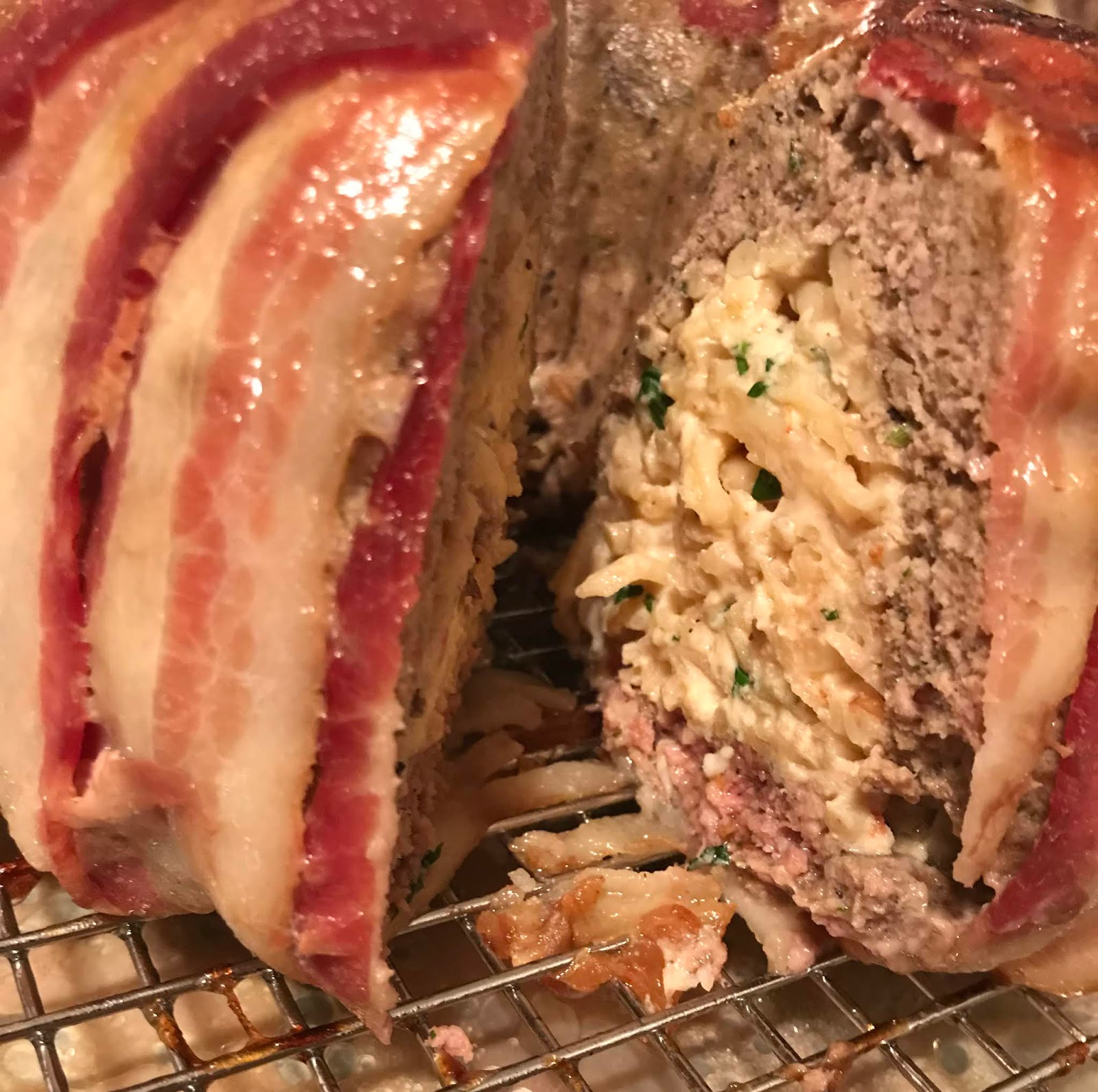
Ciambellone salato (per Mimmo Corcione) / Savory Bundt cake (for Mimmo Corcione)

CIAMBELLONE SALATO
di carne trita, bucatini,
ricotta & bacon. 
Ricetta dedicata a Mimmo Corcione.

Mimmo Corcione è il chef napoletano più famoso dell’Internet. Il suo canale YouTube (a partire da novembre 2018) ha più di 55.000 abbonati e più di 21 milioni di visualizzazioni! Non c’è davvero modo di trasmettere quanto sono rimasto sbalordito, e onorato, quando il mese scorso, Mimmo ha creato una ricetta e l’ha dedicata a me! E ha citato il mio nome nel video! Ero abbagliato come un adolescente!

Restituisco il favore in umiltà totale e senza nessune manie di grandezza. Le ricette di Mimmo sono simultaneamente rustiche e nobili. Miravo a questa dualità quando ho creato questo ciambellone salato, segno della mia più sincera stima e gratitudine a Mimmo Corcione.


Ingredienti

PER LA CARNE:

1,5 kg carne macinata
     (750 gr manzo, 750 gr maiale, oppure
     500 g ciascuno di manzo, maiale e vitello)
prezzemolo fresco, tritato
menta fresca, tagliata a pezzi grossi
3 uova
pecorino, frescamente grattugiato
pane multicereali, raffermo
1 o 2 spicchi d’aglio
un pizzico di cannella, frescamente macinata
un po’ di scorza di arancia, frescamente grattugiata
un po’ di latte intero
sale
pepe

PER IL RIPIENO:

250 gr bucatini o perciatelli
     (cotti in anticipo), freddi
2 o 3 cucchiai sugo di pomodoro
     (cotto in anticipo), freddo
500 gr ricotta
2 uovo sbattuto
pecorino, frescamente grattugiato
scamorza o mozzzarella, grattugiata
noce moscata, frescamente macinata
prezzemolo fresco, tritato
sale
pepe

PER LA CROSTA:

28 fette abbastanza spesse (c.750 gr) pancetta affumicata (tipo bacon)


ATTREZZATURE NECESSARIE:

stampo per ciambellone (diametro di 25 cm),
      con maniglie
griglia di raffreddamento
teglia da forno
grande pentola per la pasta
2 grande ciotole
un paio di forbici

Preparazione

Qualche ora prima (oppure il giorno prima), portate ad ebollizione una grande pentola di abbondante acqua salata. Buttate la pasta. Quando l’acqua tornerà ad ebollizione, fate cuocere per due minuti al di sotto del tempo di cottura consigliato (probabilmente 7 minuti – solitamente i bucatini e i perciatelli impiegano 9 minuti). Nel frattempo, aggiungete il sugo freddo a una delle due grandi ciotole. Scolate la pasta e aggiungetela alla ciotola con il sugo freddo. Amalgamate bene e fate raffreddare.

Preriscaldate il forno a 180 ° C.

Mettete la carne nell’altra grande ciotola. Aggiungete il prezzemolo e la menta.  In una robot da cucina, mescolate i successivi 9 ingredienti.  Aggiungete alla ciotola questo composto, e mescolate bene con la carne. Mettete da parte.

Nella ciotola con la pasta e il sugo, aggiungete tutti gli ingredienti del ripieno, e amalgamate bene.

Foderate lo stampo con le fette di bacon. (Una parte di ogni fetta sporgeranno oltre i lati dello stampo. Notate bene nella prima foto che non si fodera il tubo centrale. Se lo facciate, il bacon all’interno non diventerebbe croccante.)  Aggiungete 2/3 della carne sul fondo dello stampo e spalmate su i lati e al centro dello stampo, facendo una “grondaia” per il ripieno. Aggiungete il ripieno nella “grondaia.” Coprite il ripieno con la carne rimanente e appianate. Piegate le parti sporgenti del bacon sopra la parte superiore della carne. (Usate i forbici per tagliare e trasferite pezzettini del bacon come necessario.)  Coprite con un foglio di alluminio, e infornate per 30 minuti.  Rimuovete il foglio e fate cuocere per altri 30 minuti (un’ora in totale). Durante la cottura, se troppo grasso si raduni sopra, potrebbe essere necessario farne defluire un po’.

Se dopo un’ora il bacon sopra non è ancora croccante, mettetelo sotto il grill, fiamma alta, per 5 minuti

Quando cotto, sfornate lo stampo. Posizionate una griglia di raffreddamento e una teglia da forno sulla parte superiore dello stampo. Attentamente, con guanti da forno, afferrate le maniglie dello stampo, la griglia e la teglia.  Attentamente capovolgetelo. Sollevate via lo stampo. (Scivolerà fuori facilmente, a causa del grasso del bacon.) Mettete in forno sotto il grill, fiamma alta, per 5 minuti o fino a quando il bacon sarà croccante.

Variazione
Per il ripieno, si potrebbe sostituire la pasta con la purè di patate (preparata nel modo normale, senza sugo ovviamente). In questo caso, non mettete troppo latte nelle patate.
  
SAVORY BUNDT CAKE
with ground meat, bucatini,
ricotta & bacon. 
Recipe dedicated to Mimmo Corcione. 

Mimmo Corcione is the most famous Neapolitan chef on the Internet. His YouTube channel (as of November 2018) has over 55,000 subscribers and over 21 million views! There's really no way to convey how stunned, and honored, I was when last month, Mimmo created a recipe and dedicated it to me! And mentioned my name in the video! I was like a star-struck teenager!

I return the favor in total humility and without any delusions of grandeur. Mimmo's recipes are simultaneously rustic and noble. I was aiming for this duality when I created this savory cake, a sign of my sincerest esteem and gratitude a Mimmo Corcione.


Ingredients

FOR THE MEAT:

3 lb ground meat
     (1.5 lb beef, 1.5 lb pork, or
     1 lb each of beef, pork, and veal)
fresh parsley, chopped
fresh mint, coarsely cut
3 eggs
pecorino, freshly grated
multigrain bread, stale
1 or 2 cloves garlic
a smidgen of cinnamon, freshly ground
a little orange rind, freshly grated
a little whole milk
salt
pepper

FOR THE FILLING:

1/2 lb bucatini or perciatelli
     (cooked beforehand), cold
2 or 3 TB tomato sauce
     (cooked beforehand), cold
1 lb ricotta
2 egg, beaten
pecorino, freshly grated
scamorza or mozzarella, shredded
fresh parsley, chopped
nutmeg, freshly ground
salt
pepper

FOR THE CRUST:

28 slices (c. 24 oz.) bacon (hickory smoked or applewood smoked. NOT the kind sweetened with maple syrup.)


NECESSARY EQUIPMENT:

Bundt pan (10” in diameter), with handles
cooling rack
baking pan
large pot for the pasta
2 large bowls
a pair of scissors

Preparation

A few hours beforehand (or the day before), bring a large pan of abundant salted water to a boil.  Put in the pasta. When the water returns to a boil, cook for two minutes below the recommended cooking time (probably 7 minutes – usually bucatini and perciatelli take 9 minutes). Meanwhile, add the cold tomato sauce to one of the two large bowls.  Strain the pasta and add it to the bowl with the cold sauce. Mix well and let cool.

Preheat oven to 350°F.

Place the meat in the other large bowl.  Add the parsley and mint.  In a food processor, mix the next 9 ingredients. Add this mixture to the bowl, and mix well with the meat. Set aside.

In the bowl with the pasta and sauce, add all of the filling ingredients, and mix well.

Line the Bundt pan with the slices of bacon. (Part of each slice will hang over the sides of the pan.  Note well in the first photo that you don't line the central tube. If you do, the bacon in the inside would not become crispy.)  Add 2/3 of the meat to the bottom of the pan and spread up the sides and up the middle of the pan, making a “gutter” for the filling. Add the filling into the “gutter.” Top the filling with the remaining meat and smooth out. Fold the overhanging parts of the bacon over the top of the meat. (Use the scissors to cut and relocate little pieces of the bacon, as necessary.)  Cover with foil and bake for 30 minutes.  Remove the foil and bake for another 30 minutes (1 hour in total). During cooking, if too much fat gathers on top, it might be necessary to drain off some of it.

If after an hour the bacon on top is not crispy, broil on high for 5 minutes.

When done, remove the Bundt pan from the oven.  Place a cooling rack and baking sheet on top of it. Carefully, with oven mitts, grab hold of the handles of the Bundt pan, cooling rack, and baking sheet.  Carefully flip it over.  Lift away the Bundt pan. (It will slide off easily, because of the grease from the bacon.) Broil on high for 5 minutes or until the bacon is crispy.

Variation
For the filling, you could substitute the pasta with mashed potatoes (prepared in the normal way, without sauce obviously). In this case, don't put too much milk in the potatoes.

Notate che il tubo centrale non si fodera con il bacon. (Vedete la nota sopra.)
Note that the central tube is not lined with bacon. (See the note above.)
Servirà i forbici per questo passo. (Vedete le istruzioni sopra.)
You will need the scissors for this step. (See the instructions above.)

mercoledì 17 ottobre 2018

Crema di zucca violino con crostini di pane al rosmarino e speck croccante / Puréed butternut squash soup, with baked rosemary croutons and crispy speck

Foto: Mimmo Corcione
Crema di zucca violino con crostini di pane al rosmarino e speck croccante
(Dedicata a Leonardo Ciampa!)

RICETTA DI MIMMO CORCIONE

Introduzione di Leonardo Ciampa:

Cinque anni fa, una mia amica di Nocera Inferiore mi disse: “Devi vedere questo video di questo chef napoletano.” Lei stessa essendo una cuoca formidabile, una sua raccomandazione mi afferrò immediatamente l’attenzione. Vidi il video di Mimmo Corcione e ne fui subito catturato. Dichiarai in queste pagine: “Mimmo epitoma la gloria semplice e la gloriosa semplicità della cucina napoletana.

Non immaginavo che un giorno avrei l’onore di una “amicizia on-line” con Mimmo. Il suo canale YouTube (a partire da ottobre 2018) ha quasi 55.000 abbonati e quasi 21 milioni di visualizzazioni! [A partire da aprile 2024, 139.000 abbonati e 42 milioni di visualizzazioni!]

La sua gentilezza e generosità sono illimitate. E non c’è davvero modo di trasmettere quanto sono rimasto sbalordito, e onorato, quando ieri, Mimmo ha creato una ricetta e l’ha dedicata a me! E ha citato il mio nome nel video! Ero abbagliato come un adolescente!

Questa ricetta ha un significato particolare per me. Tra gli italiani del Sud, mi sono sempre sentito insicuro riguardo al terribile clima bostoniano. Ci sono molti ingredienti nella cucina mediterranea che semplicemente non riesco a coltivare qua. Tuttavia, sono molto orgoglioso della nostra zucca butternet (a.k.a. zucca violino), che si colloca tra le zucche più deliziose del mondo. Mimmo sapeva che mi sento così e, ne sono sicuro, voleva rendere omaggio sia a me che alla mia città natale.


Ingredienti
  • un piatto di zucca violino, tagliata a dadini
  • un piattino di patate, tagliate a cubetti
  • 1/2 cipolla di Tropea (tagliata)
  • 2 ciuffi di prezzemolo (tritato al momento)
  • 1 spicchio d’aglio
  • un rametto di rosmarino
  • un piattino di pane raffermo, tagliato a cubetti
  • un’idea di noce moscata (grattugiata al momento)
  • Parmigiano (oppure Grana Padano), grattugiato al momento
  • una fettina di speck Trentino, tagliato a cubetti  (N.B. Per la quantità, potete giudicarla ad occhio dal video. Io ho usato una fetta spessa di 6 o 7 mm, ch’era c. 125 gr. – L.C.)
  • un bicchiere di brodo vegetale
  • acqua bollente q.b.*
  • sale
  • pepe nero (macinato al momento)
  • olio d’oliva extravergine.

Preparazione


Per la zuppa:

In un pignatiello (pignatta di terracotta), aggiungete 2 cucchiai d’olio. Portato a temperatura l’olio, aggiungete la cipolla, e fate cuocere per una decina di minuti. Aggiungete le patate, mescolate, fate cuocere per almeno un quarto d’ora. Aggiungete la zucca, mescolate, fate cuocere per almeno un altro quarto d’ora. Salate, coprite, e continuate la cottura. Aggiungete la noce moscata appena grattugiata. Quando la zucca comincia ad ammorbidirsi, aggiungete il prezzemolo, aggiungete il brodo, coprite, fate cuocere almeno 10 minuti ancora. È pronta quando al tocco del cucchiaio di legno la zucca tende a disfarsi. Passatela con un frullatore ad immersione. Se la consistenza sia troppo densa, aggiungete un pochettino di acqua bollente.

Per i crostini:

Su una teglia, mettete la carta forno. Mettete un filo d’olio. Disponete il pane. Aggiungete l’aglio tagliato a pezzettini. Aggiungete il rosmarino fresco. Spruzzate un’altra goccina di olio in superficie. Infornate fino a doratura.

Per lo speck:

In una padellina, fate riscaldare un piccolissima goccia di olio. Aggiungete lo speck e farlo soffriggere per pochi minuti, fino alla croccantezza desiderata.

Per impiattare:

Al piatto aggiungete, in quest’ordine: la zuppa, poi lo speck, poi i crostini, poi una grattugiata del formaggio, poi una macinata di pepe nero.
  
Puréed butternut squash soup, with baked rosemary croutons and crispy speck
(Dedicated to Leonardo Ciampa!)

RECIPE BY MIMMO CORCIONE

Introduction by Leonardo Ciampa: 

Five years ago, a friend of mine from Nocera Inferiore said to me, "You must see this video of this Neapolitan chef." She herself being a formidable cook, a recommendation from her immediately grabbed my attention. I watched the video of Mimmo Corcione, and I was immediately hooked. I declared in these pages, "Mimmo epitomizes the simple glory and the glorious simplicity of Neapolitan cuisine."

I didn't imagine that I would have the honor of an "Internet friendship" with Mimmo. His YouTube channel (as of October 2018) has almost 55,000 subscribers and almost 21 million views! [As of April 2024, 139,000 subscribers and 42 million views!]

His kindness and generosity are boundless. And there's really no way to convey how stunned, and honored, I was when yesterday, Mimmo created a recipe and dedicated it to me! And mentioned my name in the video! I was like a star-struck teenager!

This recipe has particular meaning to me. Among Southern Italians, I have always felt insecure about the terrible Boston climate. There are many ingredients in the Mediterranean cuisine that I simply cannot grow here. However, I am very proud of our butternut squash, which ranks among the most delicious squashes in the world. Mimmo knew that I felt this way and, I am sure, wanted to pay homage not just to me but to the city of my birth.


Ingredients
  • a plate of butternut squash, diced
  • a small plate of potatoes, cut into cubes
  • 1/2 Tropea onion (chopped) (Note: Tropea onions are impossible to find in America. The closest substitute would be sweet vidalia onions. – L.C.)
  • 2 tufts of parsley (freshly chopped)
  • 1 clove of garlic
  • a sprig of rosemary
  • a plate of stale bread, cut into cubes
  • a dash of nutmeg (freshly grated)
  • Parmigiano (or Grana Padano), freshly grated
  • a slice of Trentino speck (smoked prosciutto), cut into cubes (Note: I used one 1/4-inch-thick slice, which was approx. 1/4 lb. – L.C.)
  • a glass of vegetable stock
  • boiling water as needed*
  • salt
  • black pepper (freshly ground)
  • extra virgin olive oil.

Preparation


For the soup:

In a pignatiello (a terracotta cooking pan), add 2 tablespoons of oil. When the oil reaches the right temperature, add the onion, and cook for about ten minutes. Add the potatoes, stir, cook for at least a quarter of an hour. Add the butternut, stir, cook for at least another quarter of an hour. Add salt, cover, and continue cooking. Add the freshly grated nutmeg. When the butternut begins to soften, add the parsley, add the stock, cover, cook for at least 10 minutes. It is ready when the butternut tends to fall apart at the touch of the wooden spoon. Purée with an immersion blender. If the consistency is too thick, add a tiny bit of boiling water.

For the croutons:

On a baking sheet, place a sheet of parchment paper. Drizzle a little oil. Place the bread. Add the garlic, cut into small pieces. Add the fresh rosemary. Drizzle another drop of oil on top. Bake until golden.

For the speck:

In a small pan, heat a tiny drop of oil. Add the speck and fry for a few minutes, until the desired crunchiness.

To serve:

Add to the plate, in this order: the soup, then the crispy speck, then the croutons, then the freshly grated cheese, then the freshly ground black pepper.
Foto: Mimmo Corcione
* = Un momento d’insegnamento: Molti stufati, potaggi e zuppe richiedono vino e/o brodo. Comunque, quando il sugo deve essere diluito, i grandi chef non aggiungono più vino o più brodo. Aggiungono invece un po’ di acqua bollente - acqua perché troppo vino o brodo potrebbe sopraffare il sapore del sugo, bollente in modo che non interrompa la cottura. – L.C.    * = A teaching moment: Many stews, potages, and soups call for wine and/or stock. However, when the gravy needs to be diluted, the great chefs do not add more wine or more stock. They add a little boiling water – boiling so that it doesn't interrupt the cooking, water because too much wine or stock could overpower the flavor of the gravy. – L.C.

martedì 12 agosto 2014

Rigatoni con bacon e basilico! / Rigatoni with bacon and basil!

Mi piace fare questo piatto, che ha tutte le caratteristiche di una grande ricetta italoamericana. È una variazione sull'antica ricetta napoletana, rigatoni allardiati. Questa variazione non è conosciuta qui in America - io sono sicuramente la prima persona a farla qui - ma credo che debba essere famosa. In cucina vostra già avete bacon, pecorino ed EVO. In giardino già avete basilico. E dal momento che l'acqua raggiunte il punto di ebollizione al momento che il piatto arriva alla tavola, occorrono solo 15 minuti. Quindi, se questo piatto diventa famoso, you read it here first! L'avete letto per la prima volta qui! 

È difficile dire quanto olio mettere, perché dipende quanto è grasso il bacon. Fate attenzione alla cottura del bacon. A differenza di pancetta e di guanciale, bacon è crudo, quindi bisogna cucinarlo. Tuttavia, se lo cuocerete troppo veloce, diventerà bruciato e secco. Il segreto è cuocerlo un po' lentamente e rimuoverlo dalla fiamma PRIMA di essere cotto. Continuerà a rosolarsi anche dopo di essere tolto dal fornello.

Tutte le ricette sono la somma delle loro parti. Dovete usare buona pasta, buon bacon, buon olio, buon pecorino e basilico fresco.

Ingredienti
500 gr rigatoni
alcune fette di bacon, tagliate a quadratini
foglie fresche di basilico (un paio di dozzine)
EVO
pecorino romano, frescamente grattugiato
pepe nero, frescamente macinato (facoltativo)

Preparazione
Nella padella, fate soffriggere piuttosto lentamente il bacon nell'EVO. Quando comincia a rosolarsi, togliete dal fornello. Quando l'olio si smette di bollire, aggiungete il basilico e mescolate. Combinate con i rigatoni e il pecorino e Buon Appetito!
   I enjoy making this dish, which has all the hallmarks of a great Italian-American recipe. It is a variation on the old Neapolitan recipe, rigatoni allardiati. This variation is not known here in America – I am surely the first person ever to make it here – but I think it should be famous. You already have bacon, pecorino, and EVOO in your kitchen. You already have basil in your garden. And from the moment that the water starts boiling to the moment that the food arrives on your table, you need only 15 minutes. So if this dish becomes famous, you read it here first!

It's difficult to say how much olive oil to use, because it depends on how fatty the bacon is. Be careful how you cook the bacon. Unlike pancetta and guanciale, bacon is raw, so you do have to cook it. However, if you cook it too quickly, it will become burnt and dry like bacon bits. The secret is to cook it somewhat slowly and to remove it from the flame BEFORE it's done. It will continue to brown even after you take it off the stove.

All recipes are the sum of their parts. You have to use good pasta, good bacon, good olive oil, good pecorino, and fresh basil.


Ingredients
1 lb rigatoni
several slices of bacon, cut in little squares
fresh basil leaves (a couple dozen)
EVOO
freshly grated pecorino romano
freshly-ground black pepper (optional)

Preparation
In the skillet, fry the bacon rather slowly in the oil. When it begins to brown, remove from the stove. When the oil stops boiling, add the basil and stir. Combine with the rigatoni and pecorino (and pepper), and Buon Appetito!


L'originale ricetta napoletana, dal gran Mimmo Corcione:
The original Neapolitan recipe, by the great Mimmo Corcione:

sabato 25 gennaio 2014

Pasta con la ricotta! (Cremosa e deliziosa!) / Pasta with ricotta! (Creamy and delicious!)

Foto: youtube.com/user/mimmocorcione
A miei cari lettori e lettrici, non è un segreto che, per la genuina ed autentica cucina partenopea, Mimmo Corcione è il mio benchmark, il mio punto di riferimento, il mio (posso dirlo?) idolo.

Ieri sera, mio figliuolo Federico - un gourmand di sette anni - ha guardato un video di Mimmo, che preparava, "Mafaldine con ricotta in bianco (un piatto della tradizione napoletana)". Freddy ha subito deciso che ha voluto questo piatto per il pranzo di oggi. Quando si svegliò stamattina, la primissima cosa della quale ha parlato è stato questo piatto.

Qua in America, direi che la maggior parte degli ingredienti italiani si possono trovare.  Ma certi ingredienti, proprio non si trovano.  La ricotta di pecora ne è uno. Ma anche la pasta è un problema qui a volte. Il supermercataccio vicino a casa nostra ha una selezione piccolissima dei tagli di pasta. Non c'avevano né mafaldine, né perciatelli, né bucatini, né niente d'interessante.

Ma vi dirò di una cosa interessante che avevo in freezer. Cosa interessantissima. Ho avuto un grosso pezzo di pancetta. Grossissimo. E visto che questa ricetta richiede lo strutto, mi sono domandato, "Ma se io dovessi fare lo strutto non dal grasso di maiale ma da questo gran pezzo di pancetta ..."

Ecco la ricetta di Mimmo. Mi levo il cappello a te, Mimmo Corcione. E vi assicuro che Freddy è rimasto molto soddisfatto da questa ricetta!

(un piatto della tradizione napoletana)
Ricetta di Mimmo Corcione

Ingredienti per due persone
200 grammi di mafaldine (anche i perciatelli o i bucatini si possono usare)
100 grammi di ricotta di pecora (io la ricotta di vaccina.  Quella di pecora non si trova qua in America)
1 o 2 cucchiai di sugna (io lo strutto che ho reso dalla pancetta ...)
25 grammi di pecorino romano
1 ciuffo di prezzemolo fresco, tritato.
pepe nero macinato fresco
sale q.b.
(Io ho aggiunto anche un po' di noce moscata frescamente macinata.)

Preparazione
Cuocete la pasta al dente. In una padella mettete una noce di sugna. Appena è sciolta, aggiungete le mafaldine insieme ad un paio di mestoli di acqua di cottura per terminare la cottura in padella. Aggiungete quindi la ricotta stemperata in un po' di acqua di cottura delle mafaldine e pepata con pepe nero macinato fresco. Quando il tutto è morbido, cotto ed amalgamato, spegnete la fiamma e mantecate col pecorino romano ed il prezzemolo tritato. Servite fumante con un po' di pepe nero e i gambetti di prezzemolo tritati finemente. Bontà.

Poscritto: Come già vi ho detto, ho fatto lo strutto dal grosso pezzo di pancetta. Naturalmente, dopo di aver rimosso lo strutto dalla padella, i ciccioli sono rimasti. E questi ciccioli di pancetta ... non avete mai mangiato nulla di più deliziosa in vita vostra. Avete mangiato alcune cose deliziose nel vostro periodo d'oro; ma qualcosa più deliziosa di questa non avete mai provato in vita vostra. Suppongo che alcuni medici direbbero che si trattino di "malsano." Ma se questi ciccioli di pancetta abbiano torto, io non vorrei avere ragione.
  
To my dear readers, it is no secret that, for the genuine and authentic Neapolitan cuisine, Mimmo Corcione is my reference, my benchmark, my (can I say it?) idol.

Last night, my son Federico – a seven-year-old gourmand – watched the video of Mimmo preparing, "Mafaldine con ricotta in bianco (un piatto della tradizione napoletana)". Freddy immediately decided that he wanted this dish for lunch today. When he woke up this morning, the very first thing that he talked about was this dish.

Here in America, I would say that you can find most Italian ingredients.  But certain ingredients you really can't find. Sheep's milk ricotta is one of them. But even pasta is a problem here sometimes. The local supermarket has only a tiny selection of cuts of pasta. It had neither mafaldine nor perciatelli nor bucatini nor any other interesting cuts.

But I will tell you about something that I had in my freezer. Something very interesting. I had a thick piece of pancetta. Very thick. And whereas this recipe called for lard, I thought, "But if I were to make lard not from pork fat but from this big piece of pancetta ..."

Here is Mimmo's recipe. I tip my hat to you, Mimmo Corcione. And I assure you that Freddy was very pleased by it!

(a dish from the Neapolitan tradition)
Recipe by Mimmo Corcione

Ingredients for two people
200 grams of mafaldine (you can also use perciatelli or bucatini)
100 grams of sheep's milk ricotta (I used cow's milk ricotta.  Sheep's milk ricotta you can't find in America.)
1 or 2 TB of lard (I used the lard that I rendered from the pancetta ...)
25 grams of pecorino romano
1 tuft of fresh parsley, chopped
freshly ground black pepper
salt to taste
(I also added some freshly ground nutmeg.)

Preparation
Cook the pasta al dente.  In a skillet put a dab of lard.  As soon as it's melted, add the mafaldine together with a few ladles' full of pasta water, so as to finish cooking the pasta in the skillet.  Then add the ricotta which has been diluted in a little pasta water and seasoned with fresh pepper. When everything is soft, cooked, and mixed, shut the flame and coat the pasta with the pecorino and the chopped parsley. Serve hot with a little pepper and finely chopped parsley stems.  Pure goodness!

Postscript: As I already mentioned, I made the lard from the thick piece of pancetta. Naturally, after I removed the lard from the pan, the cracklings remained. And these cracklings of pancetta ... you have never eaten anything more delicious in your life. You have eaten some delicious things in your heyday, but something more delicious than this you have never experienced in your life. I suppose some doctors will say that these are "unhealthy." But if these pancetta cracklings are wrong, I don't want to be right.
 
E per bere: Falanghina!  Dalle pendici vesuviane!  Un sapore unico che ognuno deve provare.  Come vinificatore Monte Faliesi è inferiore a Feudi di San Gregorio (http://feudi.it). Ma questa bottiglia è stata mica cattiva!

And to drink: Falanghina! From the slopes of Vesuvius!  A unique taste that everyone should experience.  As a winemaker, Monte Faliesi is inferior to Feudi di San Gregorio (http://feudi.it). But this bottle was not exactly lousy!

domenica 10 novembre 2013

Il Pranzo Domenicale / Sunday Dinner


Mica posso lamentare del mio pranzo oggi. Avanzi del Pollo Jeanette, mandato giù con lo stesso vino che avevo messo nel pollo.  (Non dovete MAI cucinare con un vino che non vi piace bere.  E se accompagniate il piatto con lo stesso vino, non ci sarebbe mai una questione di “abbinare” il vino con il cibo.) Poi ho fatto la scarpetta con il pane casereccio che Jeanette ha fatto, che è uscito dal breadmaker pochissimi minuti prima.  Per dolce, Jeanette sta facendo, in questo momento che scrivo queste parole, una torta di mele.  Nessuno può superare la apple pie di Jeanette, fatta con mele della fattoria. (Nel New England centrale e del nord, abbiamo le migliori mele di tutto il mondo.)

Allo stesso tempo, il pranzo domenicale per noi italoamericani è quasi un rito religioso.  E il pranzo domenicale vuol dire il sugo (o il ragù) domenicale.

Già sapete, care lettrici e cari lettori, che Mimmo Corcione è il mio eroe della cucina casereccia partenopea.  Lui ha catturato su pellicola il suo ragù napoletano, in quattro video.  Il quarto, anche se rivela poco della ricetta stessa, rivela la famiglia, seduta a tavola, chiacchierando, alternandosi liberamente fra italiano e napoletano.  Non ho mai detto questo a Mimmo, ma ogni tanto, la domenica, guardo questo quarto video.  Per trasportarmi nello spirito del pranzo domenicale. Lo spirito della mia formazione.

Ecco i links alle quattro parti:
   I can hardly complain about my dinner today. Leftover Pollo Jeanette, washed down with the same wine that I had put in the chicken.  (You mustn't EVER cook with a wine that you don't like to drink.  And if you accompany the dish with the same wine, there is never a question of "pairing" the wine with the food.)  Then I wiped the plate with the homemade bread that Jeanette made, which had come out of the breadmaker mere minutes before.  For dessert, Jeanette is making, at this very moment that I type these words, an apple pie.  No one can surpass Jeanette's apple pie, made with apples from the farm.  (In central and northern New England, we have the best apples in the whole world.)

At the same time, the Sunday dinner for us Italian-Americans is almost a religious rite.  And Sunday dinner means Sunday sugo, or ragù.

My dear readers already know that Mimmo Corcione is my hero of homestyle Neapolitan cuisine. He has captured on film his Sunday ragù in four videos.  The fourth, even if it reveals little of the recipe itself, reveals the family, seated at the table, chatting, alternating freely between Italian and Neapolitan.  il mio eroe della cucina partenopea.  I never told Mimmo this, but every so often, on Sundays, I look at this fourth video.  To transport me into the spirit of the Sunday dinner. The spirit of my formation.

Here are the links to the four parts:

Ed ecco la Parte IVª: domenica pranzo, tutti a tavola.
  
And here is Part IV: Sunday dinner, everyone at the table.

venerdì 18 ottobre 2013

Mimmo

Foto: Eurochannel.com
“Ho fatto in modo che la scuola non interferisse con la mia istruzione.” 
— Mark Twain

Quelle parole sono più vere oggi di quando Twain le disse. Specialmente nelle arti. NellʼOttocento, sʼimparava a dipingere dipingendo. Oggi, sʼimpara a dipingere iscrivendosi a scuola, studiando libri scritti da autori che non dipingono, memorizzando le opinioni contenute nei libri, facendo gli esami su queste opinioni, ricevendo una laurea in pittura, diventando professore di pittura, e insegnando agli studenti come si ottiene una laurea in pittura. Poi gli studenti diventano professori, e i loro studenti diventano professori, e i loro studenti ...

Sono tanto grato che Mimmo Corcione non abbia una laurea in cucina.

Come posso esprimerlo in una sola frase? Mimmo epitoma la gloria semplice e la semplicità gloriosa della cucina partenopea.

Ma cosʼè questa gloria-semplicità della cucina meridionale?

Ho un amico da Torre del Greco che cucina i grandi piatti “poveri” come il gattò di riso, la pasta e fasule, ecc. Una volta, lui preparò la pasta e ceci per un suo amico, un americano. Il sughetto gli fece recitare poesie. “Ma che liquido hai usato in questo stupendo sughetto? Vino? Brodo?” “No,” rispose il mio amico. “Acqua.” “Acqua?!” disse lʼamericano. “Mah, posso solo dire che è lʼacqua più deliziosa che abbia mai assaggiato in vita mia!”

Ebbi unʼesperienza simile nella cucina di una magnifica donna pimontese (non piemontese). Lei fece una zuppa di un sapore strepitoso. “Cosa cʼè dentro?” domandai. “Patate, verza, cipolle, e acqua.” “Ma ci deve essere qualcosa dʼaltro,” dissi. “No, patate, verza, cipolle, acqua.” “Ma comʼè possibile? Il sapore è così...” “Ma cʼè anche la crosta del parmigiano.” Impossibile credere che quella piccola crosta, che quasi tutti buttano, dia tantissimo sapore.

È proprio questʼabilità di generare unʼesplosione di sapore con pochissimi ingredienti che distingue i miei antenati — contadini analfabeti — da tutti gli altri chef del mondo. (Non guasta che il terreno vulcanico del Vesuvio e del Mungibeddu diano la produzione agricola più gustosa e interessante del mondo intero.)
  
“I've never let my school interfere with my education.” 
— Mark Twain

Those words are truer today than when Twain said them.  Especially in the arts.  In the 19th century, one learned to paint by painting.  Today, one learns to paint by enrolling in school, studying books written by authors who don't paint, memorizing opinions contained in the books, taking exams on these opinions, receiving a degree in painting, becoming a professor of painting, and teaching students how to obtain a degree in painting.  Then the students become professors, and their students become professors, and their students ...

I am so grateful that Mimmo Corcione does not have a degree in cooking.

How can I express it in one sentence? Mimmo epitomizes the simple glory and the glorious simplicity of Neapolitan cuisine.

But what is this glory-simplicity of Southern Italian cooking?

I have a friend from Torre del Greco who cooks the great peasant dishes like gattò di riso, pasta e fasùl, etc. Once, he prepared pasta with chick peas for a friend of his, an American.  The American waxed poetic over the sauce.  "But what liquid did you use in this stupendous sauce? Wine? Stock?" "No," replied my friend. "Water." "Water?!" said the American. "Well, all I can say is: that is the most delicious water I have ever tasted in my life!"

I had a similar experience in the kitchen of a magnificent woman from Pimonte (not Piemonte). She made a soup with a sensational taste. "What did you put in that?" I asked. "Potatoes, savoy cabbage, onions, and water." "But there has to be something else in there," I said. "No, potatoes, savoy cabbage, onions, water." "But how is that possible? The flavor is so ..." "Well, there's also the hard end of the parmesan." Imagine that that little end, which most people throw away, gives that much flavor.

It is this very ability to generate an explosion of flavor with very few ingredients that distinguishes my ancestors — illiterate farmers — from all the other chefs of the world.  (It doesn't hurt that the volcanic soil of Mt.Vesuvius and that of Mt. Etna bear the most flavorful and interesting fruits and vegetables in the world.)
Boscotrecase.
La chiesa di SantʼAnna è circondata dalla lava della famosa eruzione del Vesuvio del 1906. (Ho incluso questa foto senza sapere che Mimmo nacque in quella stradina, allora sepolta dalla lava, a sinistra della chiesa, Via Gian Battista Monaco.)

The Church of St. Anne is surrounded by lava from the famous 1906 eruption of Mt. Vesuvius. (I included this photo without knowing that Mimmo was born on that little street, buried under lava in the photo, to the left of the church, Via Gian Battista Monaco.)
Foto: Wikipedia.
Mimmo nacque precisamente in questa zona vulcanica, a Boscotrecase. Il suo “curriculum vitæ” culinario è abbastanza semplice. Imparava a cucinare dai genitori. Raccoglieva altre ricette durante i suoi viaggi frequenti. (Viaggiava molto per lavoro.) Adesso è pensionato, e cucina per hobby. Ma che hobby! 270 video, 2.500.000 visualizzazioni, 4000 visualizzazioni al giorno, 15 commenti al giorno ... (Aggiornamento 2023: 1100 video, 133.000 iscritti, quasi 40.000.000 visualizzazioni!)

Uno dei fan di Mimmo è una mia cara amica di Nocera Inferiore. Lei stessa è una cuoca formidabile; dunque, quando lei mi ha raccomandato personalmente il video delle Mezze Maniche alla Ferdinando II, ci ho prestato attenzione. Improvvisamente ho visto che lui fosse la cosa vera, la cosa autentica. Ho cercato altre ricette e ho trovato i Rigatoni Allardiati.

A questo punto, invece di annoiarvi con più parole, vi presento questi due favolosi video:
   Mimmo was born precisely in this volcanic area, in Boscotrecase.  His culinary "résumé" is simple enough.  He learned how to cook from his parents.  He collected other recipes during his frequent travels. (He traveled a lot for work.)  Now he is retired, and he cooks for a hobby. But what a hobby! 270 videos, 2,500,000 views, 4000 views per day, 15 comments per day ... (2023 update: 1100 videos, 133,000 subscribers, almost 40,000,000 views!)

One of Mimmo's fans is a dear friend of mine from Nocera Inferiore. She herself is a formidable cook; thus, when she personally recommended the video of the Mezze Maniche alla Ferdinando II to me, I paid attention.  Instantly I saw that he was the real deal, the genuine article. I searched for other recipes and found the Rigatoni Allardiati.

At this juncture, rather than bore you with more words, I present to you these two fabulous videos:

MEZZE MANICHE ALLA FERDINANDO II


RIGATONI ALLARDIATI