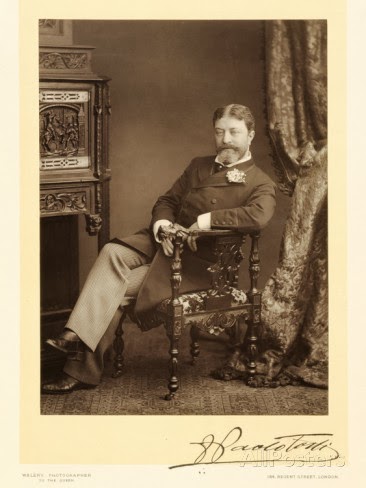
Visualizzazione post con etichetta Tosti. Mostra tutti i post

venerdì 1 aprile 2016

E' l'April! / 'Tis April!

APRILE 
Music by F. Paolo Tosti (1846-1916) 
Words by Rocco Pagliara (1857-1914)

Non senti tu ne l’aria
il profumo che spande Primavera?
Non senti tu ne l’anima
il suon de nova voce lusinghiera?
È l’April! È la stagion d’amore!
Deh! vieni, o mia gentil
su’ prati’n fiore!

Il piè trarrai fra mammole,
avrai su’l petto rose e cilestrine,
e le farfalle candide
t’aleggeranno intorno al nero crine.
È l’April! È la stagion d’amore!
Deh! vieni, o mia gentil
su’ prati’n fiore!
Do you not smell in the air
the perfume that Spring spreads?
Do you not hear in your soul
the sound of a new, enticing voice?
'Tis April! 'Tis the season of love!
Come, sweetheart,
to the meadow in bloom!

Your foot will tread among violets,
you will wear roses and sky-blue flowers,
and the white butterflies
will hover around your black mane.
'Tis April! 'Tis the season of love!
Come, sweetheart,
to the meadow in bloom!

venerdì 4 dicembre 2015

Tosti XVIII

Tristemente (tragicamente), i dì vengono che il nome di Francesco Paolo Tosti sarà sconosciuto – sconosciuto come la lampada a petrolio, come l’orologio che si carica con la chiave. Anche in Italia. Specialmente in Italia.

Ma quando io ero ventenne, molti cantanti conoscevano il nome di Tosti. E invariabilmente, la canzone preferita di ognuno era Ideale. Di ognuno. Nessuno ha mai nominato un’altra canzone.

Già in queste pagine ho postato l’interpretazione di Jussi Björling. Adesso offro quella di Beniamino Gigli.

Il video è rimarchevole sia per il canto di questo tenore di 61 anni (!) che per la miriade di foto fornite dal sig. Pierluca Trucchia (presidente dell’Associazione Beniamino Gigli di Recanati). Quest’interpretazione è anche più preziosa, considerando che Gigli non abbia mai inciso questa canzone in studio.
  Sadly (tragically), the days are coming when the name of Francesco Paolo Tosti will be unknown – unknown like kerosene lamps, like clocks that you wind up with a key.  Even in Italy.  Especially in Italy.

But when I was in my 20s, many singers knew the name of Tosti.  And invariably, everyone's favorite song was Ideale.  Everyone's.  No one ever named another song.

Already in these pages I have posted Jussi Bjoerling's interpretation of this song. Now I offer Beniamino Gigli's version.

The video is remarkable both for the singing of this 61-year-old (!) tenor, and for the myriad of photos provided by Mr. Pierluca Trucchia (president of the Beniamino Gigli Association of Recanati).  This performance is even more precious, taking into consideration the fact that Gigli never recorded this song in the studio.


IDEALE
parole di Carmelo Errico (1848-1892)
Io ti seguii com’iride di pace
Lungo le vie del cielo;
Io ti seguii come un’amica face
De la notte nel velo.
E ti senti ne la luce, ne l’aria,
Nel profumo dei fiori;
E fu piena la stanza solitaria di te,
dei tuoi splendori.
In te rapito,
al suon de la tua voce
Lungamente sognai,
E de la terra ogni affanno, ogni croce
In quel giorno scordai.
Torna, caro ideal,
torna un istante
A sorridermi ancora,
E a me risplender nel tuo sembiante
Una novell’aurora.
... una novell’aurora.
Torna, caro ideal, torna, torna!
   I followed you like a rainbow of peace
A long way across the sky;
I followed you like a friendly face
of the night under a veil.
And you feel it in the light, in the air,
In the scent of the flowers;
And the solitary room was full of you,
of your splendors.
Captivated by you,
by the sound of your voice
A long time I dreamed,
and all the worry of the earth, every cross
In that day is forgotten.
Return, beloved ideal,
Return for an instant.
Give me a smile again,
and to me the sparkle of your countenance
will be a new dawn.
... a new dawn.
Return, beloved ideal, return, return!

sabato 4 ottobre 2014

Tosti XVII


CHANSON DE L'ADIEU
Musica di Francesco Paolo Tosti (1846-1916)
Parole di Edmond Haraucourt (1856?-1941)
Interpreta da Michel Dens (1911-2000)


Partir, c'est mourir un peu,
C'est mourir à ce qu'on aime:
On laisse un peu de soi-même
En toute heure et dans tout lieu.

C'est toujours le deuil d'un vœu,
Le dernier vers d'un poème;
Partir, c'est mourir un peu,
C'est mourir à ce qu'on aime.

Et l'on part, et c'est un jeu,
Et jusqu'à l'adieu suprême
C'est son âme que l'on sème,
Que l'on sème en chaque adieu:
Partir, c'est mourir un peu.
   To part is to die a little,
To die to him (her) whom one loves:
One leaves a little bit of oneself
In every hour and in every place

It is always the mourning of a wish,
The last verse of a poem:
To part is to die a little,
To die to the person whom one loves.

And one leaves, and it's a game,
And until the final farewell
It's his (her) soul that is sown,
that is sown in each farewell:
To part is to die a little.
English translation: Leonardo Ciampa

venerdì 12 settembre 2014

Tosti XVI

Il poeta Domenico Milelli (che scrisse sotto il pseudonym "Conte di Lara") morì a Palermo nel 1905. L'anno seguente, Tosti compone questa bellissima romanza. La dedicò al suo amico e collega, il grande Enrico Caruso. Qua ascoltiamo un'interpretazione di un altro grande tenore, Carlo Bergonzi, che ci ha lasciato il 25 luglio.The poet Domenico Milelli (who wrote under the pseudonym "Conte di Lara") died in Palermo in 1905.  The following year, Tosti composed this beautiful romanza. He dedicated it to his friend and colleague, Enrico Caruso.  Here we listen to a performance by another great tenor, Carlo Bergonzi, who left us on July 25th.

IO TI SENTO!
Musica di Francesco Paolo Tosti (1846-1916)
Parole di Domenico Milelli (1841-1905)
Interpretata da Carlo Bergonzi (1924-2014)

Io ti sento nel sole che si leva sul mare,
Tu, sol più bello e fulgido
Del triste viver mio su l’onde amare.

Io ti sento nel fresco olezzo delle rose,
Tu, fior più molle e tenero
Che in un’ora di fede amor compose.

Io ti sento nel lume che dalle stelle piove,
Tu, stella ancor più limpida,
Più raggiante di Venere e di Giove.

O sole, o fiore, o stella viva, mi arridi e fa’
Che sia la vita un’estasi, e duri lunga nella eternità.
I feel you in the sun that rises over the sea,
you, the most beautiful, effulgent sun
in my sad life on the bitter ocean waves.

I feel you in the fresh fragrance of the roses,
you, the softest and most tender flower
whom love composed in a moment of faith.

I feel you in the light which rains from the stars,
you, the brightest star,
brighter even than Venus and Jupiter.

O sun, o flower, o living star, you smile on me
and make life an ecstasy that lasts for eternity.
English translation: Leonardo Ciampa

lunedì 11 agosto 2014

Tosti XV

Pubblicata nel 1874, Mattinata fu una delle prime canzoni di successo tostiane. Qui l'interprete è il leggendario soprano austrialiano, Dame Nellie Melba (1861-1931). La registrazione non è senza importanza storica. Fu incisa nel 1904 a Londra, ove Tosti stesso viveva e lavorava.

Published in 1874, Mattinata was one of Tosti's first hit songs.  Here the performer is the legendary Australian soprano, Dame Nellie Melba (1861-1931). The recording is not without historic significance.  It was recorded in 1904 in London, where Tosti himself was living and working.


MATTINATA
(Morning Song)

Musica di F. Paolo Tosti (1846-1916)
Parole di Enrico Panzacchi (1840-1904)
Interpretata da Dame Nellie Melba (1861-1931)


Mary, tremando
L'ultima stella
Nel vasto azzurro;
Tra poco vanirà.
E presso a sorgere
L'alba novella,
Con un susurro
L'aura l'annunzia già.

Io non ti dico, "Vieni al verone";
Mary, in quest'ore
Più dolce è riposar;
Mormoro basso la mia canzone,
Che il tuo sopore
Non giunga ad abbreviar...

Solo domando, solo desio
Che il canto mio,
Lambendo il tuo guancial,
Versi, o fanciulla,
Nella tua mente,
L'onda lucente
D'un sogno celestial!

Mary, tremando
L'ultima stella
Nel vasto azzuro
Tra poco vanirà...
  Mary, the last star
is trembling
in the vast azure;
Very soon it will vanish.
The new dawn
is about to rise.
With a whisper
the breeze already announces it.

I don't say to you. "Come to the balcony";
Mary, at this early hour
it is better to sleep;
My song murmurs low,
so that it will not
abbreviate your slumber...

I only ask, I only desire,
that my song,
brushing again your pillow,
will turn in your mind,
dear girl,
the shining wave
of a heavenly dream!

Mary, the last star
is trembling
in the vast azure.
Very soon it will vanish.
English translation: Leonardo Ciampa


sabato 9 agosto 2014

Tosti XIV

Non c'è nessun dubbio alcuno che Rosa Ponselle (nata Rosa Ponzillo) (1897-1981) fosse il più grande soprano italoamericano della storia. Infatti, fra i soprani drammatici, Ponselle era il soprano di riferimento per musicisti del calibro di Leonard Bernstein, Maria Callas, Beverly Sills, e molti altri.

Una parola sul paroliere, Riccardo Mazzola. All'età di seidici pubblicò un libro di poesie che piaceva tanto a Tosti. Tosti musicò ben 14 poesie di Mazzola, l'ultima della quale quando il poeta ancora aveva soltanto 21 anni. Nove anni dopo, Mazzola morì all'età di 30.
  There is no doubt whatsoever that Rosa Ponselle (born Rosa Ponzillo) (1897-1981) was the greatest Italian-American soprano in history.  In fact, among dramatic soprani, Ponselle was the soprano of reference for musicians of the calibre of Leonard Bernstein, Maria Callas, Beverly Sills, and many others.

A word about the lyricist, Riccardo Mazzola.  At the age of sixteen, he published a book of poems that Tosti liked very much. Tosti set no fewer than 14 of Mazzola's poems, the last of which when the poet was still only 21 years old.  Nine years later, Mazzola died at age 30.


LUNA D'ESTATE
(Summer Moon)
Musica di F. Paolo Tosti (1846-1916)
Parole di Riccardo Mazzola (1892-1922)
Interpretata da Rosa Ponselle (1897-1981)


Luna d'estate, ho un sogno nel mio cuore
E vo' cantando tutta notte al mare.
Mi son fermato a una finestra in fiore
Perchè l'anima mia febbre ha d'amore.

Mi son fermato a una finestra in fiore
Ove son due pupille affatturate.
E chi le guarda soffre per amore
E sogna per desìo, luna d'estate!

Luna d'estate, amore è come il mare
Ed il mio cuore è un'onda senza posa.
Ma solamente lo potran fermare
Le pupille e il labbro suo di rosa.

E vo' cantando tutta notte al mare
Per quelle due pupille addormentate.
Ho il pianto agli occhi e la speranza in cuore
E splendo come te, luna d'estate!
   Summer moon, I have a dream in my heart
and all night long I go singing along the sea.
I stopped at a window filled with flowers,
because my soul caught a fever of love.

I stopped at a window filled with flowers
where there are two bewitching pupils.
And whoever looks at them suffers with love
and has dreams filled with desire.  Summer moon!

Summer moon, love is like the sea
and my heart is like a wave that never rests.
But the only thing that can stop it
are those pupils and those rose-colored lips.

And all night long I go singing along the sea,
singing about those two sleepy pupils.
I have tears in my eyes and hope in my heart,
and I shine like you, summer moon!
English translation: Leonardo Ciampa

mercoledì 30 luglio 2014

Tosti XIII

Una delle canzoni migliori e più famose di Tosti, interpretata dal meraviglioso soprano casertana, Rosa Feola. Lei è ancora ventenne, ma è un artista di gran maturità che non ha paura di utilizzare l’ampia tavolozza di colori utilizzata dai cantanti nei tempi antichi.

One of Tosti's best and most famous songs, sung by the marvelous soprano from Caserta, Rosa Feola. She is still in her 20s, but she is an artist of great maturity who isn't afraid to use the wide palette of colors used by singers in the olden days.


NON T’AMO PIÙ
(I don't love you anymore)
musica di F. Paolo Tosti (1846-1916)
parole di Carmelo Errico (1848-1892)
cantata da Rosa Feola

Ricordi ancora il dì che c’incontrammo,
Le tue promesse, le ricordi ancor...?
Folle d’amore io ti seguii ... ci amammo,
E accanto a te sognai, folle d’amor.

Sognai felice, di carezze e baci
Una catena dileguante in ciel;
Ma le parole tue... furon mendaci...
Perché l’anima tua è fatta di gel.

Te ne ricordi ancor?

Or la mia fede, il desiderio immenso
Il mio sogno d’amor ... non sei più tu:
I tuoi baci non cerco, a te non penso...
Sogno un altro ideal;
Non t’amo più, non t’amo più.

Nei cari giorni che passammo insieme
Io cosparsi di fiori il tuo sentier.
Tu fosti del mio cor l’unica speme
Tu della mente l’unico pensier
Tu m’hai visto pregare, impallidire,
Piangere tu m’hai visto innanzi a te.
Io sol per appagare un tuo desire
Avrei dato il mio sangue a la mia fè.

Te ne ricordi ancor?

Or la mia fede, il desiderio immenso
Il mio sogno d’amor...non sei più tu:
I tuoi baci non cerco, a te non penso...
Sogno un altro ideal;
Non t’amo più, non t’amo più.
   Do you still remember the day that we met,
your promises, do you still remember them?
Crazy with love I followed you ... we loved each other,
and next to you I dreamed, crazy with love.

I dreamed happily, a chain of caresses and kisses
melting into the sky;
but your words were lies,
because your soul is made of ice!

Do you still remember it?

Now, my faith, my immense desire
my dream of love ... it is no longer you.
Your kisses I do not seek; about you I do not think ...
I dream about another ideal.
I don't love you anymore.  I don't love you anymore.

In the cherished days that we spent together
I scattered flowers along your pathway.
You were the only hope of my heart
and the only thought in my mind.
You saw me pray, grow pale,
you saw me cry in front of you.
To satisfy any desire of yours
I would have given my blood and my faith.

Do you still remember it?

Now, my faith, my immense desire
my dream of love ... it is no longer you.
Your kisses I do not seek; about you I do not think ...
I dream about another ideal.
I don't love you anymore.  I don't love you anymore.
English translation: Leonardo Ciampa

Tosti XII

Una delle più grandi, e più semplici, melodie di Francesco Paolo Tosti, con parole di un dei miei poeti preferiti, il gran scrittore/studioso/artista napoletano Rocco Pagliara.

One of the greatest, and simplest, melodies by Francesco Paolo Tosti, with words by one of my favorite poets, the great Neapolitan writer/scholar/artist Rocco Pagliara.

 
MALÌA 
(Magic spell)
musica di F. Paolo Tosti (1846-1916)
parole di Rocco E. Pagliara (1856-1914)
cantata da Ernesto Palacio (*1946)


Cosa c’era ne ’l fior che m’hai dato?
forse un filtro, un arcano poter?
Nel toccarlo, il mio core ha tremato,
m’ha l’olezzo turbato il pensier.
Ne le vaghe movenze, che ci hai?
Un incanto vien forse con te?
Freme l’aria per dove tu vai,
spunta un fiore ove passa ’l tuo piè.

Io non chiedo qual plaga beata
fino adesso soggiorno ti fu:
non ti chiedo se Ninfa, se Fata,
se una bionda parvenza sei tu!
Ma che c’è nel tuo sguardo fatale?
Cosa ci hai nel tuo magico dir?
Se mi guardi, un’ebbrezza m’assale,
Se mi parli, mi sento morir!
   What was there in that flower that you gave me?
Perhaps a philter (love potion), a mysterious power?
When I touched it, my heart trembled,
its aroma disturbed my thoughts.
What is there in your delicate movements?
Maybe you have a magic charm?
Wherever you go, the air trembles;
wherever your foot touches the ground, a flower blooms

I won't ask in which blessed region
you have lived until now.
I won't ask if you are a nymph, a fairy
or a blonde apparition!
But I will ask: what is there in your fateful glance?
What is there in your magical words?
When you look at me, intoxication assails me,
when you speak to me, I feel as though I will die!
English translation: Leonardo Ciampa

venerdì 25 luglio 2014

Tosti XI

In questa bella romanza, cantata dal gran Beniamino Gigli, il cantante soffre profondamente dall'incapacità di parlare alla donna che segretamente ama.  In this beautiful romanza, sung by the great Beniamino Gigli, the singer suffers profoundly from his inability to speak to the woman whom he secretly loves.


SEGRETO
Musica di F. Paolo Tosti (1846-1916)
Parole di Lorenzo Stecchetti (pseud. di Olindo Guerrini) (1845-1916)
Cantata da Beniamino Gigli (1890-1957)

Ho una ferita in cor che gitta sangue,
Che a poco a poco mi farà morir.
Trafitta dal dolor l'anima langue;
Amor e il segreto mio non posso dir.

Bella come la luce a me d'accanto
Il segreto amor mio veggo talor.
Lei passa e sento in me come uno schianto
Un impeto di gioia e di dolor.

Dal primo giorno non ho mai sperato,
Il segreto fatale ho chiuso in me,
Ed ella non saprà d'esser amata
Mi vedrà morto e non saprà perché.

Seppur la veggo aprir vorrei le braccia,
Dirle che l'amo e che il mio cor le do.
Vorrei fissarla arditamente in faccia,
Ma il cor mi trema e gli occhi alzar non so.
I have a wound in my heart that is throwing blood
little by little it will kill me.
Pierced by pain, my soul languishes;
Love and my secret I cannot say.

Beautiful like the light, next to me,
my secret love I see sometimes.
She passes by, and like a crash I feel in me
a surge of joy and of pain.

From the first day I never held hope;
the fatal secret I have locked inside me,
and she will not know that she is loved.
She will see me dead and won't know why.

If I were to see her, I would like to open my arms,
to tell her that I love her and that I give her my heart.
I would like to ardently look her right in the eye,
but my heart trembles and I can't lift my eyes.
Translation: Leonardo Ciampa

domenica 20 luglio 2014

Tosti X

Foto: forgottenoperasingers.blogspot.com
Giuseppe De Luca (1876-1950) era il miglior baritono della sua generazione, la generazione dopo Battistini. Creò due importanti ruoli pucciniani, Sharpless e Gianni Schicchi. Ma più importantamente, portava avanti la tecnica belcantista, permettendogli di cantare il repertorio intero, sia Donizetti sia Wagner.

Di questa romanza cosa diciamo? La musica è diverso da Beethoven; la poesia è diversa da Shakespeare; ma questa canzone non è inferiore a Beethoven e Shakespeare – solo diversa.
  Giuseppe De Luca (1876-1950) was the greatest baritone of his generation, the generation after Battistini.  He created two important Puccini roles, Sharpless and Gianni Schicchi.  But more importantly, he carried forward the Belcanto technique, enabling him to sing the whole repertoire, be it Donizetti or Wagner.

What do we say about this song?  The music is different from Beethoven; the poem is different from Shakespeare; but this song isn't inferior to Beethoven and Shakespeare – only different.


VOI DORMITE, SIGNORA
Musica di F. Paolo Tosti (1846-1916)
Parole di Rocco E Pagliara (1855-1914)
Cantata da Giuseppe De Luca (1876-1950)


Voi dormite, signora, e, intorno, i rami
si chinano a comporvi ‘l padiglione,
e mormoranvi sommesso, una canzone
che la schiera de’ sogni a voi richiami.

De le mobili arcate tra le fronde,
piovon raggi da li astri a mille a mille,
e ‘l nimbo de le vivide scintille
cresce l’incanto de le trecce bionde!

E dormite, signora, e, intorno, i fiori
spandon la ninna-nanna de li olezzi,
sale l’effluvio, e par che vi carezzi,
a profumarvi i placidi sopori!

Sale, del pari, ‘l desiderio mio,
co’ le note d’amore, avido e forte,
invidiando la lor bella sorte
a’ rami, a’ fior, de li astri ‘l tremolío;

e con l’ale di foco vi percote,
a tentarvi le labbra e ‘l collo o bianco;
ma, su l’erbe adagiato, vostro fianco
come marmo di Paro, ahi, non si scote!

E dormite, e dormite, e inutilmente
strappo le corde a la chitarra mia;
oh, destatevi alfine, e ‘l bacio sia,
come i sospiri miei, lungo ed ardente!
  Sleep, dear woman; and around you, the branches
stoop to create for you a pavilion,
and whisper softly to you a song
that will recall to you a multitude of dreams.

The moving arches among the branches,
they rain down star beams by the thousands,
and the halo of the bright sparkles
increases the charm of your blond braids!

So sleep, dear woman; and around you, the flowers
spread the lullaby of their scents,
the odor rises, and seems to caress you,
to perfume your placid drowsiness!

Rise, also, my desire,
with love notes, avid and strong,
envying the good fortune
of the branches, flowers, and the flicker of the stars;

and with the wings of fire they pummel you,
to tempt your lips and your white neck;
but, lying on the grass, your side,
like Parian marble, oh, it doesn't move!

So sleep, sleep, while I unnecessarily
pluck the strings of my guitar;
oh, wake up soon, and the kiss,
like my sighs, will be long and ardent!
English translation: Leonardo Ciampa

Tosti IX

MATTIA BATTISTINI. Si deve scrivere il suo nome con le lettere maiuscole! Si chiamava “La Gloria d’Italia,” e lo era.  Era ammirato unanimamente da i più grandi musicisti dell’epoca. Qua canta una romanza a un testo nientemeno che dal gran Victor Hugo.  MATTIA BATTISTINI. His name needs to be written with capital letters! He was called “La Gloria d’’Italia,” and he was. He was admired unanimously by the greatest musicians of the era. Here he sings a song to a text by none other than Victor Hugo.

AMOUR! AMOUR!
Musica di F. Paolo Tosti (1846-1916)
Parole di Victor Hugo (1802-1885)
Cantata da Mattia Battistini (1856-1928)


Mon bras pressait ta taille frêle
Et souple comme le roseau;
Ton sein palpitait comme l’aile
D’un jeune oiseau!

Longtemps muets, nous contemplâmes
Le ciel où s’éteignait le jour.
Que se passait-il dans nos âmes?
Amour! Amour!

Comme un ange qui se dévoile,
Tu me regardais, dans ma nuit,
Avec ton beau regard d’étoile,
Qui m’éblouit.

My arm squeezed your figure, fragile
and flexible like a reed;
Your bosom throbbed like the wing
of a young bird.

Long silent, we gazed
at the sky where the day was dying.
What was happening in our souls?
Love! Love!

As an angel reveals,
you looked at me in my night
with your beautiful star gaze
that dazzles me.
English translation by Leonardo Ciampa

Il mio braccio strinse la tua taglia, fragile
e flessibile come un giunco​​;
Il tuo seno pulsava come l’ala
Di un giovane uccello.

Silenziosi a lungo, guardammo
Il cielo dove il giorno stava morendo.
Cosa stava succedendo nelle nostre anime?
Amore! Amore!

Come un angelo rivela,
Mi guardasti nella mia notte
Con il tuo bellissimo sguardo di stella
Che mi abbaglia.
Traduzione italiana di Leonardo Ciampa

Tosti VIII

È interessante che la canzone Addio! apparì prima in lingua inglese, sotto il titolo Goodbye! All'epoca Goodbye! era una delle canzoni più famose del mondo anglofonico. Qua Addio! è interpretata da uno dei miei tenori preferiti, l'interessante ed emozionante Franco Bonisolli (1938-2003).

It's interesting that the song Addio! appeared first in English, under the title Goodbye! At the time Goodbye! was one of the most famous songs in the English-speaking world. Here Addio! is sung by one of my favorite tenors, the interesting and exciting Franco Bonisolli (1938-2003).

E adesso una bellissima registrazione della versione inglese da un dei più grandi tenori della storia, John McCormack.

And now, a gorgeous recording of the English version by the very greatest tenors in history, John McCormack.

Tosti VII

Non c'è nessun dubbio alcuno che l'interpretazione carusiana de L'alba separa rimarrà insuperata per sempre. Simultaneamente lui è più potente degli altri e anche più lirico. Il testo di questa canzone è di uno dei più importanti scrittori italiani, Gabriele D'Annunzio.

There is no doubt whatsoever that Caruso's recording of L'alba separa will always remain unsurpassed. Simultaneously he is more powerful than the others and also more lyrical.  The text of this song is by one of the most important Italian writers, Gabriele D'Annunzio.

L'ALBA SEPARA DALLA LUCE L'OMBRA
Musica di F. Paolo Tosti (1846-1916)
Parole di Gabriele D'Annnzio (1863-1938)


L'alba sepàra dalla luce l'ombra,
E la mia voluttà dal mio desire.
O dolce stelle, è l'ora di morire.
Un più divino amor dal ciel vi sgombra.

Pupille ardenti, O voi senza ritorno
Stelle tristi, spegnetevi incorrotte!
Morir debbo. Veder non voglio il giorno,
Per amor del mio sogno e della notte.

Chiudimi, O Notte, nel tuo sen materno,
Mentre la terra pallida s'irrora.
Ma che dal sangue mio nasca l'aurora
E dal sogno mio breve il sole eterno!
The dawn separates the shade from the light,
And my sensual pleasure from my desire,
O sweet stars, the hour of death is now at hand:
A love more divine sweeps you from the skies.

Ardent pupils, O you who'll never return,
sad stars, extinguish yourself incorrupted!
I must die. I do not want to see the day,
For love of my own dream and of the night.

Envelop me, O Night, in your maternal breast,
While the pale earth bedews itself;
But may the dawn be born from my blood
And from my brief dream the eternal sun!
English translation: L.C.

Fra le numerose incisioni di L'alba separa, do una menzione d'onore al disco del 1961 del tenore copparese, Daniele Barione (*1930). (Grazie all'amico Charlie Handelman per introdurmi a questa squisita registrazione.)

Among the numerous recordings of L'alba separa, I give an honorable mention to the 1961 disk by the fine tenor from Copparo (Ferrara), Daniele Barioni (born 1930). (Thanks to my friend Charlie Handelman for introducing me to this exquisite recording.)

Tosti VI

La bella romanza Donna, vorrei morir. Interpretata da un dei più meravigliosi cantanti del novecento, 
Leo Nucci.

The beautiful song Donna, vorrei morir. Sung by one of the most marvelous singers of the 20th century, 
Leo Nucci.


DONNA, VORREI MORIR
musica di F. Paolo Tosti (1846-1916)
parole di Olindo Guerrini (1845-1916)

Donna, vorrei morir, ma confortato
Dall'onesto tuo amor;
Sentirmi almeno una sol volta amato
Senza averne rossor.
Vorrei poterti dar quel po' che resta
Della mia gioventù;
Sovra l'omero tuo piegar la testa
E non destarmi più.
Woman, I would like to die, but am comforted
by your honest love;
to feel loved at least one time
without feeling ashamed of it.
I would like to be able to give you that little bit which remains
from my youth;
on your forearm bend your head
and never wake me again.
(English translation: Leonardo Ciampa)

sabato 5 luglio 2014

Tosti V

LA SERENATA
Musica di Francesco Paolo Tosti (1846-1916)
Parole di Giovanni Alfredo Cesareo (1860–1937)
Cantata da Beniamino Gigli (1890-1957)

Vola, o serenata:
La mia diletta è sola,
E, con la bella testa abbandonata,
Posa tra le lenzuola:
O serenata, vola. O serenata, vola.
Splende pura la luna,
L’ale il silenzio stende,
E dietro i veli dell’alcova
Bruna la lampada s’accende.
Pura la luna splende.
Vola, o serenata,
Vola, o serenata, vola.
Ah! là. Ah! là.

Vola, o serenata:
La mia diletta è sola,
Ma sorridendo ancor mezzo assonnata;
Torna fra le lenzuola:
O serenata, vola. O serenata, vola.
L’onda sogna su ’l lido,
E ’l vento su la fronda;
E a’ baci miei ricusa ancora un nido
La mia signora bionda.
Sogna su ’l lido l’onda.
Vola, o serenata,
Vola, o serenata, vola.
Ah! là. Ah! là.
Fly, o serenade:
my beloved is alone,
and with her beautiful, abandoned head,
lie between her covers:
O serenade, fly.  O serenade, fly.
The moon shines brightly,
silence extends its wings,
and behind the veils of the alcove
the brown lamp is lit.
The moon shines brightly.
Fly, o serenade,
Fly, o serenade, fly.
Ah! là. Ah! là.

Fly, my serenade:
my beloved is alone,
but still smiling, half asleep;
return to her covers:
O serenade, fly.  O serenade, fly.
The waves are dreaming on the shore,
and the wind on the branches;
and my blond lady still refuses
a nest for my kisses.
The waves are dreaming on the shore,
Fly, o serenade,
Fly, o serenade, fly.
Ah! là. Ah! là.
(English translation: Leonardo Ciampa)

domenica 29 giugno 2014

Tosti IV

Luigi Alva ... nato in Perù nel 1927 ... un dei PIÙ GRANDI tenori lirici mai a camminare sulla faccia della terra. Eccolo qua nella squisita "Seconda Mattinata" di Tosti.Luigi Alva ... born in Perù in 1927 ... one of THE GREATEST lyric tenors ever to walk the face of the earth.  Here he is in the exquisite "Seconda Mattinata" of Tosti.
SECONDA MATTINATA
Musica di Francesco Paolo Tosti (1846-1916)
Parole di Francesco Cimmino (1862-1938)
Cantata da Luigi Alva (*1927)
Su la villa solitaria
  Splende il sole:
  V'è nell'aria
Un profumo di viole;
Fra le siepi, nelle aiuole,
Degli augelli è gaio il canto:
  Tu soltanto,
  Tu soltanto
Non ti dèsti al novo sole.
  Non il sole, non gli augelli
  L'alba allietano così:
  Se non apri gli occhi belli,
  Non sorride il novo dì.

Quali immagini sì care
  T'han rapita,
  Che vagare
Ti fan lungi da la vita?
Qual parvenza più gradita
Ride in sogno a te d'accanto?
  Qual incanto,
  Qual incanto
Al mio sguardo t'ha rapita?
  Pur, se un tenero desio
  Per me chiudi in fondo al cor,
  Se tu sogni l'amor mio,
  Dormi, o bella, dormi ancor!
On the lonely villa
  the sun shines;
  There is in the air
A fragrance of violets;
Among the hedges, in the flower beds,
Happy is the song of the birds;
  Only you,
  Only you,
Don't wake up at the new sun.
  Not the sun, not the birds,
  They cheer up the dawn in that way.
  If you don't open your beautiful eyes,
  The new day will not smile.

What are the dear pictures
  that have carried you away,
  and made you
wander far from life?
What is the very gratifying image
that is laughing in your dream next to you?
  What picture,
  What picture
Has carried you to my glance?
  By all means, if a tender desire
  for me you are enclosing in the bottom of your heart,
  if you are dreaming about my love,
  sleep, beautiful one, keep sleeping!
   (English translation: Leonardo Ciampa)

sabato 21 giugno 2014

Tosti III


L'ULTIMA CANZONE
Musica di Francesco Paolo Tosti
Parole di Francesco Cimmino
Cantata dal grandissimo Beniamino Gigli

M'han detto che domani
Nina vi fate sposa,
Ed io vi canto ancor la serenata.
Là nei deserti piani
Là, ne la valle ombrosa,
Oh quante volte a voi l'ho ricantata!

Foglia di rosa
O fiore d'amaranto
Se ti fai sposa
Io ti sto sempre accanto.

Domani avrete intorno
Feste, sorrisi e fiori,
Né penserete ai nostri vecchi amori.
Ma sempre notte e giorno,
Piena di passione,
Verrà gemendo a voi la mia canzone.

Foglia di menta
O fiore di granato,
Nina, rammenta
I baci che t'ho dato!
   They told me that tomorrow
Nina, you will be a bride.
and I still sing my serenade to you!
There, up on the deserted plateaus,
there, down in the shady valleys,
Oh, how often I have re-sung it to you!

O rose petal,
O amaranth flower,
even though you're getting married,
I will always be next to you.

Tomorrow you'll have around you
parties, smiles and flowers,
and you will not be thinking about our old love.
But always, day and night,
filled with passion,
my song will come to you, moaning.

O mint leaf,
O pomegranate flower,
Nina, remember
the kisses that I gave you!
(English translation: L.C.)

venerdì 13 giugno 2014

Tosti II

Una delle canzoni più amate di Tosti, in un’incisione fenomenale, dal vivo, di Jussi Björling, meno di due mesi prima della morte del tenore svedese. Immortale la canzone, immortale l’interpretazione.  One of the most beloved songs of Tosti, in a phenomenal live recording by Jussi Björling, less than two months before the Swedish tenor’s death. Immortal song, immortal performance.


IDEALE
parole di Carmelo Errico (1848-1892)
Io ti seguii come’iride di pace
Lungo le vie del cielo;
Io ti seguii come un’amica face
De la notte nel velo.
E ti senti ne la luce, ne l’aria,
Nel profumo dei fiori;
E fu piena la stanza solitaria di te,
dei tuoi splendori.
In te rapito,
al suon de la tua voce
Lungamente sognai,
E de la terra ogni affanno, ogni croce
In quel giorno scordai.
Torna, caro ideal,
torna un istante
A sorridermi ancora,
E a me risplender nel tuo sembiante
Una novell’aurora.
... una novell’aurora.
Torna, caro ideal, torna, torna!
   I followed you like a rainbow of peace
A long way across the sky;
I followed you like a friendly face
of the night under a veil.
And you feel it in the light, in the air,
In the scent of the flowers;
And the solitary room was full of you,
of your splendors.
Captivated by you,
by the sound of your voice
A long time I dreamed,
and all the worry of the earth, every cross
In that day is forgotten.
Return, beloved ideal,
Return for an instant.
Give me a smile again,
and to me the sparkle of your countenance
will be a new dawn.
... a new dawn.
Return, beloved ideal, return, return!

lunedì 9 giugno 2014

TOSTI

Ritratto di Francesco Paolo Tosti eseguito ad olio su tela da Théobald Chartran, Londra 1898
Portrait of Francesco Paolo Tosti (oil on canvas) by Théobald Chartran (London, 1898).
(Istituto nazionale tostiano, Sezione Museo musicale d'Abruzzo, Fondo Francesco Paolo Tosti)
Il 2 dicembre 2016 marcherà il centenario della morte del più grande melodista italiano della storia: FRANCESCO PAOLO TOSTI. Non posso aspettare fino ad allora per iniziare il mio tributo al maestro ortonese!  (Ortona si trova nella provincia di Chieti, in Abruzzo.)  December 2, 2016, will mark the centenary of the death of the greatest Italian melodist in history: FRANCESCO PAOLO TOSTI. I cannot wait till then to begin my tribute to the maestro from Ortona! (Ortona is in the province of Chieti, in Abruzzi.)

’A VUCCHELLA
(nel dialetto napoletano)
parole di Salvatore Di Giacomo

domenica 9 febbraio 2014

L'alba separa dalla luce l'ombra

allposters.com
La canzone "L'alba separa dalla luce l'ombra" — parole dell'immortale Gabriele D'Annunzio, musica dell'ugualmente immortale Francesco Paolo Tosti — è stata cantata da ogni grande tenore da Caruso e Gigli ai tenori odierni. Quest'incisione dal 1961, del tenore copparese, Daniele Barioni, è una delle più belle. (Grazie all'amico Charlie Handelman per introdurmi a questa squisita registrazione.)The song "L'alba separa dalla luce l'ombra" — words by the immortal Gabriele D'Annunzio, music by the equally immortal Francesco Paolo Tosti — has been sung by every great tenor from Caruso and Gigli to the tenors of today.  This 1961 recording by Daniele Barioni, the fine tenor from Copparo (Ferrara), is one of the most beautiful. (Thanks to my friend Charlie Handelman for introducing me to this exquisite recording.)

L'ALBA SEPARA DALLA LUCE L'OMBRA
Musica di F. Paolo Tosti (1846-1916)
Parole di Gabriele D'Annnzio (1863-1938)


L'alba sepàra dalla luce l'ombra,
E la mia voluttà dal mio desire.
O dolce stelle, è l'ora di morire.
Un più divino amor dal ciel vi sgombra.

Pupille ardenti, O voi senza ritorno
Stelle tristi, spegnetevi incorrotte!
Morir debbo. Veder non voglio il giorno,
Per amor del mio sogno e della notte.

Chiudimi, O Notte, nel tuo sen materno,
Mentre la terra pallida s'irrora.
Ma che dal sangue mio nasca l'aurora
E dal sogno mio breve il sole eterno!
The dawn separates the shade from the light,
And my sensual pleasure from my desire,
O sweet stars, the hour of death is now at hand:
A love more divine sweeps you from the skies.

Ardent pupils, O you who'll never return,
sad stars, extinguish yourself incorrupted!
I must die. I do not want to see the day,
For love of my own dream and of the night.

Envelop me, O Night, in your maternal breast,
While the pale earth bedews itself;
But may the dawn be born from my blood
And from my brief dream the eternal sun!
English translation: L.C.