Visualizzazione post con etichetta Recipes. Mostra tutti i post

giovedì 9 febbraio 2017

Bombolotti "Arrivederci, Roma"

Foto: romeinformation.it
In un momento di nostalgia, ho composto questa ricetta. Non è necessariamente una ricetta “tradizionale” romana, ma piuttosto, il mio tributo alla cucina romana – oppure, la mia nostalgia per la cucina romana. Mi sono ispirato da un piatto sul menù della mia trattoria preferita in tutta Roma, la Trattoria Grotta Amatriciana (http://www.grottamatriciana.it), un locale semi-nascosto su via Principe Amedeo (non lontano da Termini). Non faccio alcuna pretesa che questa sia una riproduzione del cibo di questo ristorante divino (divino perché divinamente autentico). Non è questa. È semplicemente un omaggio a quella grande trattoria, e alla grande città di Roma.

Ingredienti
500 gr bombolotti (mezzi rigatoni)
500 gr broccoli, fiori e gambi (I gambi dovete tagliare a piccoli cubetti.)
250 gr (c. 3) salsicce dolci, a pezzettini (Io le taglio con i forbici, non col coltello.)
100 gr finocchio (solo il grumolo bianco, senza i gambi verdi), a cubetti
75 gr cipolla, a quadratini
1 spicchio d’aglio, dimezzato (Si può togliere dopo.)
400 gr (mezza scatola) pelati San Marzano, tagliati
250 ml Frascati DOC (oppure un altro vino bianco romano)
250 ml acqua
250 ml panna grassa
EVO
qualche foglia fresca di basilico
sale marino, macinato al momento
pepe nero, macinato al momento
noce moscata, macinata al momento
pecorino romano, grattugiato al momento

Preparazione
In una padella oppure una casseruola a ghisa, riscaldate l’evo. A fiamma alta, fate saltare le salsicce, sale e pepe per soli 1 o 2 minuti. Poi aggiungete il resto degli ortaggi tranne i pomodori. (La carne deve prendere il sapore dagli ortaggi aromatici.)  Fate saltare per 5 minuti, fino a quando le salsicce si rosolano e gli ortaggi cambiano colore. Aggiungete il vino bianco. Appena bollisce aggiungete l’acqua. Appena bollisce aggiungete i pomodori e il basilico. Abbassate la fiamma a media-bassa e fate cuocere per 15 minuti. Abbassate la fiamma all’impostazione più bassa. In un robot da cucina fate passare una metà del sugo, inclusa la carne. Rimettere alla padella. Aggiungete la panna e la noce moscata. Mescolate.

Nel frattempo, fate cuocere i bombolotti in abbondante acqua salata. Scolate, aggiungete al sugo, e aggiungete il pecorino romano alla tavola.

Servite con Castelli Romani Rosso DOC, oppure un altro vino rosso romano.
  In a moment of nostalgia, I composed this recipe. It is not necessarily a "traditional Roman" recipe, but rather, my tribute to the Roman cuisine – or perhaps, my nostalgia for the Roman cuisine. I drew inspiration from a dish which was served at my favorite trattoria in all of Rome, Trattoria Grotta Amatriciana (http://www.grottamatriciana.it), a hole-in-the-wall on Via Principe Amedeo (not far from the main train station). I make no claim that this is a reproduction of the food at this divine restaurant (divine because divinely authentic). It is not.  It is simply an homage to that great trattoria, and to the great city of Rome.

Ingredients
500 gr bombolotti (a.k.a. mezzi rigatoni, half-rigatoni)
500 gr broccoli, florets and stalks (The stalks have to be chopped into little cubes.)
250 gr (c. 3) Italian sweet sausages, cut in small pieces (I cut them with scissors, not with a knife.)
100 gr fennel (only the white bulb, not the green stalks), cut in little cubes
75 gr onion, cut in little squares
1 clove garlic, halved (You can remove it afterwards.)
400 gr (half a can) peeled San Marzano tomatoes, chopped
250 ml Frascati DOC (or another Roman white wine)
250 ml water
250 ml heavy cream
extra-virgin olive oil
a few fresh basil leaves
sea salt, freshly ground
black pepper, freshly ground
nutmeg, freshly ground
pecorino romano, freshly grated

Preparation
In a skillet or a Dutch oven, heat the EVOO. On high heat, sauté the sausages, salt, and pepper for only 1 or 2 minutes. Then add the rest of the vegetables except the tomatoes. (The meat must take the flavor from the aromatic vegetables.) Sauté for 5 minutes, until the sausages are brown and the vegetables change color. Add the white wine. As soon as it boils, add the water. As soon as that boils, add the tomatoes and basil. Lower the flame to medium-low and cook for 15 minutes. Turn the heat down to the lowest setting (warm). In a food processor, purée half of the sauce, including the meat. Return it to the pan. Add the cream and nutmeg. Stir.

Meanwhile, boil the pasta in abundant salted water. Strain, add the pasta to the sauce, and add the pecorino romano at the table.

Serve with Castelli Romani Rosso DOC, or another Roman red wine.
L’autore alla sua trattoria preferita di Roma, la Grotta Amatriciana (http://www.grottamatriciana.it). Il più buono è il ristorante, la più difficile è la decisione!
The author at his favorite trattoria in Rome, the Grotta Amatriciana http://www.grottamatriciana.it). The better the restaurant, the more difficult the decision!

sabato 21 novembre 2015

Capelli d’angelo Federico / Angel hair Federico

Mio figlio Federico (9 anni) mi ha detto, “Daddy, ho inventato una ricetta.  Ho scritto tutti gli ingredienti su questo foglio di carta.  Puoi preparare questo piatto per me?”

Ingredienti
16 oz (454 gr) capelli d’angelo
100 gr bacon, tagliato a quadratini
½ di una piccola cipolla, tritata
1 spicchio d’aglio, tritato
1 peperoncino habanero, tritato
16 oz (454 gr) tacchino macinato, senza ormoni
800 gr pomodori pelati San Marzano, frullati
(Io metto il frullatore ad immersione direttamente nella scatola.)
8 fl oz (236 ml) panna da montare
asiago, appena grattugiato
pecorino, appena grattugiato
sale marino, appena macinato
pepe nero, appena macinato
noce moscata, appena macinata
prezzemolo fresco
basilico fresco

Preparazione
In una padella a secco (nessun olio è necessario), fate soffriggere il bacon a fuoco medio per qualche minuto. Aggiungete la cipolla, l’aglio, l’habanero, il tacchino, e il sale e pepe nero. Fate saltare fino a quando il tacchino perderà il suo colore rosa. Aggiungete i pelati e il prezzemolo, abbassate la fiamma un po’, e fate cuocere per 15/20 minuti. Una volta cotto, spegnete la fiamma e aggiungete i restanti 5 ingredienti (panna, asiago, pecorino, noce moscata, basilico).

Nel frattempo, in una grande pentola di acqua salata bollente, fate cuocere i capelli d’angelo per due minuti.

Bravo, Federico!

ADDENDUM (22 novembre 2015)

Una vera conversazione con Federico stamattina:

F: Daddy, credi che un giorno serviranno questo ai ristoranti?
L: Sì, perché no?
F: Ma è un po’ piccante. Voglio che nel menù daranno sette sapori diversi:
1. Dolce
2. Dolce-medio
3. Medio
4. Medio-piccante
5. Piccante
6. Strapiccante
7. Ahia! Toglimi questo di bocca!
  My son Federico (age 9) said to me, "Daddy, I invented a recipe.  I wrote down all the ingredients on this piece of paper.  Can you make this dish for me?"

Preparation
16 oz (454 gr) angel hair
100 gr bacon, cut in small squares
½ of a small onion, chopped
1 clove garlic, chopped
1 habanero pepper, chopped
16 oz (454 gr) ground turkey, without hormones
800 gr San Marzano whole peeled tomatoes, pureed (I put the immersion blender directly in the can.)
8 fl oz (½ pint) heavy cream
asiago, freshly grated
pecorino, freshly grated
freshly-ground salt
freshly-ground black pepper
freshly-ground nutmeg
fresh parsley
fresh basil

Preparation
In a dry skillet (no oil necessary), fry the bacon on medium heat for several minutes.  Add the onion, garlic, habanero, turkey, salt, and black pepper.  Sauté until the turkey loses its pink color.  Add the pureed tomatoes and parsley, lower the heat somewhat, and cook for 15-20 minutes.  When done, shut the heat and add the remaining 5 ingredients (cream, asiago, pecorino, nutmeg, basil).

Meanwhile, in a very large pot of boiling salted water, cook the angel hair for two minutes.

Bravo, Federico!

ADDENDUM (22 November 2015)

An actual conversation with Federico this morning:

F: Daddy, do you think that someday they will serve this at restaurants?
L: Yes, why not?
F: But it is a little spicy. On the menu I want them to give seven different flavors:
1. Mild
2. Mild-medium
3. Medium
4. Medium-hot
5. Hot
6. Extra-hot
7: Ow! Get that out of my mouth!


martedì 4 febbraio 2014

Storia di una catanese / The story of a woman from Catania


STORIA DI UNA CATANESE
Una conversazione con Rossella Palmieri,
autrice del blog “Le Delizie di Casa Mia” (http://ledeliziedicasamia.blogspot.it)

Pubblicata sulla festa di Sant’Agata,
Patrona di Catania
5 febbraio 2014

Introduzione
È un’ironia che porto con me ogni giorno. Come molti americani, sogno l’Italia, la vita italiana, tutte le cose italiane. I miei amici italiani sognano l’America, la vita americana, tutte le cose americane. Tutti i due lati credono che il proprio paese sia un inferno e l’altro paese sia un paradiso. Queste due prospettive si sono giustapposte in modo potente ed inatteso durante questa conversazione.

Rossella Palmieri abita ad Aci Bonaccorsi, all’ombra del Monte Etna. Conduce una vita semplice che, comunque, sarebbe l’invidia di molti americani ricchi – in particolare il grandioso forno a legna che si trova in casa sua, nel suo angolo rustico di cucina. Un vero focolare domestico – la roba dai romanzi vittoriani! Almeno, appare così agli occhi di un cittadino americano come me.

(Nota bene: La Festa di Sant’Agata è la terza festa religiosa più grande del mondo, dopo la festa della Settimana Santa a Siviglia, Spagna, e quella del Corpus Christi a Cuzco, Perù. Dunque, non c’è esagerazione quando Rossella parla dei milioni di devoti.)

***

LC: Raccontaci un po’ di Sant’Agata – e dei tuoi nonni.

RP: Sant’Agata è la patrona della mia città, Catania. Morì martire giovanissima. Pensa che il suo velo fu usato per fermare una colata lavica che minacciava la città. Ogni anno attira a sè milioni di devoti col loro sacco bianco, con i loro pesanti ceri accesi in segno di devozione, che urlano all’unisono:

“Semu tutti divoti, tutti?
Cittatini, cittatini!
Evviva sant’Àjta!”

Pensa che mio nonno, per arrotondare il suo misero stipendio, da giovane faceva lo scaricatore di porto, e tutti i lavori pesanti per la sua stazza imponente, alto e forte. Ogni mattina s’alzava presto e andava al porto a vedere se c’era manovalanza per lui. Durante la festa della Patrona veniva scelto per portare le candelore.

LC: Candelore? Cose sono?
  
THE STORY OF A WOMAN FROM CATANIA
A Conversation with Rossella Palmieri,
author of the blog “Le Delizie di Casa Mia” (http://ledeliziedicasamia.blogspot.it)

Published on the feast day of St. Agatha,
Patron Saint of Catania
5 February 2014

Introduction
It is an irony that I carry around with me every day. Like many Americans, I dream about Italy, about Italian life, about all things Italian. My Italian friends dream about America, about American life, about all things American. Both sides believe that their country is a hell and the other country is a paradise. These two perspectives were juxtaposed in a powerful and unexpected way during this conversation.

Rossella Palmieri lives in Aci Bonaccorsi, in the shadow of Mt. Etna. She leads a simple life which, however, would be the envy of many rich Americans – in particular her grand brick oven, located in the unfinished corner of her kitchen. A true hearth and home – the stuff of Victorian novels! At least, it appears that way in the eyes of an American city-dweller like me.

(Note well: The Feast of St. Agatha is the third largest religious festival in the world, after the Holy Week festival in Seville, Spain, and the Corpus Christi festival in Cuzco, Peru. Therefore, there is no exaggeration when Rossella speaks of the millions of participants.)

***

LC: Tell us a little about St. Agatha – and about your grandparents.

RP: St. Agatha is the patron saint of my city, Catania. She died a very young martyr. Her veil was used to stop a river of lava that was threatening the city. Every year she attracts millions of devoted followers clothed in white sackcloth, carrying their large, heavy candles lit as a sign of devotion, singing loudly in unison:

“Are we all devoted, all of us?
Citizens, citizens!
Long live St. Agatha!”

Imagine my grandfather as a youth, supplementing his meager salary by working as a longshoreman at the port, all the heavy lifting with his imposing stature, tall and strong. Every morning he rose early and went to the port to see if there was any work for him. During the Feast of St. Agatha he was chosen to carry the candeloras.

LC: Candeloras? What are they?
delcampe.net
lapulceeiltopo.it
wikipedia.org
viaggivacanze.info
RP: Le candelore – “i cannalori” in siciliano – sono strutture in legno, dal peso di 500/700 chili.

LC: 500 o 700 chili?

RP: Sì! Sono opere in legno decorate in oro che ricordano i mestieri (macellaio, pescivendolo, panettiere, ecc. ecc.).  Le candelore avanzano instancabili prima della Santa come un apripista, illuminate di fiori e di luci con a capo il capo (quasi sempre mio nonno) e 4 o 6 uomini.  Vengono portate di spalla e di braccia ancora oggi così. Allora in cambio ricevevano carne, pesce, pane … insomma cibo per la famiglia.  Nonno tornava a casa spesso con le piaghe sanguinanti alle spalle, e per giorni indossare anche una misera canotta diventava insopportabile.  Ma si sa, la fame è fame, e lui non rifiutava mai. Così mia mamma e i suoi fratelli sempre orgogliosi del sacrificio del padre raccontavano a noi figli, e oggi ai loro nipoti, quanto fosse brava il loro papà.

Io da piccola ricordo che ci faceva sedere sulla candelora e poi in segno di orgoglio insieme alla sua troupe faceva la classica ballata, da noi chiamata “annacata”.  Noi battevamo le mani, e ci sentivamo fieri del nonno forzuto. Molte sue foto si trovano nel museo delle candelore – era molto noto. Veniva chiamato ’Ngnaziu Nasca.

LC: Dove nacquero i nonni e i genitori?

RP: I nonni materni e mia mamma sono nati di Catania proprio. I nonni paterni e il mio caro papà che non c’è più erano invece di un paesino alle pendici dell’Etna che si chiama Belpasso. Un giorno dal paese, col carretto siciliano e sette figli, i miei nonni paterni scesero in città [Catania] ed aprirono una “putìa” [bottega, negozio], dove il nonno paterno, sempre allegro, veniva chiamato Peppinu Banna.  Cucinava degli ottimi legumi, e serviva il suo vino di casa.  La nonna teneva i conti stando alla cassa. La cucina non era per lei. Comunque faceva bene la maglia.  Mi ha fatto una coperta di lana grande che ancora oggi ho nel mio lettone.

La nonna materna invece era una brava ricamatrice, ed amava cucinare il suo sugo. Non lo imita nessuno, manco le sue figlie. Lo dico sempre a mia mamma. Quel sugo è rimasto solo un caro ricordo. I parenti della nonna materna erano pescatori invece, e ancora i figli dei suoi cari fratelli, ormai tutti deceduti, hanno a che fare col pescato. Perché qualcuno di loro possiede dei pescherecci e rivende il pesce ai grandi mercati della zona.
  RP: The candeloras – “i cannalori” in Sicilian – are wooden structures, weighing between 500 and 700 kilos.

LC: 500 or 700 kilos? [1102 to 1543 lbs.]

RP: Yes! They are made of wood and decorated with gold, commemorating the people’s trades (butcher, fishmonger, baker, etc. etc.).  The candeloras process tirelessly in front of the Saint like trailblazers, illuminated with flowers and light, led by a leader (almost always my grandfather) and 4 to 6 men.  Even today they still carry the candeloras on their backs and arms. Then in return they receive meat, fish, bread … in other words, food for their family. Grandfather returned home often with bloody wounds on his back, and for days, even putting on a miserable T-shirt was unbearable.  But you know, hunger is hunger, and he never refused. For this reason, my mother and her brothers were always proud of the sacrifice their father made, and they recounted to us children, and now to their grandchildren, how brave their father was.

As a little girl, I remember his sitting on the candelora and then, as a sign of pride, together with his troupe, doing the classic dance, which we called “annacata.” We clapped our hands, and we were always proud of our big, strong grandfather. Many photos of him can be found in the museum of the candeloras – he was very well known. He was called ’Ngnaziu Nasca.

LC: Where were your grandparents and parents born?

RP: My maternal grandparents and my mother were born right in Catania. My paternal grandparents and my dear father, who is no longer with us, were instead born in a little town on the slopes of Mt. Etna called Belpasso. One day my paternal grandparents left their town in a traditional, Sicilian-style cart, with their seven children, and went down into the city [Catania]. There my paternal grandfather opened a “putìa” or store. Always cheerful, he was named Peppinu Banna. He cooked excellent legumes and served his own homemade wine. My grandmother handled the money and worked the cash register. Cooking was not her thing. However she was a good knitter.  She made me a big wool bedcover that I still have today on my bed.

My maternal grandmother, on the other hand, was a wonderful embroiderer, and she loved to cook her special sugo. No one else copied the recipe, not even her daughters. I always mention this to my mother. That sugo remains but a fond memory. My maternal grandmother’s dear brothers, now all deceased, were all fisherman, and their children are all into fishing. One of them owns fishing boats and sells the fish to the big markets in the area.
Da Belpasso a Catania. 16,5 km, in un carretto ...
From Belpasso to Catania. More than 10 miles, in a cart ...
LC: In quale paese nascesti tu?

RP: Io sono nata di Catania città. Quando avevo 10 anni mia mamma ha deciso di trasferirsi in paese a Valverde. La città era cambiata; era diventata più caotica così come il quartiere dove abitavo. Pensa, sono la secondogenita di quattro figlie femmine. Mia mamma voleva per noi un paesino tranquillo più a misura d’uomo.

I nostri paesi etnei per fortuna offrono tanto. Io da sposata mi sono trasferita ad Aci Bonaccorsi. Amo la vita tranquilla. La città mi mette ansia e mi stressa tanto. Diciamo che non rimpiango la città.

LC: Anch’io sono così. Quando ero picciutteddu, New York era la mia città preferita del mondo. Oggi è la mia città MENO preferita del mondo. Boston è più calma ed ha moltissima cultura. Ma adesso che abito 35 km ovest di Boston, sto anche meglio!

RP: Sì, è sempre così!
  LC: In what town were you born?

RP: I was born in Catania, in the city. When I was 10 my mother decided to move to the country, to Valverde. The city had changed; it had become more chaotic, including the area where we lived. Imagine, I am the secondborn of four daughters. My mother wanted a small, tranquil town for us, something more people-friendly.

Fortunately, the towns near Mt. Etna have much to offer. When I got married I moved to Aci Bonaccorsi. I love the tranquil life. The city makes me nervous and stresses me out. Let’s just say that I don’t miss the city.

LC: I am that way, too. When I was a little kid, New York was my favorite city in the world. Today it’s my LEAST favorite city in the world. Boston is calmer and has lots of culture. But now that I live more than 20 miles west of Boston, I’m even happier!

RP: Yes, it’s always that way!
Aci Bonaccorsi.
Foto: Giada Privitera
LC: Quando pensi ai cari nonni, cos’è la prima ricetta che ti viene in mente?

RP: Allora, parlo dei miei nonni materni – ho più ricordi di loro – il sugo della nonna e il pesce fresco del nonno. Lui amava il sugo di seppie.

LC: E i tuoi genitori? Cose sono le ricette che ti saltano prima in mente quando li pensi?

RP: Mio papà non cucinava molto. Ma la cosa che penso è il famoso Pesce al Cartoccio di mamma e tutti i sughi di pesce.

LC: Già hai detto che preferisci il paese alla città. Come ti trovi ad Aci Bonaccorsi? Secondo la Wikipedia siciliana,

“Jaci Bonaccossi è nu centru pasturali e avanta na pruduzzioni di li citrati e li racini. Nutàbbuli è la pruduzzioni di li tìpici tumazzi siciliani ca si pòtinu tastari duranti l’annuali ‘Sagra della Ricotta.’ Ogni annu nna li misi d’aprili e maiu cc’è puru nu spittàculu intirissanti di li chianti e di li ciuri.”

RP: Ahahah! Non è che sia una paesana DOC. Ma ti posso dire che le feste sono molto sentite dai paesani. Fanno un festival di fuochi d’artificio conosciuto durante la ricorrenza in agosto del loro patrono, Santo Stefano. È un paese dove ci stanno anche dei pastori; ogni tanto le vie del paese vengono percorse da qualche gregge di caprette o di pecorelle. Ma non mi ricordo ci sia questa sagra della ricotta. Però i formaggi sono ben visti qui.

LC: Allora, ho richiesto tre ricette, in onore dei nonni, dei genitori, e della Patrona. Che cos’hai per noi?

RP: La pasta al forno della nonna, il sugo col pesce della mamma, e il tipico torrone con le mandorle pralinate tipiche della festa di S. Agata.

LC: Prima d’immergerci in queste tre bellissime ricette: di recente hai pubblicato una foto delle “cartocciate,” che hai detto tua mamma faceva, e anche la nonna. So che dentro si mette “quel che si trova nel frigo.” Ma per l’impasto?
  LC: When you think of your dear grandparents, what is the first recipe that comes to mind?

RP: OK, well I’ll speak of my maternal grandparents – I have more memories of them – my grandmother’s sugo and my grandfather’s fresh fish. He loved cuttlefish sauce.

LC: And your parents? What are the recipes that first leap to mind when you think of them?

RP: My father didn’t cook a lot. But the thing that I think of is my mother’s famous Pesce al Cartoccio [fish wrapped in baking paper, then aluminum foil] and all of the fish sauces.

LC: You already said that you prefer the country to the city. How do you like Aci Bonaccorsi? According to the Sicilian Wikipedia:

“Aci Bonaccorsi is a pastoral center and boasts a production of citrus fruit and wine gripes. Notable is the production of typical Sicilian cheeses that can be tasted during the annual ‘Ricotta Festival.’ Every year in the months of April and May, there is also an interesting wine show and a flower show.”

RP: Hahaha! I’m not exactly a genuine native of the town. But I can tell you that the feasts are very beloved by the townsfolk. They have a well-known fireworks festival that takes place in August during the celebration of their patron saint, St. Stephen. The town also has shepherds; every so often a herd of nanny goats or ewes will cross the street. I’m not familiar with the ricotta festival, but the cheeses here are highly regarded.

LC: So, I requested three recipes, in honor of your grandparents, your parents, and your Patron Saint. What do you have for us?

RP: The baked pasta of my grandmother, the fish sauce of my mother, and the almond praline torrone traditional to the Feast of St. Agatha.

LC: Before immersing ourselves in these three beautiful recipes: recently you published a photo of “cartocciate,” which you said your mother and your grandmother both made. I know that inside you put “whatever’s in the fridge.” But for the dough?
ledeliziedicasamia.blogspot.com
RP: Ci vuole 600 gr di pasta per pane, fatta con sola semola di grano duro siciliana. Questa volta le ho riempite con cipolle, pomodoro, olive e prosciutto cotto, e tanto formaggio. Vanno fritte.

LC: Ah, fritte, non cotte nel forno. Qua sono popolarissimi i “calzoni,” con la pasta per pizza e cotti nel forno. Il segreto sarebbe trovare quella semola di grano duro siciliana ... Questa semola ha un sapore molto distinto. È strepitosa. A Messina ho mangiato una fetta – be’, molte fette! – di questo pane di semola siciliana. Anche la pasta Poiatti, mentre cuoce, emette quest’odore distinto. Chissà dove si trova qua – anche se in Canadà hanno del miglior grano duro del mondo. Loro hanno anche un buonissimo grano tenero, la “farina Manitoba” (Manitoba essendo una provincia canadese). Ma nessuna di queste farine ha quel gusto distintissimo che ha la semola siciliana.

RP: Be’, indubbiamente avete anche voi delle cose tradizionali vostre.

LC: Ma ecco l’ironia di tutto questo. Eccomi qua, negli Stati Uniti, una nazione presumibilmente “ricca.” La farina giusta non abbiamo. I pomodori giusti non abbiamo. Dei formaggi non possiamo parlare. In Europa le vacche e le pecore mangiano l’erba bio, il fieno bio, tutto bio. Quindi il latte esce bio. Qua, cosa mangiano gli animali? Che tipo di latte esce? Quante sostanze chimiche si mettono dentro?

Ma l’ironia principale è questa:  Qua, per comprare una chitarra per fare gli spaghetti, la gente “upper middle class” va in un negozio chic e spende $40. Per comprare un’apparecchio per fare appendere gli spaghetti (gli avi usavano le sedie!), si spende $30. Prosciutto vero, $15-20 per 450 gr. Guanciale, $20-25 per 450 gr. Ma i nostri bisnonni analfabeti che non avevano due lire mangiavano questa roba! Mangiavano la pasta e il pane integrali perché la farina bianca non esisteva. Mangiavano i frutti e le verdure bio perché le sostanze chimiche non esistevano. Qua, per vivere questa vita in America – per TROVARE i prodotti bio, per TROVARE l’evo che contiene solo olive – devi spendere un sacco di soldi, per vivere la vita che vivevano i miserabili d’una volta. Questo, secondo te, significa il PROGRESSO? Mio nonno mi diceva che nei vecchi tempi i cani mangiavano il prosciutto. Suggerirei, dunque, che almeno sotto certi rispetti, i cani siciliani di una volta mangiavano meglio della gente americana di oggi.

RP: Sul punto di vista nutrizionale e culinario, hai pienamente ragione. Noi abbiamo tante belle e buone materie prime che Madre Natura ci offre: clima, mare, monti, vulcano, sole, ecc. ecc. Ma non abbiamo lavoro. Non abbiamo più sogni da realizzare. Ti alzi al mattino e devi solo pagare tasse, che arricchiscono sempre gli stessi. Ne siamo stufi. Obama l’altra sera [nello “State of the Union Address”] ha alzato il salario minimo. Qui non c’è più un salario. Siamo alla soglia di povertà. Ti alzi al mattino e non sai come devi campà. Ecco cosa intendo quando dico che, a volte, vorrei andare via dalla mia terra. Ma come dici tu, se mi fermo in aperta campagna trovo arance, trovo verdura e tutto bio. Ma solo questo non basta più a noi siciliani. Non voglio disperare, e spero che le cose cambino e che la mia terra emerga da questo buio.

LC: Grazie, Rusidda, per avere questa meravigliosa conversazione con me!

RP: Grazie a te, Leonardo! Ti ringrazio di cuore, che con i tuoi post, i tuoi racconti di vita, hai parlato anche di me e della mia sicilianità in cucina. E una dedica particolare la dono a chi mi ha dato radici forti per fare della mia cucina un trionfo di sapori veri e genuini, come sono io nella vita: la mia famiglia.


***


PASTA AL FORNO DELLA NONNA
  RP: You need 600 grams of bread dough, made with only semola di grano duro siciliana [Sicilian durum wheat flour]. This time I filled them with onions, tomatoes, olives, and ham, and lots of cheese. Then they’re fried.

LC: Oh, they’re fried, not baked. Here “calzones” are very popular. They are made with pizza dough and baked in the oven. The secret would be to find that Sicilian durum wheat flour ... This flour has a very distinct flavor. It’s sensational. In Messina I ate a slice – OK, many slices! – of this Sicilian semolina bread. Even Poiatti pasta, while it’s cooking, emits this distinct aroma. Who knows where you’d find it here – even though in Canada they have some of the best durum wheat in the world. They have a very good soft wheat called “farina manitoba” (named after the province in Canada). But none of these flours have that very distinct taste of Sicilian semolina.

RP: Well, I’m sure you have your own traditional things.

LC: But here is the irony of all this. Here I am, in the United States, a presumably “rich” country. We don’t have the right flour. We don’t have the right tomatoes. Best not to talk about the cheeses. In Europe the cows and ewes eat organic grass, organic hay, organic everything. Therefore the milk comes out organic. Here, what do the animals eat? What type of milk comes out? How many chemicals do they put inside?

But the main irony is this: Here, to buy a chitarra to make spaghetti, the “upper middle class” go into a high-end store and spend $40. To buy a gadget to hang the spaghetti (our ancestors used chairs!), you spend $30. Real prosciutto, $15-20 a pound. Guanciale, $20-25 a pound. But our illiterate ancestors who didn’t have two cents ate this stuff! They ate whole-wheat pasta and whole-wheat bread because white flour didn’t exist. They ate organic fruits and vegetables because chemicals didn’t exist. Here, to live this life in America – to FIND organic products, to FIND extra-virgin olive oil that contains only olives – you have to spend a pile of money, to live the life that dirt-poor people used to live. This, in your opinion, is PROGRESS? My grandfather used to tell me that in the olden days they used to give prosciutto to the dogs. I would suggest, then, that at least in certain respects, Sicilian dogs in the olden days ate better than American people do today.

RP: From a nutritional and culinary point of view, you are absolutely right. We have many good and beautiful natural resources which Mother Nature provides us: climate, sea, mountains, volcano, sun, etc. etc. But we don’t have work. We no longer have dreams to have come true. You wake up in the morning and all you do is pay taxes, which always make the same people rich. The other night Obama [in the State of the Union Address] raised the minimum wage. Here there is no longer a wage. We are on the threshold of poverty. You wake up in the morning, and you don’t know how you’re going to live. That is what I mean when I say that, at times, I would like to leave my country. But like you say, if I go into the open country I find oranges, I find vegetables, and they’re all organic. But this alone is no longer enough to us Sicilians. I don’t want to despair, and I hope that things change and that my country emerges from this darkness.

LC: Thank you, Rusidda, for having this wonderful conversation with me!

RP: Thank you, Leonardo! A heartfelt thanks to you, who, in your posts and your life stories, you have even spoken about me and my Sicilianity in the kitchen. And, in particular I would like to dedicate this to those who gave me the strong roots with which to make my cooking a triumph of true and genuine flavors, and to make me true and genuine as a person: my family.

***

NONNA’S BAKED PASTA
ledeliziedicasamia.blogspot.com
Questa è una pasta che spesso faceva mia nonna materna e che a noi piaceva tanto. Lei la chiamava “pasta al forno alla mozzarella”. Io a volte sostituisco la provola ragusana, ma il procedimento è fatto uguale uguale: un sugo al pomodoro, con tanti capperi, acciughe, prezzemolo...

Ingredienti per 6 persone:

500 gr pasta (io penne rigate)
1 litro di passata di pomodoro
una bella manciata di capperi
un bel ciuffo di prezzemolo, tritato
1 spicchio di aglio
5 filetti di acciughe
olio evo
pangrattato
formaggio grattugiato, q.b
mozzarella a volontà

Preparazione:

Preparate il sugo, facendo sciogliere in una casseruola le acciughe con un bel filo d’olio evo e facendo dorare l’aglio, che poi va eliminato. Aggiungete quindi la vostra passata di pomodoro, i capperi e, solo quasi a fine cottura, del prezzemolo tritato. Lessate le penne al dente, scolatele ed mescolate con il sugo. Prendete una pirofila, ungetela di olio e spolverate di pangrattato, versate un primo strato di pasta, farcite con del prezzemolo tritato e tanta mozzarella, finite con l’ultimo strato di pasta, ancora trito di prezzemolo, altra mozzarella e cospargete di pangrattato, formaggio grattugiato a piacere e altro prezzemolo tritato. Cuocete in forno per 10 minutini circa, se occorre fate gratinare e servite!

CASERECCE AL RAGÙ DI MASCULINI (ALICI)
  This is a pasta dish that my maternal grandmother made often and that we enjoyed very much. She called it “pasta al forno alla mozzarella”. I sometimes substitute provola ragusana [a young provolone from Ragusa], but the procedure is exactly the same: tomato sauce, lots of capers, anchovies, parsley ...

Ingredients for 6 people:

1 lb pasta (I used penne rigate)
1 liter of tomato purée
a good handful of capers
a good tuft of parsley, chopped
1 clove garlic
5 anchovy filets
extra-virgin olive oil
breadcrumbs
grated cheese to taste
a good amount of mozzarella

Preparation:

In a pan, heat the olive oil and sauté the anchovies till they break apart and the garlic until it is golden. Discard the garlic clove. Then add the tomato purée, the capers and, almost at the end, some chopped parsley. Boil the penne al dente, strain them, and mix them with the sauce. Take an oven pan, oil it, sprinkle it with breadcrumbs, and pour half of the pasta. Add a layer of chopped parsley and lots of mozzarella. Add a layer of the rest of the pasta. Add more parsley and mozzarella. Sprinkle with breadcrumbs, grated cheese to taste, and more parsley. Cook in the oven for around 10 minutes. If you’d like, brown the top (au gratin), and serve!


CASERECCE WITH ANCHOVY SAUCE
ledeliziedicasamia.blogspot.com
Ecco un primo piatto che fa parte della tradizione di famiglia. La faceva mia nonna materna, poi mia mamma e adesso noi figlie. Piace tanto anche ai piccoli. Il ragù di “masculini” per noi siciliani, di “alici” per tutti.

Semplice e molto gustoso nel suo insieme, vuole come tutti i buoni ragù una cottura a fiamma dolce.

Ingredienti per 4 persone:

400 gr di alici fresche, diliscate e ben pulite
1 tubetto di 130 gr di doppio concentrato di pomodoro
piselli (io surgelati home made) q.b
1 cipollina fresca
olio evo
vino (io quello di casa)
320 gr pasta (io le casarecce)

Preparazione:

In una casseruola fare dorare la cipollina con un bel filo di olio evo. Aggiungete le alici, sfumate con del vino ed aggiungete il concentrato. Aggiungete quindi un po’ di acqua calda e fate cuocere. Appena inizia il bollore aggiungete i piselli e a metà cottura aggiustate di sale. Fate cuocere a fiamma dolcissima. Appena sarà ben ristretto è pronto; quindi scolate la pasta ben al dente e mantecatela al vostro ragù.


TORRONE ALLE MANDORLE PRALINATE
  Here is a first course that is part of our family’s tradition. My maternal grandmother made it, then my mother, and now we daughters make it. Even the young ones like it. To us Sicilians it is ragù di “masculini”; to everyone else it is ragù di “alici.”

A simple and very tasty ensemble, this anchovy sauce, like all ragùs, requires slow cooking on low heat.

Ingredients for 4 people:

400 gr fresh anchovies, deboned and cleaned well
1 tube (130 gr) of tomato paste
peas (I made homemade frozen peas)
1 small fresh onion
extra-virgin olive oil
wine (I use homemade)
¾ lb pasta (I use casarecce)

Preparation:

In a pan, heat some olive oil and sauté the small onion until golden. Add the anchovies, then some wine, then the tomato paste. Then add a little warm water and cook. As soon as it reaches the boiling point add the peas. Halfway through cooking, adjust the salt. Cook on a very low flame. As soon as the sauce has reduced to a good thickness, it is ready. Then strain the pasta when it is al dente and add it to your ragù.

TORRONE WITH SUGAR-COATED ALMONDS
ledeliziedicasamia.blogspot.com
Translator’s note: this is a hard torrone, not the soft nougat that is most often encountered in America.
In tutta la famiglia sono l’unica che fa il torrone e le mandorle pralinate. E non me lo ha insegnato nessuno. Vado a naso. Non ho termometri per misurare il caramello. Lascio fare al mio naso, ai miei occhi, alle mie mani ...

Preparando questa ricetta, io sono tornata indietro negli anni, nella mia adolescenza quando in occasione della festa della Santa Patrona camminavamo per le strade con in mano un bel cartoccio di mandorle caramellate o con un bel pezzo di torrone intero ...

Ingredienti:

300 gr di mandorle
300 gr di zucchero
cannella in polvere (facoltativo)

Preparazione:

I maestri del torrone preparano questo in una pentola in rame che gira continuamente, tipo betoniera del cemento. Basta usare una pentola ai bordi alti.

Fate scaldare la pentola vuota (senz’acqua, senza niente). Aggiungete lo zucchero e fatelo sciogliere. Poi aggiungete le mandorle e lasciatele tostare bene. Poi versatele su un foglio di carta oleata (per chi non ha un piano di marmo o di pietra lavica ... Deve essere un piano freddo, naturale ma levigato. Io in cucina ad esempio ho un piano di pietra lavica levigata. Lì faccio i miei impasti!). Formate e lasciate raffreddare il torrrone. Usate delle palette oleate bene per evitare che il torrone bollente si attacchi ovunque ed evitate così di ustionarvi.

La cannella non è un ingrediente nella ricetta tradizionale. Mi piace aggiungerla per profumare ancor di più le mandorle.
  I am the only person in the whole family who makes torrone and sugar-coated almonds. And no one taught me. I go by nose. I don’t have thermometers to measure the temperature of the caramel. I leave it to my nose, my eyes, my hands ...

Preparing this recipe took me back in time, to my adolescence when on the occasion of the feast of our Patron Saint we walked down the streets with a nice parchment-paper sack of caramel almonds and with a nice piece of whole torrone ...

Ingredients:

300 gr almonds
300 gr sugar
ground cinnamon (optional)

Preparation:

The torrone masters prepare this in a copper pan that turns continuously, like a cement mixer. You can simply use a pot with high sides.

Heat the empty pot (no water, nothing in the pan). Add the sugar and let it melt. Then add the almonds and let them roast well. Then pour the mixture onto a sheet of baking paper (for those who do not have a board of marble or of lava stone ... It must be a cold board, natural but polished. For example, in my kitchen I have a board of polished lava stone. It’s what I use to make my dough!). Form the torrone and let it cool. Use some well-oiled spatulas to prevent the hot torrone from sticking everywhere and to avoid burning yourself.

The cinnamon is not an ingredient in the traditional recipe. I like to add it to give the almonds even more flavor.

mercoledì 2 ottobre 2013

Lasagna

Ci sono due tipi di lasagne. State sicuri che tutti e due sono “autentici”.

Non è esattamente vero che le lasagne provennero dallʼEmilia-Romagna. Lasanum (oppure lasana nel plurale) fu un piatto conosciuto nellʼantica Roma. Fu un piatto preferito di Cicerone, e una ricetta apparve in De re coquinaria del famoso cuoco romano Marco Gavio Apicio (25 a.C – 37 d.C.) È unʼaltra convinzione errata, dunque, che le Lasagne alla Bolognese con la besciamella sia la ricetta “autentica” e che la lasagna italoamericana con la ricotta sia “fasulla”. Una ricetta perfettamente autentica della cucina campana è la Lasagna di Carnevale (notate lʼortografia singolare). È normale che questa seconda versione proliferò in America; quasi tutti gli italiani che attraversarono Ellis Island furono meridionali. Questa proliferazione è giustificata per unʼaltra ragione. Non cʼè un modo delicato di dirlo: nelle lasagne, la ricotta è superiore alla besciamella.

Come il nome indica, la Lasagna di Carnevale si prepara spesso per Martedì grasso. La ricetta tradizionale partenopea richiede la pasta casareccia, i polpettini, e le cervellatine (sottilissime salsicce di suina napoletane). La migliore ricetta in lingua inglese – più autenticamente campana di molte ricette in lingua italiana! – è di Frank Fariello, autore del famosisssimo blog Memorie di Angelina. È inutile offrire qua una mia ricetta in inglese. Io stesso userei la ricetta di Frank, che non può essere migliorata. Offro, invece, una versione più veloce. Si può farla se non abbiate troppo tempo.  Se abbiate abbastanza tempo, usate la ricetta di Frank.
   There are two types of lasagna. Rest assured that both of them are "authentic."

It isn't exactly true that lasagna came from the Emilia-Romagna.  Lasanum (or lasana in the plural) was a well-known dish in Ancient Rome.  It was a favorite dish of Cicero, and a recipe appeared in De re coquinaria by the famous Roman cook Marcus Gavius Apicius (25 BC – 37 AD.)  It is another misconception, therefore, that Lasagne alla Bologonese with béchamel sauce is the "authentic" recipe and that the Italian-American lasagna with ricotta is "bogus." A perfectly authentic recipe in the cuisine of Campania is Lasagna di Carnevale (note the singular spelling). It's only natural that this second version proliferated in America; almost all the Italians who passed through Ellis Island were from Southern Italy. This proliferation is justified for another reason.  There is no nice way to say it: in lasagna, ricotta is superior to béchamel.

As the name indicates, Lasagna di Carnevale is often prepared for Fat Tuesday. The traditional Neapolitan recipe calls for homemade pasta, little meatballs, and cervellatine (very thin pork sausages from Naples). The best recipe in English – more authentically Campanian than many recipes in Italian! – is by Frank Fariello, author of the very famous blog Memorie di Angelina. It is useless to offer here a recipe of my own in English.  I myself would use Frank's recipe, which cannot be improved upon.  I offer, instead, a quicker version. You can make it if you don't have too much time.  If you have enough time, use Frank's recipe.
Ingredienti
500 g sfoglie di lasagna
olio di oliva extravergine
1/2 cipolla, tritata
1 spicchio dʼaglio, intero
alcuni decagrammi di pancetta o bacon
500 g carne macinata (Io ho usato una combinazione di manzo, maiale, e vitello)
sale
pepe nero, frescamente macinato
peperoncino secco
125 ml brodo casereccio
125 ml vino rosso o bianco (un vino che vi piace bere.  Non cucinare MAI con un vino che non berreste.)
1200 g pomodori pelati interi, tritati fini oppure frullati nel frullatore
basilico del giardino, intero

Per la miscela di ricotta:
900 g ricotta
170 g scamorza oppure mozzarella, a striscioline
una bella manciata di pecorino, frescamente grattugiato
3 o 4 uova (Questa è questione di gusti. Con più uova, la miscela di ricotta si solidificherà più facilmente. Con meno uova, il meraviglioso gusto della ricotta è più prominente.)
sale
pepe nero, frescamente macinato
noce moscata, frescamente macinata
prezzemolo del giardino, sminuzzato
(Il sopraelencato comprende la classica miscela di ricotta che si usa in tanti amati piatti italoamericani, come i ravioli, i manicotti, e i conchiglioni ripieni.)

Per la cima:
Altri 170 g scamorza oppure mozzarella, a striscioline
   Ingredients
1 lb lasagna sheets
extra-virgin olive oil
1/2 onion, chopped
1 clove garlic, whole
a few ounces pancetta or bacon
1 lb ground meat (I used a combination of beef, pork, and veal)
salt
freshly ground black pepper
crushed red pepper
4 oz. homemade stock
4 oz. red or white wine (a wine that you like you drink. NEVER cook with a wine that you would not drink.)
1.5 cans (45 oz.) whole peeled tomatoes, chopped fine or puréed in the blender
garden basil, whole

For the ricotta mixture:
2 lbs ricotta
6 oz. scamorza or mozzarella, shredded
a good handful of freshly-grated pecorino
3 or 4 eggs (This is a matter of personal taste.  With more eggs, the ricotta mixture will solidify more easily. With fewer eggs, the wonderful taste of the ricotta is more prominent.)
salt
freshly-ground black pepper
freshly-ground nutmeg
garden parsley, chopped fine
(The above is the classic ricotta mixture, used as a filling in so many beloved Italian-American dishes, such as ravioli, manicotti, and stuffed shells.)

For the top:
Another 6 oz. scamorza or mozzarella, shredded 
Preparazione

Riscaldate la padella. Appena calda aggiungete un poʼ di olio. Quando sarà caldo aggiungete la pancetta o il bacon. Fate soffriggere finché piuttosto dorato (non rosolato e croccante).
   Preparation

Heat the skillet. As soon as it is hot add a little oil. When it's hot, add the pancetta or bacon. Fry until somewhat golden (not brown and crispy).
Aggiungete la cipolla e lʼaglio. Fate soffriggere finché la cipolla sarà traslucente (non rosolata).    Add the onion and garlic. Fry until the onion is translucent (not brown).
Aggiungete la carne macinata, sale e pepe. Fate soffriggere finché la maggior parte del colore roseo se ne andrà. (Non rosolare troppo.)    Add the ground meat, salt, and pepper. Fry until most of the pink color goes away. (Don't brown too much.)
Aggiungere il vino e il brodo.                                               Add the wine and stock.
Appena raggiungerà l’ebollizione (1-2 minuti), aggiungete i pelati e il peperoncino. Riducete la fiamma.  Fate cuocere lentamente per unʼora. Spegnete, aggiungete il basilico, e lasciatelo raffreddare.    As soon as it starts boiling (1-2 minutes), add the tomatoes and the hot pepper. Reduce the heat.  Cook slowly for an hour. Shut the gas, add the basil, and let cool.
Nel frattempo, in una ciotola, mescolate gli ingredienti della miscela di ricotta.    Meanwhile, in a bowl, mix the ingredients of the ricotta mixture.
In acqua salata abbondante, lessate le sfoglie di lasagna, avendo cura di lasciarle al dente. (Cuoceranno un altro poʼ mentre in forno.) Scolatele e sciacquatele con acqua fredda. (N.B.: In circostanze normali, non si sciacqua MAI la pasta con l’acqua fredda.  Questa è l’unicissima eccezione. Sciacquate le sfoglie per pochi secondi, finché saranno abbastanza fredde da maneggiare.)  Disponete le sfoglie o sopra un canovaccio o appoggiate su una ciotola.    In abundant salted water, boil the lasagna sheets, being careful to leave them al dente. (They will cook another little bit while they're in the oven.) Drain them and rinse them with cold water. (N.B.: In normal circumstances, you NEVER rinse pasta with cold water.  This is the only exception. Rinse the sheets for a few seconds, until they are cool enough to handle.) Arrange the sheets either on a dish towel or draped over a bowl.
Siete pronti per construire la lasagna.  Non ungere la teglia; il ragù già contiene olio e grasso. Coprite il fondo della teglia con del ragù. Poi disponete uno strato di pasta. (Avete cura di non porre due sfoglie di lasagna una sopra lʼaltra. Fate uno strato solo, usando i forbici se necessario.) Poi, uno strato della miscela di ricotta. Poi, uno strato del ragù. Poi, ripetete: uno strato di pasta, uno di ricotta, uno di ragù. Poi, mettete il terzo strato di pasta, poi il resto della scamorza, poi del ragù.    You're now ready to construct the lasagna.  Don't grease the pan; the sauce already contains oil and fat.  Cover the bottom of the pan with some sauce.  Then arrange a layer of pasta. (Be careful not to place two sheets of lasagna one on top of another. Make only one layer, using scissors if necessary.) Then, a layer of the ricotta mixture.  Then, a layer of sauce.  Then repeat: a layer of pasta, a layer of ricotta, a layer of sauce.  Then, put the third layer of pasta, then the rest of the scamorza, then some sauce.
Coprite con stagnola, ma state molto attento che la stagnola non tocca il cibo. (L’acidità dei pomodori reagirà con l’alluminio.) È difficile dire quanto tempo di cottura ci vuole.  Gli ingredienti sono raffreddati prima di assemblarle.  Ma quanto raffreddati? Sono a temperatura ambiente?  Sono freddi?  Dunque, si può solamente dare i numeri approssimativi. Probabilmente ci vorrà 190-200 gradi per 30 minuti.  Dopo i 30 minuti, rimuovete la stagnola. Quando la scamorza farà bolle, la lasagna sarà pronto.  Se non fa ancora bolle, fate cuocere senza coperta per altri 10 minuti.    Cover with alluminum foil, but be very careful not to let the foil touch the food.  (The acidity of the tomatoes will react with the alluminum.) It's difficult to say how much cooking time is required.  The ingredients are cooled before assembling them.  But how cooled? Are they are room temperature?  Are they cold?  Therefore, one can only give approximate numbers. Probably it will need 375-400 degrees for 30 minutes.  After the 30 minutes, remove the foil.  When the scamorza bubbles, the lasagna is ready.  If it isn't yet bubbling, cook uncovered for another 10 minutes.

lunedì 23 settembre 2013

Orecchiette alla Jeanette

Oggi abbiamo con noi una chef ospite molto speciale e molto bella: mia moglie Jeanette!  Questa è una ricetta che a lei piace tanto preparare, e a me piace tanto mangiare.

Ingredienti

500 g orecchiette
olio di oliva extravergine
500 g pollo macinato
pangrattato (casereccio se possibile. Il nostro è di pane integrale e qualche erba dal giardino.)
pecorino romano, frescamente grattugiato
parmigiano reggiano, frescamente grattugiato
prezzemolo dal giardino, trittato
basilico dal giardino
2 uova, battute
1 cucchiaio latte intero
1 cucchiaio ketchup
375 mL brodo di pollo CASERECCIO
600 g pomodorini ciliegia, dimezzati
500 g perle di mozzarella, oppure bocconcini piccoli
sale
pepe nero, frescamente macinato

Preparazione

Combinate il pangrattato, prezzemolo, uova, latte, ketchup, pecorino, sale e pepe.  Aggiungete il pollo e mescolate bene. Con un cucchiaino fate minipolpette circa 2 cm di diametro. Riscaldate una grande padella, aggiungete olio, e appena caldo fate soffriggere le polpette in lotti (solo 1-2 minuti per lato). Diglassate la padella con il brodo. Aggiungete i pomodorini, rimettete le polpette alla padella, e fate cuocere a fiamma bassa per 5 minuti.

Nel frattempo, fate cuocere le orecchiette al dente in abbondante acqua salata.  Scolate, riservando 250 mL dell'acqua.  Trasferite le orecchiette scolate in una grande ciotola da portata.  Aggiungete parmigiano e acqua di cottura; mescolate bene. Aggiungete le polpettine, salsa, e basilico; mescolate. Guarnite con più basilico e più parmigiano e/o pecorino, e Buon Appetito!
   Today we have with us a very special and very beautiful guest chef: my wife Jeanette! This is a recipe that she loves to make, and that I love to eat.

Ingredients

1 lb orecchiette
extra-virgin olive oil
1 lb ground chicken
breadcrumbs (homemade if possible.  Ours were made from whole-wheat bread and a few herbs from the garden.)
pecorino romano, freshly grated
parmigiano reggiano, freshly grated 
garden parsley, chopped
garden basil
2 eggs, beaten
1 TB whole milk
1 TB ketchup
1.5 C homemade chicken stock
4 C (2 dry pints) cherry tomatoes, halved
½ lb mozzarella pearls or small bocconcini
salt
freshly-ground black pepper

Preparation

Combine the breadcrumbs, parsley, eggs, milk, ketchup, pecorino, salt and pepper. Add the chicken and mix well.  With a teaspoon make mini-meatballs about ¾ inches in diameter. Heat a large frying pan, add oil, and when hot fry the meatballs in batches (only 1-2 minutes per side). Deglaze the pan with the stock. Add the tomatoes, return the meatballs to the pan, and cook on low heat for 5 minutes.

Meanwhile, cook the orecchiette al dente in abundant salted water. Drain, reserving 1 C of the cooking liquid. Transfer the drained orecchiette to a large serving bowl. Add parmigiano and cooking liquid; stir well. Add the meatballs, sauce and basil; stir. Garnish with more basil and more parmigiano and/or pecorino, and Buon Appetito!


mercoledì 18 settembre 2013

Peperoni dolci arrostiti / Roasted peppers

Qualche settimana fa ho preparato un piatto che sempre mi riempie di grande nostalgia. Molte volte osservavo mentre i miei nonni siciliani facevano i peperoni dolci arrostiti.  Mio nonno affettava una grande pagnotta rotonda e faceva un panino di peperoni e formaggio semiduro (scamorza, provolone dolce, anche Emmenthaler).

Mi rammarico di non aver scattato una foto dei peperoni prima di arrostirli.  Erano grandi, lucicanti, e belli. Non esagero quando dico che appena arrostiti erano dolci come una frutta.

La procedura è molto semplice. Prendete i peperoni. Privateli dello stelo e dei semi. Tagliate ciascun peperone a circa 6 fette piatte. (Devono essere piatte, perché la pelle deve annerire uniformemente. La pelle rossa è troppo difficile da rimuovere.) Foderate una teglia per biscotti, o con carta stagnola o con un tappetino di gomma siliconica. Sopra questo disponete le fette di peperoni. Nel grill del forno, fate abbrustolire i peperoni. Quando tutta la pelle sarà nera, muovete la teglia dal forno. Quando i peperoni saranno abbastanza raffreddati, togliete la pelle nera, trasferite i peperoni in una ciotola, e conditeli con aglio, basilico dal giardino, un po’ di sale, e olio d’oliva extravergine.

La dolcezza dei peperoni, il sapore pungente dell’aglio, e il gusto del basilico che quasi ricorda la menta fanno un trio strepitoso — nel mio caso, strepitoso e nostalgico.

  A few weeks ago I prepared a dish that always fills me with great nostalgia. Many times I watched my Sicilian grandparents make roasted peppers. My grandfather would slice a big round loaf and made a sandwich with the peppers and semisoft cheese (scamorza, mild provolone, or even Swiss).

I lament not having taken a photo of the peppers before roasting them. They were big, shiny, and beautiful. I'm not exaggerating when I say that as soon as they were roasted they were sweet as a fruit.

The procedure is very simple. Take the peppers. Cut away the stems and the seeds. Slice each pepper in approximately 6 flat pieces. (They have to lie flat, because they must blacken uniformly. The red skin is too difficult to remove.) Line a cookie sheet either with aluminum foil or with a silicon rubber pad. Onto this, place the pepper slices. Broil them. When all the skin is black, remove the pan from the oven. When the peppers are cool enough, take off the black skin, transfer the peppers to a bowl, and add garlic, garden basil, a little salt, and extra-virgin olive oil.

The sweetness of the peppers, the pungent flavor of the garlic, and the almost minty taste of the garden basil make a sensational trio — in my case, sensational and nostalgic.

mercoledì 7 agosto 2013

An interview with Robert Palizzolo


Tutto Italiano in Wellesley Square is undoubtedly the best known and best respected Italian market in the western suburbs of Boston. Owner Robert Palizzolo offers not only the authentic flavors of Italy but the authentic spirit of Italy – the Italy of our grandparents and great-grandparents, who washed their clothes in not-yet-polluted streams and who cooked only organic food, because they had no food that was not organic! Robert does not hide the fact that his grandmother was, and continues to be, his greatest influence and inspiration. For that reason, this interview was for me a profound joy.

LC: We both have something important in common: our maternal grandmothers were the strongest influence in our lives. Where was your grandmother from?

RP: My grandmother was born in Matera.

LC: Matera itself, or a small town near Matera?

RP: No, Matera itself.

Matera, Basilicata.
(Photo: Wikipedia)
LC: Did she talk often about her upbringing in Matera? When did she come to America? How old was she?

RP: My Nana, as I called her, came over as a young girl, 7 or 8 years old. She didnʼt often talk about Italy because she really didnʼt remember a whole lot, except they were very poor, without electricity. Iʼm familiar with the area now, having researched it many years ago when computers came into being. I can certainly see how rough a place that must have been back then. My mother visited Matera about ten years ago. Although it has a definite beauty to it, she quickly understood why the family left.

LC: Itʼs amazing how few of our grandparents and great-grandparents ever went back. Even when they lived into the era of air travel, the memories of their incredibly hard voyage, and all the poverty that preceded it, were too much.

RP: Exactly. She never returned. In fact, she never even learned to drive.  She never once drove a car in all of her 90 years. Pretty amazing.

LC: What are some of the dishes that you associate with your grandmother?

RP: The first dish that pops into my head is Nanaʼs squash patties. I loved them! Shredded zucchini, a little onion, grated cheese, egg, a little flour, and I believe baking powder, formed into patties and fried in olive oil. Boy, o boy, I could eat them by the dozen. Another one I loved was her spinach pie, made in a standard loaf pan. I could eat the whole loaf, and was encouraged to do so. She loved feeding my brother and me, and she made sure we finished whatever was on our plate, or we wouldnʼt be in the “clean plate club” and thus wouldnʼt be able to go to Hampton Beach that summer!

LC: Was the spinach pie like a calzone with spinach and ground meat?

RP: No, there was no dough at all. It was chopped spinach, egg, and cheeses, all mixed together, topped with mozzarella or provolone, and baked. Friday was fish day, and that meant breaded filet of sole, mashed potatoes, and corn or peas – not completely Italian, but just so comforting and delicious.

LC: Fabulous! Now, you were like her sous-chef, helping her chop things.

RP: Yes, I was the shredder and grater. Nana would hand me a big chunk of Romano and a cheese grater. That was the beginning of my culinary journey. I liked grating the cheese and also liked to nibble on it as I did. She caught onto that real quick. So she told me to whistle while I grated. Iʼm not sure if she was kidding or not, but I whistled!

LC: She also played store with you.

RP: Yes, she did. I would take the cans from her pantry and sell them to her for a penny. A precursor to my future!

LC: My grandmother had lots of sayings – little proverbs. Was your grandmother that way?

RP: Not really. She was more of a singer, always singing while she cooked, cleaned, etc.

LC: Do any specific songs come to mind?

RP: I can hear her voice, but I canʼt remember many specific songs. All I remember is, “Donʼt Sit Under the Apple Tree” and Patsy Cline!

LC: Later, you met Angelo Locilento, owner of Tutto Italiano in Hyde Park. How did you discover his store? Did you live in or near Hyde Park?

RP: Yes, I grew up in Roslindale and was a regular customer of his. I really loved his store and got to be friendly with him and his family. At the time I was a tile setter, and I didnʼt exactly love the job. I asked Angelo if he would consider franchising a store for me to own. To make a long story short, I worked with him for almost three years. In that time he taught me to make sausages, mozzarella, the proper way to slice cold cuts, and so much more.
Photo courtesy of Robert Palizzolo.
In addition to the Hyde Park store, he had another store in Wellesley that was mismanaged and losing money. I knew I could make it successful. At the time, the store bore no resemblance to what it is today. I remodeled the interior, added the awnings outside, changed the signage, put flowers out front – really, anything to grab peopleʼs attention. In the beginning, I would stand out front passing out samples of our food, so people would know what we offered. Many people had no idea what the store was. There was only a painted sign that said “Tutto Italiano.” Most people didnʼt know what that meant. Did we sell furniture? Or clothing? It was very confusing for the people of Wellesley. I knew I would change that, and I did.

LC: What a story! I canʼt say how much I admire that! To take a business thatʼs a shambles and rebuild it into a success – and in an area where there arenʼt too many Italians. I donʼt know how you did it! When you started working for Angelo, did you have in mind from the outset that you wanted to own a store? Or did you work for him first and then get entrepreneurial aspirations?

RP: No, I worked for him practically for free, with the promise of his helping me find my own location – that is, if he thought I had what it takes! So it was a leap of faith in a sense. He was not an easy man to work for, but I kept my eye on the prize.

Photo courtesy of Robert Palizzolo.
LC: In what way was he not easy?

RP: He was like the high school teacher that you couldnʼt stand, but years later thatʼs the teacher you remember most, and you realize how much he truly helped you.

LC: Now, the most important question of all: did your grandmother live to see your resurrection of the Wellesley store?

RP: Yes, she did!! One of the proudest moments of my life was when she ambled through that front door...
Photo: TuttoWellesley.com
SABRINETTE WITH CAPERBERRIES, CHERRY TOMATOES, & SOLID TUNA
a recipe by Leonardo Ciampa

Note: This recipe is very simple and quick.  However, the ingredients are very particular.  Each one requires a little explanation. It takes more time to read the recipe than to prepare it!

Ingredients

All of these ingredients can be purchased at Tutto Italiano in Wellesley, Massachusetts.

500 g Sabrinette (Divella #99)

Divella and Poiatti are the two best producers of industrial (i.e., machine-made) pasta in the whole world.  Divella is a heavenly pasta, superior even to DeCecco.  The only danger with Divella comes when you test the pasta while it's cooking, to see if it's done. You test it and you test it, and when the pasta is ready only half of it is left!  Divella is the only pasta producer that I know that makes the cut called “sabrinette.”

extra-virgin olive oil

San Comaio is undoubtedly the best olive oil producer in the province of Avellino, and one of the best in all of Campania.  In particular, their organic oil is admired throughout Italy; it has won several prizes in national competitions.  (Click here to read an interview with Pasquale Caruso, director of San Comaio.)

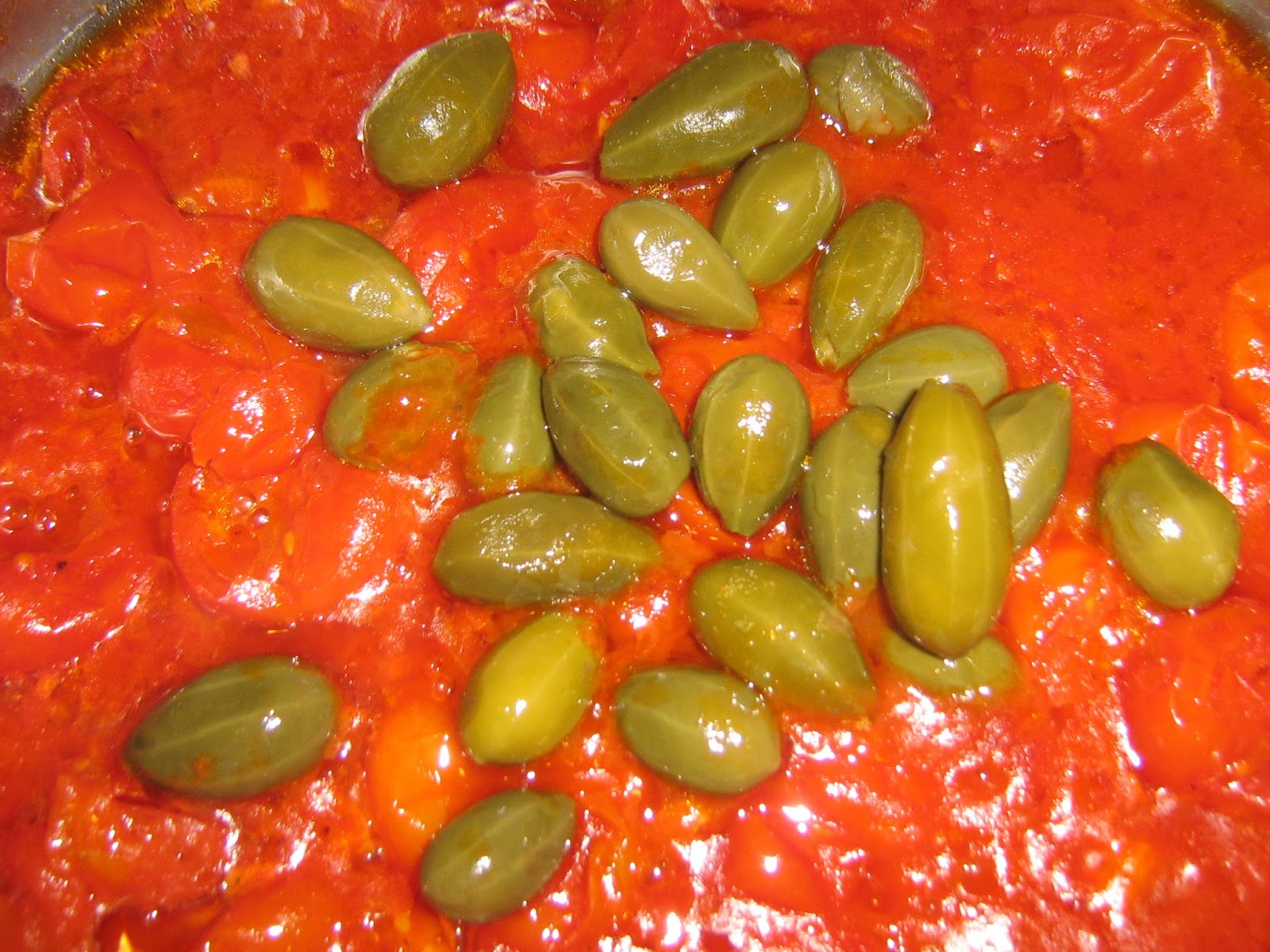
180 g (about 25) caperberries, rinsed well, the stems removed

Caperberries are a marvel!  The caper plant is a shrub that grows in the most arid terrains, and in the most improbable places.  (See the photo below!) The buds of this plant are called capers.  However the fruit of the same plant are called caperberries.  Caperberries are of the size and texture of olives, but the taste is a lighter version of capers.  The company Villa Reale is located in Sciacca (province of Agrigento).  They produce rustic preserves, condiments, pâtés — truly exquisite things.  For ten years now I have been eating Villa Reale products, including their caperberries. 
The Palazzo Risolo in Specchia (province of Lecce).  Look at the capers!
400 g cherry tomatoes
La Valle, a company in New Jersey, was founded in 1949 by a farmer from the Valle del Sarno, named Alfonso Selletti (in the photo above, second from the left). Even today, the tomatoes are imported from this marvelous valley, homeland of the famous San Marzano (DOP) tomatoes.  The cherry tomatoes are sweet as sugar.  And when you look at the label, you see that there is no calcium chloride.  Permit me a brief tirade.  When you empty a can of tomatoes into the pan, what do you want the tomatoes to do?  You want them to fall apart nicely.  And what does calcium chloride do?  Prevents them from falling apart!  But in America 99% of canned tomatoes contain this chemical.  How is such a stupid thing possible?  (Tirade not yet finished.)  The inhalation of calcium chloride is harmful to the respiratory airways.  The Russian national army used it in the Chechen war as a means of torture.  In the year 2002, North America consumed 1,687,000 tons of calcium chloride.  (Tirade finished.) 

200 g solid tuna, in olive oil

Canned tuna in water will not work for this dish; it has to be canned tuna in olive oil.  In America, it isn't an automatic thing that tuna comes in a solid piece; if it doesn't specifically say, "solid tuna," it could be shredded tuna. (An analogy would be chicken nuggets from a fast food restaurant, which are not whole pieces of chicken.)  Àsdomar is a Genoese brand of tuna.  It is phenomenal.
fresh basil
fresh oregano
1 clove garlic, chopped
salt
freshly-ground black pepper
(Note: grated cheese is not called for in this recipe. You shouldn't put grated cheese with fish.) 

Preparation

While the sabrinette are cooking in abundant salted water (4 or 5 quarts), heat a frying pan and add oil.  Add the chopped garlic and cook it for a few seconds, until is it golden (not brown).
Add the cherry tomatoes.
All you need is one light tap of a potato masher, and the cherry tomatoes will dissolve into a beautiful sauce.
Add salt and pepper, and cook on medium heat for 15 minutes.  If during the cooking the tomatoes become dry, add a few ounces of water from the pasta.  After 15 minutes, the sauce will be so sweet that your family will think that you added a cup of sugar!  But in fact you will not have added even a grain of sugar.

4 or 5 minutes before the end, add the caperberries.  (You can add the oregano at this point, if you want.)
One minute before the end, add the tuna.  Stir to break it up a little (only a little – don't shred it). Add the oregano if it wasn't already added.
After the 15 minutes are up, shut the heat, add the basil (don't cook the basil!), and Buon Appetito!