Visualizzazione post con etichetta Napoletana. Mostra tutti i post

domenica 28 febbraio 2016

Un sondaggio / A poll

“Vesuvio in Eruzione,” cartolina storica (timbro postale 1905), dalla collezione di Leonardo Ciampa.
"Vesuvius Erupting," historic postcard (postmarked 1905), from the collection of Leonardo Ciampa.

Qual è la più grande romanza napoletana della storia?

What is the most beautiful Neapolitan song of all time?

Cliccate sotto per la Playlist, per ascoltare tutte le 15 romanze:
Click below for the Playlist, to hear all 15 of the songs:

domenica 31 gennaio 2016

Foto della Settimana / Photo of the Week

“Lo stupendo fiordo di Furore (costa amalfitana)”
“The stupendous fjord of Furore (Amalfi Coast)”

foto: Antonio della Corte (panoramio.com)

giovedì 22 ottobre 2015

Re dei Piatti Partenopei! / King of the Neapolitan Dishes!

Mamma r’ ’o Càrmene!!!

Il re dei piatti napoletani non è la pizza. Non è gli spaghetti con le polpette. È le salsicce con i friarielli. Un piatto più grandioso, chi lo potrebbe mai inventare?!

Tuttavia, si prega di notare: questa ricetta è un peana non solo alla cucina napoletana, ma anche alla pentola stessa. Questa ricetta non si può preparare in una pentola normale d’inox. La si prepara con la ghisa e solo con la ghisa.

Non posso immaginare una cucina senza una pentola di ghisa smaltata, sia di Le Creuset che di Staub. Il modo in cui questa pentola fonde i sapori e ritiene l’umidità ... è oltre ogni descrizione. Metti una sol cucchiaiata in bocca e dici: “Dio mio...” (Se non mi credete, provatelo. Fate qualsiasi ricetta che di solito fate in inox, e fatela dentro Le Creuset. Un unico assaggio, e capirete.)

E allora, come si fa questa ricetta regale?

Dentro Le Creuset sono andati:

6 salsicce piccanti, incise con un coltello
2 mazzi di friarielli (broccoli di rapa), senza i gambi (che salvo in freezer per un brodo futuro)
4 spicchi d’aglio, interi
un po’ di evo (di alta qualità)
un po’ di vino bianco (di alta qualità)
sale marino
pepe nero, macinato al momento

Coprite e fate cuocere a fuoco medio-basso fino a quando sarà pronto. Coronatelo o con pecorino o con parmigiano, frescamente grattugiato.


  The king of Neapolitan dishes is not pizza. It is not spaghetti and meatballs. It is sausages with broccoli-rabe. A more grandiose dish, who could ever invent?!

However, please note: this recipe is a paean not only to Neapolitan cuisine but also to the pan itself. This recipe CANNOT BE MADE in a regular stainless steel pot. It is made in IRON and ONLY iron.

I cannot imagine a kitchen without an enameled cast-iron pan, either by Le Creuset or by Staub. The manner in which this pan blends the flavors and retains the moisture ... it is beyond description. You put one spoonful in your mouth and you say, "Oh, my God ..." (If you don't believe me, try it.  Make any recipe that usually you make in stainless steel, and make it in Le Creuset.  Just one taste, and you'll understand.)

And so, how do you prepare this kingly recipe?

Into Le Creuset went:

6 hot sausages, scored with a knife
2 bunches of broccoli-rabe, without the stems (which I save in the freezer for a future stock)
4 cloves of garlic, whole
a little extra-virgin olive oil (top-quality)
a little white wine (top-quality)
sea salt
freshly ground pepper

Cover and cook on medium-low heat until it is ready. Crown with freshly grated pecorino or parmigiano.
Foto: SurLaTable.com

mercoledì 7 ottobre 2015

Autunno

Acton Arboretum, Acton, Massachusetts (U.S.A.)
Foto di Leonardo Ciampa (7.X.15)
Autunno nel New England.  Non c’è nessun altro posto in cui preferirei stare!

In particolare amo l’inizio autunno, quando piccole esplosioni di rosso e d’arancio scoppiano fuori dal verde.

In questo periodo dell’anno, ho sempre voglia di riascoltare Autunno, come interpretato dal rimarchevole tenore sessantenne, Beniamino Gigli. Parole, musica e canto – tutti i tre mi fanno vibrare le corde del cuore.
  Autumn in New England.  There is no place else I’d rather be!

In particular I love the early autumn, when little explosions of red and orange burst forth from the green.

At this time of year, I always have the desire to relisten to Autunno, as sung by the remarkable 63-year-old tenor, Beniamino Gigli.  The words, the music, and the singing – all three tug at my heart strings.

AUTUNNO
Music by Ernesto De Curtis (1875-1937)
Words by Libero Bovio (1883-1942)


ENGLISH
Perhaps it’s the autumn
That makes this melancholy of mine remain.
It’s raining cats and dogs, my Ninetta.
It’s almost October; it seems like winter.
Cold days, bitter nights.
Always waiting for a word, just one word,
from you.

And you, what are you doing?
Are you happy or sad these days?
Do you ever think of me? Are you coming back, or are you not coming back?
Eh, OK, stay far away...
After all, it’s a whole year that you haven’t written me a word.
Not one, not a single word!
And yet, it’s still always you.
It’s still always you.


NAPOLETANO
Forse è ll’autunno
ca mme mantene ’sta malincunia.
Chiove a zeffunno, Ninetta mia.
È uttombre quase; vierno mme pare.
Jurnate fredde, nuttate amare.
Sempe aspettanno ca na parola,
una, una sola,
mme venesse ’a te,
mme venesse ’a te.

E tu che faje?
Staje allèra o malinconica ’e sti juorne?
Mme pienze maje? Tuorne o nun tuorne?
E sí, faje buono, statte luntana,
tanto, è passata n’annata sana
ca nun mm’hê scritto cchiù na parola,
una, una sola.
Giá, si’ sempe tu.
Giá, si’ sempe tu.


ITALIANO
Forse è l’autunno
che mi fa rimanere questa malinconia.
Piove a dirotto, Ninetta mia.
È quasi ottobre; mi sembra inverno.
Giornate fredde, nottate amare.
Sempre aspettando che una parola,
una, una sola,
mi arrivi da te,
mi arrivi da te.

E tu che fai?
Sei allegra a malinconica in questi giorni?
Mi pensi mai? Torni o non torni?
E sì, fai bene, stai lontana...
Tanto, è da un anno intero
Che non mi scrivi più una parola...
Una, una sola!...
Già, sei sempre tu...
Già, sei sempre tu!

domenica 22 marzo 2015

Palomma 'e notte

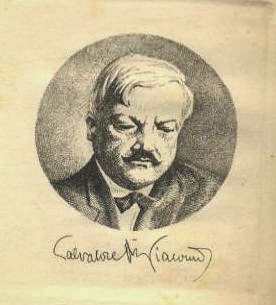
Grandissimo, questo! Grandissima poesia dal grandissimo poeta Salvatore Di Giacomo (1860-1934), musicata nel 1906 dal grandissimo compositore Francesco Buongiovanni (1872-1940), interpretata dal grandissimo tenore napoletano, Gabriele Vanorio (1922-1969).  Nato coincidentemente sul primo anniversario della morte di Enrico Caruso, Vanorio fu nella sua epoca uno degli interpreti più importanti della canzone napoletana. Morì di un fulmineo tumore al cervello, all’età di 47.Such greatness! A great poem by the great Neapolitan poet Salvatore Di Giacomo (1860-1934), set to music in 1906 by the great composer Francesco Buongiovanni (1872-1940), interpreted by the very great Neapolitan tenor, Gabriele Vanorio (1922-1969). Coincidentally born on the one-year anniversary of the death of Enrico Caruso, Vanorio was in his day one of the most important interpreters of the Neapolitan song. He died of a rapidly growing brain tumor at age 47.


NAPULITAN’

Tiene mente ’sta palomma,
Comme ggira, comm’avota,
Comme torna ’n’ata vota
’Sta ceroggena a tentà!

Palummè, chist’è ’nu lume,
Nun è rosa o giesummino,
E tu a fforza ccà vvicino
Te vuò mettere a vulà!

Vattenn’ ’a lloco!
Vattenne, pazzarella!
Va’, palummella, e torna,
E torna a ’st’aria
Accussì fresca e bella!
’O bbì ca i’ pure
Mm’abbaglio chianu chiano,
E ca mm’abbrucio ’a mano
Pe’ te ne vulè caccià?

Carulì, pe’ ’nu capriccio,
Tu vuò fà scuntento a ’n’ato
E po’, quanno ll’hê lassato,
Tu addu ’n’ato vuò vulà.

Troppe core staje strignenno
Cu ’sti mmane piccerelle;
Ma fernisce ca ’sti scelle
Pure tu te può abbrucià.

Vattenn’ ’a lloco!
Vattenne, pazzarella!
Va’, palummella, e torna,
E torna a ’st’aria
Accussì fresca e bella!
’O bbì ca i’ pure
Mm’abbaglio chianu chiano,
E ca mm’abbrucio ’a mano
Pe’ te ne vulè caccià?

Torna, va’, palomma ’e notte,
Dint’a ll’ombra addò sì nata!
Torna a ’st’aria ’mbarzamata
Ca te sape cunzulà!

Dint’ ’o scuro e pe’ me sulo
’Sta cannela arde e se struje,
Ma c’ardesse a tutt’ ’e dduje,
Nun ’o ppozzo suppurtà!

Vattenn’ ’a lloco!
Vattenne, pazzarella!
Va’, palummella, e torna,
E torna a ’st’aria
Accussì fresca e bella!
’O bbì ca i’ pure
Mm’abbaglio chianu chiano,
E ca mm’abbrucio ’a mano
Pe’ te ne vulè caccià?
   ITALIANO

Guarda questa farfalla,
Come gira, come svolazza,
Come torna un'altra volta
A tentare questa candela!

Farfallina, questo è un lume,
Non è rosa o gelsomino,
E tu per forza qua vicino
Ti vuoi mettere a volare!

Vattene da là!
Vattene, pazza!
Va', farfallina, e torna,
E torna a quest'aria
Così fresca e bella!
Lo vedi che anch'io
Mi abbaglio piano piano
E che mi brucio la mano
Per volerti cacciare via?

Carolina, per un capriccio,
Tu vuoi fare scontento un altro
E poi, quando l'hai lasciato,
Tu, da un altro, vuoi volare.

Troppi cuori stai stringendo
Con queste tue mani piccole,
Ma finisce che queste ali
Anche tu ti puoi bruciare.

Vattene da là!
Vattene, pazza!
Va', farfallina, e torna,
E torna a quest'aria
Così fresca e bella!
Lo vedi che anch'io
Mi abbaglio piano piano
E che mi brucio la mano
Per volerti cacciare via?

Torna, va', farfalla di notte,
Nell'ombra dove sei nata!
Torna a quest'aria imbalsamata
Che ti sa consolare!

Nel buio e solo per me
Questa candela arde e si strugge,
Ma che arda tutti e due,
Non lo posso sopportare!

Vattene da là!
Vattene, pazza!
Va', farfallina, e torna,
E torna a quest'aria
Così fresca e bella!
Lo vedi che anch'io
Mi abbaglio piano piano
E che mi brucio la mano
Per volerti cacciare via?
Traduzione italiana
di Natalia Cernega
(napule-de-canzone.com)
   ENGLISH

Look at this butterly,
How it whirls, how it flits,
How it comes back again
To tempt this candle!

Butterfly, this is a lamp,
It's not a rose or jasmine,
And you at any cost
Want to fly nearer to it!

Fly away from here!
Fly away, crazy butterfly!
Fly, butterfly, and return,
And return to the air
So fresh and beautiful!
Do you see that I also
Make a mistake
And that I burn my hand,
Trying to chase you away?

Caroline, on a whim,
You want to make another person unhappy,
And then, when you leave him,
You want to fly away to an other.

Too many hearts you are squeezing
In your little hands,
But in the end, you might also burn your wings.

Fly away from here!
Fly away, crazy butterfly!
Fly, butterfly, and return,
And return to the air
So fresh and beautiful!
Do you see that I also
Make a mistake
And that I burn my hand,
Trying to chase you away?

Return, fly, butterfly of the night,
To the shadow where you were born!
Return to the balmy air
That can console you!

In the dark only for me
This candle burns and melts,
But let it burn to both of us
Because alone I can't bear it!

Fly away from here!
Fly away, crazy butterfly!
Fly, butterfly, and return,
And return to the air
So fresh and beautiful!
Do you see that I also
Made a mistake
And that I burnt my hand,
Trying to chase you away?
English translation
by Leonardo Ciampa
Foto: crazycompany.it

martedì 24 febbraio 2015

Buon compleanno, Enrico Caruso!!!

Buon compleanno al più grande tenore della storia. Perché era il più grande? Questo ne è un buon esempio. Qua, un’aria che generazioni di tenori hanno gridato, Caruso la canta, con legato perfetto, senza sforzarsi, e infonde il canto con anche più emozione dei gridatori. Evviva Caruso!Happy birthday to the greatest tenor in history.  Why was he the greatest? This is a good example. Here, an aria that generations of tenors have screamed, Caruso sings it, with perfect legato, without forcing, and he infuses the singing with even more emotion than the screamers. Long live Caruso!

No! Pagliaccio non son;
se il viso è pallido,
è di vergogna, e smania di vendetta!
L'uom riprende i suoi dritti,
e'l cor che sanguina vuol sangue
a lavar l'onta, o maledetta!
No, Pagliaccio non son!
Son quei che stolido
ti raccolse orfanella in su la via
quasi morta di fame,
e un nome offriati,
ed un amor ch'era febbre e follia!

Sperai, tanto il delirio accecato m'aveva,
se non amor, pietà... mercè!
Ed ogni sacrifizio al cor lieto, imponeva,
e fidente credeva
più che in Dio stesso, in te!
Ma il vizio alberga sol ne l'alma tua negletta;
tu viscere non hai... sol legge e'l senso a te!
Va, non merti il mio duol,
o meretrice abbietta,
vo' ne lo sprezzo mio
schiacciarti sotto i piè!!
No! I am not Pagliaccio;
If my face is pale,
It’s from shame, and lust for revenge!
This man is taking back his rights,
This bleeding heart wants blood
To wash away the shame, o cursed woman!
No, I am not Pagliaccio!
I am the idiot
Who picked this little orphan off the street
Almost dead from hunger,
And gave you a name,
And a love that was feverish and mad!

I had hoped, I had been blinded by this delirium,
If not love, pity... mercy!
And my heart was glad for every sacrifice required,
And confidently believed
In you, more than God Himself!
But only vice lives in your neglected soul;
you have no feeling... only feeling for yourself!
Go away, you’re not worth my grief,
Wretched harlot,
You have my contempt
Just to crush you under my feet!!

lunedì 22 settembre 2014

Napoli ...

Cartolina dalla collezione di Leonardo Ciampa.
Postcard from the collection of Leonardo Ciampa.
Napoli... Adottando le parole di un personaggio pucciniano, quella parola profumata si vaga nello spirto e ascose fibre va a carezzare.

Napoli ha una grandiosità che uno straniero che conosce solo le città settentrionali non può concepire.

La prima volta che io misi piede sul suolo partenopeo fu nel settembre del 1995. Non c’è un’altra città italiana con tanta grandezza concentrata in un’area così piccola. Camminai attraverso la Galleria Umberto. Appena uscii l’ingresso principale, subito vidi il Teatro San Carlo. Si trova in Piazza Trieste e Trento, ove si trova anche il Palazzo Reale. La facciata principale del palazzo si affaccia su Piazza Plebiscito. Di fronte al palazzo, sul lato opposto di Piazza Plebiscito, vidi l’enorme colonnato che fiancheggia la Basilica di San Francesco di Paola (una delle più grandi strutture neoclassiche del mondo, modellato ispirandosi al Partenone). Tutti questi edifici stupendi sono concentrati in un’area con raggio inferiore a 100 metri – una camminata di 5 minuti! (Devo menzionare anche l’imponente Castel Nuovo, a 2 minuti a piedi dal San Carlo.) Questa passeggiata fu il mio primo impatto con Napoli. Figuratevi che impressione mi fece questa città.

Ai tempi dei Greci, furono costruite tre strade importanti che attraversavano Neapolis da ovest a est. All’epoca romana queste strade furono chiamate con nomi latini: decumano superiore (oggi dalla Via della Sapienza alla Via Santi Apostoli), decumano maggiore (oggi Via dei Tribunali) e decumano inferiore (oggi Spaccanapoli). È sorprendente che queste tre vie siano rimaste identiche sin dai tempi dei Greci. È ancora più sorprendente che, ad oggi, rimangano le vie principali per attraversare la città antica.

La mia seconda passeggiata napoletana avvenne nel gennaio del 2001. Dopo di visitare il Conservatorio di San Pietro a Majella (uno dei conservatori più storicamente importante del mondo) e di passare la Cappella Sansevero (un museo che caricava l’ammissione – nella mia tirchieria andai avanti, non sapendo che dentro c’era “Cristo Velato” di Sammartino!), la camminata iniziò alla Basilica di Santa Chiara e alla Chiesa del Gesù Nuovo – due grandissime chiese, una accanto all’altra. Di Santa Chiara mi ricordo l’interno vasto ma spoglio, cosparso di piccoli resti di affreschi trecenteschi, in contrasto con l’interno riccamente ornato del Gesù Nuovo. Poi arrivai alla Piazza San Domenico Maggiore, di cui ricordo bene l’Obelisco (ma non mi ricordo il più grande Obelisco dell’Immacolata davanti al Gesù Nuovo). Della magnifica Chiesa di San Domenico Maggiore m’impressionò il soffitto a cassettoni. Che chiesa magnifica! Ognuna di queste tre chiese supererebbe la maggior parte delle cattedrali del Nord America.

Da San Domenico mi diressi ad est su Spaccanapoli, la strada dove fu inventata la pizza... e una pizza mangiai! Da lì proseguì per Spaccanapoli e svoltai a sinistra in Via Duomo. Le chiese sembravano diventare sempre più grandi ... fino a quando ... arrivai al Duomo. Mi cadde la mascella. Una struttura mastodontica. Ogni cappella laterale mi sembrava in sé una grande chiesa. Ricordo la più grande di queste cappelle, la Cappella Reale del Tesoro di San Gennaro, così grande che ha la sua cupola! Ricordo anche un’altra cappella laterale, che di per sé è considerata una basilica: la Basilica di Santa Restituita, edificata nel IV (!) secolo. Mi ricordo anche la cripta, completamente ricoperta di marmo (impressionante però non all’altezza della stupenda cripta del duomo salernitano).

Non credo ci sia un altro duomo che possa reggere il paragonare con quello di Napoli. Con la chiesa principale, la basilica del IV secolo, la cappella gotica, la cripta rinascimentale, e la ricchezza di decorazioni barocche, questo massiccio edificio eclissa quasi tutte le altre cattedrali del mondo.

Quello che sto per dire può sembrare un’esagerazione poetica, ma è una dichiarazione veritiera: a Napoli c’è una musicalità nell’aria. La sentii il primo giorno che arrivai e mi sedetti al pianoforte. È inspiegabile, ma è reale. Non può essere coincidenza che i più grandi maestri di composizione del settecento (incluso Porpora, maestro di Haydn) fossero napoletani. In quel periodo, per studiare la composizione la mecca non era Berlino, non era Parigi, non era Londra, ma era Napoli. Nel settecento la città aveva QUATTRO conservatori!  Si vede, dunque, che la superiorità musicale di Napoli non si limiti solo ai tenori lirici e ai compositori di canti popolari.

È possibile che la magia di Napoli sia legata al Vesuvio? Uno sguardo alla mappa geografica ne rivela la sua spaventosa vicinanza. Più di un milione di abitanti di questa città vive proprio lì, ai piedi del vulcano, un vulcano vivo e fumante. Ancora una volta, mi potete accusare di esagerazioni poetiche. Però, bisogna dare credito a questo suolo vulcanico per la particolarità della sua uva (e di conseguenza del suo vino), dei suoi pomodori, dei suoi ortaggi. Grazie al sapore particolare di questi inimitabili prodotti della terra, la cucina napoletana ha influenzato e ispirato il resto del mondo.

Spirto partenopeo, sussurro gentil, deh! non cessar!
  Napoli... Borrowing the words of a Puccini character, that fragrant word wanders into my soul and caresses its hidden fibers.

Naples has a magnificence that a foreigner who knows only the northern cities cannot conceive.

The first time that I lay foot on Parthenopean soil was in September 1995.  There is no other Italian city with so much grandeur concentrated in such a small area. I walked through the Galleria Umberto. As soon as I exited the main entrance, I immediately saw the Teatro San Carlo. It's located in Piazza Trieste e Trento, where the Royal Palace is also found.  The main façade of the palace faces Piazza Plebiscito. In front of the palace, on the opposite side of Piazza Plebiscito, I saw the enormous colonnade which flanks the Basilica di San Francesco di Paola (one of the great Neoclassic structures of the world, modeled somewhat after the Parthenon). Imagine that all of these stupendous edifices are concentrated within a radius of less than 100 meters – a five-minute walk! (I must mention also the imposing Castel Nuovo, a two-minute walk from the San Carlo). This excursion was my very first impression of Naples. You can just imagine what kind of impact this city made on me.

In Greek times, there were three main streets that ran the length of Neapolis west to east.  In the Roman era, they were given Latin names: decumano superiore (today from Via della Sapienza to Via Santi Apostoli), decumano maggiore (today the Via dei Tribunali) e decumano inferiore (today Spaccanapoli). It is amazing that these three roads have not been moved since Greek times.  But it's even more amazing that, to this day, they remain the main thoroughfares of the historic part of the city.

I made my second Neapolitan excursion in January 2001.  After visiting the Conservatorio di San Pietro a Majella (one of the most historically important conservatories in the world), and passing by the Cappella Sansevero (a museum that charged admission – in my cheapness I continued on, not knowing that inside was Sammartino's "Veiled Christ"!), the walk began at the Basilica di Santa Chiara and the Chiesa di Gesù Nuovo – two huge churches, one next to the other.  I remember Santa Chiara's vast but stark interior, dotted with small remnants of 14th-century frescoes, in contrast to the ornate interior of Gesù Nuovo. Then I reached Piazza San Domenico Maggiore, whose Obelisk I remember well  (but I don't remember the larger Obelisk of the Immaculate, in front of Gesù Nuovo). Inside the magnificent Church of San Domenico Maggiore, I remember the impression that the coffered ceiling made upon me. What a magnificent church!  Any of these three churches would surpass most of the cathedrals in North America.

From San Domenico I headed east on Spaccanapoli, the street where pizza was invented ... and I ate a pizza!  From there, I continued on Spaccanapoli and took a left on Via Duomo.  The churches seemed to get bigger and bigger ... until ... I arrived at the Duomo. The jaw dropped. A colossal structure.  Every side chapel seemed like a large church in itself.  I remember the largest of these chapels, the Royal Chapel of the Treasure of St. Januarius – so large that it has its own cupola!  I also remember another side chapel, which in itself is considered a basilica: the Basilica of St. Restituita, built in the fourth (!) century.  I also remember the crypt, completely covered with marble (impressive, but not on the level of the stupendous crypt of the Duomo in Salerno).

I don't think you can compare any other cathedral to that of Naples. With the main church, the fourth-century basilica, the Gothic chapel, the Renaissance crypt, and an abundance of Baroque decoration, this massive edifice eclipses most any other cathedral in the world.

The following sentence might seem like a poetic exaggeration, but it is a truthful statement: in Naples there is a musicality in the air.  I felt it the first day that I arrived in Naples and sat down at the piano.  It is unexplainable, but it is real.  It cannot be a coincidence that the greatest composition teachers of the 18th century (including Porpora, Haydn's teacher) were Neapolitan. At that time, to study composition, the mecca was not Berlin, not Paris, not London, but Napoli. In the 1700s the city had FOUR conservatories! You see, then, that Naples's musical superiority is not confined to operatic tenors and composers of popular songs in dialect.

Could the magic of Naples be related to Vesuvius? A glance at the map reveals its frightening proximity: Naples's million-plus inhabitants live right there, at the foot of the volcano – a live, smoking volcano. Once again, you might accuse me of poetic exaggerations. But at very least, you can give some credit the volcanic soil for the inimitable grapes (and, consequently, wine), tomatoes, and other vegetables which aroused Naples to create a cuisine that has influenced and inspired the rest of the world.

Parthenopean spirit, may your kind whisperings never cease!
Castel Nuovo (a.k.a., Maschio Angioino)
Wikipedia
Galleria Umberto
vesuviusvspompeii.com
Galleria Umberto
bestourism.com
“Appena uscii l’ingresso principale, subito vidi il Teatro San Carlo.”
“As soon as I exited the main entrance, I immediately saw the Teatro San Carlo.”
Wikipedia
L’ingresso principale.
The main entrance.
Wikipedia
Piazza Trieste e Trento: Galleria Umberto & Teatro San Carlo.
Wikipedia
Palazzo Reale (facciata principale)
Royal Palace (main façade)
Wikipedia
Basilica di San Francesco di Paola
Wikipedia
Questa vista a volo d’uccello dimostra la concentrazione di queste magnifiche strutture. Si vedono la Basilica di San Francesco di Paola sulla sinistra, il Palazzo Reale sulla destra, e dietro il palazzo (con la grande cupola scura) la Galleria Umberto.

This bird's eye view shows the concentration of these magnificent structures.  You see the Basilica di San Francesco di Paola on the left, the Royal Palace on the right, and behind the palace (with the large, dark cupola) the Galleria Umberto.
Campaniatour.it
“Vesuvio in Eruzione,” cartolina storica (timbro postale 1905), dalla collezione di Leonardo Ciampa.
"Vesuvius Erupting," historic postcard (postmarked 1905), from the collection of Leonardo Ciampa.
Quest’articolo è stato scritto nel settembre 2014. L’ultima revisione: settembre 2021.
This article was written in September 2014. Latest revision: September 2021.

lunedì 9 giugno 2014

TOSTI

Ritratto di Francesco Paolo Tosti eseguito ad olio su tela da Théobald Chartran, Londra 1898
Portrait of Francesco Paolo Tosti (oil on canvas) by Théobald Chartran (London, 1898).
(Istituto nazionale tostiano, Sezione Museo musicale d'Abruzzo, Fondo Francesco Paolo Tosti)
Il 2 dicembre 2016 marcherà il centenario della morte del più grande melodista italiano della storia: FRANCESCO PAOLO TOSTI. Non posso aspettare fino ad allora per iniziare il mio tributo al maestro ortonese!  (Ortona si trova nella provincia di Chieti, in Abruzzo.)  December 2, 2016, will mark the centenary of the death of the greatest Italian melodist in history: FRANCESCO PAOLO TOSTI. I cannot wait till then to begin my tribute to the maestro from Ortona! (Ortona is in the province of Chieti, in Abruzzi.)

’A VUCCHELLA
(nel dialetto napoletano)
parole di Salvatore Di Giacomo

lunedì 14 aprile 2014

Buon compleanno, Carlo Coccia

Novara, Teatro Carlo Coccia.
(Wikipedia)
Ammetto che, fino ad oggi, non ho conosciuto chi fu Carlo Coccia. Ho conosciuto solo il teatro della bella città settentrionale, Novara, che si chiama il Teatro Carlo Coccia.

Vedere questo teatro in carne ed ossa nel 2008 fu per me una cosa speciale. Negli anni 1990 fui accompagnatore ed assistente della professoressa Iride Pilla (1904-1997), soprano importante e maestra di canto al Conservatorio di Boston.  (Lei nacque a Lynn,  Massachusetts, a genitori castellammaresi.)  Madama Pilla mi narrò molte volte il racconto della sera, nel 1927, che cantò Andrea Chénier nella presenza del compositore. Dopo lo spettacolo ci fu una cena opulenta.  Ma Pilla non ne poté mangiare. Sotto la tavola, Giordano le stringeva una mano, e il Sindaco di Novara stringeva l’altra!

Oggi è il compleanno di Carlo Coccia, che — ho imparato oggi – fu un compositore napoletano. Scrisse dozzine di opere e moltissimi pezzi sacri.

Buon 232º compleanno, Carlo Coccia!
  I admit that, until today, I did not know who Carlo Coccia was.  I knew only the opera house in the beautiful northern Italian city of Novara, which is called the Teatro Carlo Coccia.

To see this theater in person in 2008 was a special thing for me.  In the 1990s I was the accompanist and assistant of Iride Pilla (1904-1997), important soprano and voice professor at the Boston Conservatory.  (She was born in Lynn, MA, to parents from Castellammare di Stabia.)  Madame Pilla told me many times the story of when, in 1927, she sang Andrea Chénier in the presence of the composer. After the performance there was an opulent dinner.  But Pilla could not eat any of it.  Under the table, Giordano was holding one of her hands, and the Mayor of Novara was holding the other!

Today is the birthday of Carlo Coccia, who — I learned today — was a Neapolitan composer. He wrote dozens of operas and many sacred pieces.

Happy 232rd Birthday, Carlo Coccia!

giovedì 6 marzo 2014

Vincenzo Montefusco

Godetevi i dipinti del meraviglioso pittore napoeltano, Vincenzo Montefusco.
Nacque a Cava de’ Tirreni nel 1852. Morì a Roma nel 1912.
Enjoy the paintings of the marveous Neapolitan painter, Vincenzo Montefusco.
He was born in Cava de’ Tirreni in 1852. He died in Rome in 1912.
Scorcio di Capri / Glimpse of Capri
Christies.com
Figura femminile / Female figure
arcadja.com
Napoli, i venditori di strada / Naples, street vendors
minervaauctions.com
Scena con Fidanzati / Scene with fiancées
arcadja.com
Natura morta / Still life
arcadja.com

Capri, Marina Grande
pinacotecabari.it


martedì 25 febbraio 2014

Buon Compleanno, Enrico Caruso!!!

Nato 25 febbraio 1873, a Napoli.
Born February 25, 1873, in Naples.

Ecco tre incisioni, da tre epoche diverse della sua vita:
Here are three recordings, from three different periods of his life:

Una furtiva lagrima (L’elisir d’amore), Donizetti (1904)


La Danza, Rossini (1912)


Vaghissima sembianza, Donaudy (1920)


mercoledì 19 febbraio 2014

Pomodori San Marzano / San Marzano tomatoes


BASTA ADESSO!

Non ci sarà più di convincermi che i pomodori inscatolati con le sostanze chimiche siano una cosa ammissibile da mettere in bocca.  Da questo momento in poi, i pomodori di San Marzano DOP, senza le sostanze chimiche, saranno quel che mangerò.

Se viviate in America, la marca che dovete comprare è La Valle.  E se abitiate vicino a me (ovest di Boston), il luogo ove dovete comprarlo è Tutto Italiano di Wellesley

  ENOUGH!

Enough trying to convince myself that canned tomatoes with chemicals are an acceptable thing to put into my mouth.  From this moment on, tomatoes from San Marzano (DOP), without chemicals, are what I shall eat.

If you live in America, the brand you must buy is La Valle.  And if you live near me (west of Boston), the place to buy it is Tutto Italiano in Wellesley Square.
La Valle Food Company si trova Teterboro, New Jersey (vicinissimo a Manhattan). Fu fondata nel 1949 da un agricoltore della Valle del Sarno, Alfonso Selletti (nella foto sopra, il secondo da sinistra). Anche oggi, i pomodori vengono importati da quella meravigliosa valle. Il clima mediterraneo e il terreno vulcanico producono un pomodoro colmo di sapore, dolce come lo zucchero.  E quando guardate l’etichetta, vedete che non c’è il cloruro di calcio. Quando mettete una scatola di pomodori in pentola, cosa volete che i pomodori facciano? Volete che si disintegrino. E cosa fa il cloruro di calcio? Impedisce loro di disintegrarsi! Ma in America 99% dei pomodori inscatolati contengono quest’elemento chimico. Com’è possibile una tale stupidaggine?  L’inalazione del cloruro di calcio è dannosa per le vie respiratorie. L’esercito federale russo l’usava nella guerra cecena come mezzo di tortura. Nell’anno 2002, America del Nord consumava 1.530.421 megagrammi del cloruro di calcio.

Stasera ho preparato le penne (comprate a Tutto Italiano anche quelle) con i pomodori La Valle.  Non ho frullato i pomodori.  Non li ho nemmeno spezzati con il cucchiaio di legno.  Semplicemente si sono disciolti nella padella.  E il gusto?  Giurereste ch’io ne abbia aggiunto lo zucchero.

Pomodori inscatolati americani, siete ufficilamente andati via dalla mia vita!
  La Valle Food Company is located in Teterboro, New Jersey (very close to Manhattan). It was founded in 1949 by a farmer from the Valle del Sarno, named Alfonso Selletti (in the photo above, second from the left). Even today, the tomatoes are imported from this marvelous valley.  The Mediterranean climate and volcanic soil produce a tomato filled with flavor, sweet as sugar.  And when you look at the label, you see that there is no calcium chloride.  When you empty a can of tomatoes into the pan, what do you want the tomatoes to do?  You want them to fall apart nicely.  And what does calcium chloride do?  Prevents them from falling apart!  But in America 99% of canned tomatoes contain this chemical.  How is such a stupid thing possible?  The inhalation of calcium chloride is harmful to the respiratory airways.  The Russian national army used it in the Chechen war as a means of torture.  In the year 2002, North America consumed 1,687,000 tons of calcium chloride.

This evening I made penne (also purchased at Tutto Italiano) with La Valle tomatoes.  I didn't blend the tomatoes in the blender.  I didn't even break them with the wooden spoon.  They simply dissolved in the pan.  And the taste?  You would swear that I added sugar.

American canned tomatoes, you are officially gone from my life!

giovedì 13 febbraio 2014

Nu pianefforte 'e notte

Una poesia dal più grande poeta napoletano, musicata dal più grande tenore leccese, cantata dal compositore!
A poem by the greatest poet from Naples, set to music by the greatest tenor from Lecce, sung by the composer!

NU PIANEFFORTE E NOTTE
parole: Salvatore Di Giacomo
musica: Tito Schipa


Nu pianefforte ’e notte
sona, luntanamente,
e ’a museca se sente
per ll’aria suspirà.

È ll’una: dorme ’o vico
ncopp’ a sta nonna nonna
’e nu mutivo antico
’e tanto tiempo fa.

Dio, quante stelle ’ncielo!
Che luna! E c’aria doce!
Quanto na bella voce
vurria sentì cantà!

Ma sulitario e lento
more ’o mutivo antico;
se fa cchiù cupo ’o vico
dint’a ll’oscurità.

L’anema mia surtanto
rummane a sta fenesta.
Aspetta ancòra. E resta,
ncantànnose, a penzà.


Un pianoforte di notte
suona lontanamente
e una musica si sente
per l’aria sospirar.

È l’una: dorme il vico
su questa ninna nanna
di un motivo antico
di tanto tempo fà.

Dio, quante stelle in cielo!
Che luna! Che aria dolce!
Quanto una bella voce
vorrei sentir cantar.

Ma solitario e lento
muore il motivo antico;
si fa più cupo il vico
nell’oscurità.

L’anima mia soltanto
rimane a questa finestra.
Indugia ancora. E resta,
incantandosi, a pensar.


At night, a piano
is playing far away,
and music is heard
sighing in the air.

That's the one: the alley is sleeping
to this lullaby
of an old theme
from so long ago.

God, how many stars are in the sky!
What a moon! How sweet is the air!
How I would like to hear
a beautiful voice sing it.

But lonely and slowly
dies the old theme;
the alley becomes gloomier
in the darkness.

Only my soul
remains at this window.
It still hangs around. And it remains,
bewitched, thinking.
English translation: L.C.

sabato 25 gennaio 2014

Pasta con la ricotta! (Cremosa e deliziosa!) / Pasta with ricotta! (Creamy and delicious!)

Foto: youtube.com/user/mimmocorcione
A miei cari lettori e lettrici, non è un segreto che, per la genuina ed autentica cucina partenopea, Mimmo Corcione è il mio benchmark, il mio punto di riferimento, il mio (posso dirlo?) idolo.

Ieri sera, mio figliuolo Federico - un gourmand di sette anni - ha guardato un video di Mimmo, che preparava, "Mafaldine con ricotta in bianco (un piatto della tradizione napoletana)". Freddy ha subito deciso che ha voluto questo piatto per il pranzo di oggi. Quando si svegliò stamattina, la primissima cosa della quale ha parlato è stato questo piatto.

Qua in America, direi che la maggior parte degli ingredienti italiani si possono trovare.  Ma certi ingredienti, proprio non si trovano.  La ricotta di pecora ne è uno. Ma anche la pasta è un problema qui a volte. Il supermercataccio vicino a casa nostra ha una selezione piccolissima dei tagli di pasta. Non c'avevano né mafaldine, né perciatelli, né bucatini, né niente d'interessante.

Ma vi dirò di una cosa interessante che avevo in freezer. Cosa interessantissima. Ho avuto un grosso pezzo di pancetta. Grossissimo. E visto che questa ricetta richiede lo strutto, mi sono domandato, "Ma se io dovessi fare lo strutto non dal grasso di maiale ma da questo gran pezzo di pancetta ..."

Ecco la ricetta di Mimmo. Mi levo il cappello a te, Mimmo Corcione. E vi assicuro che Freddy è rimasto molto soddisfatto da questa ricetta!

(un piatto della tradizione napoletana)
Ricetta di Mimmo Corcione

Ingredienti per due persone
200 grammi di mafaldine (anche i perciatelli o i bucatini si possono usare)
100 grammi di ricotta di pecora (io la ricotta di vaccina.  Quella di pecora non si trova qua in America)
1 o 2 cucchiai di sugna (io lo strutto che ho reso dalla pancetta ...)
25 grammi di pecorino romano
1 ciuffo di prezzemolo fresco, tritato.
pepe nero macinato fresco
sale q.b.
(Io ho aggiunto anche un po' di noce moscata frescamente macinata.)

Preparazione
Cuocete la pasta al dente. In una padella mettete una noce di sugna. Appena è sciolta, aggiungete le mafaldine insieme ad un paio di mestoli di acqua di cottura per terminare la cottura in padella. Aggiungete quindi la ricotta stemperata in un po' di acqua di cottura delle mafaldine e pepata con pepe nero macinato fresco. Quando il tutto è morbido, cotto ed amalgamato, spegnete la fiamma e mantecate col pecorino romano ed il prezzemolo tritato. Servite fumante con un po' di pepe nero e i gambetti di prezzemolo tritati finemente. Bontà.

Poscritto: Come già vi ho detto, ho fatto lo strutto dal grosso pezzo di pancetta. Naturalmente, dopo di aver rimosso lo strutto dalla padella, i ciccioli sono rimasti. E questi ciccioli di pancetta ... non avete mai mangiato nulla di più deliziosa in vita vostra. Avete mangiato alcune cose deliziose nel vostro periodo d'oro; ma qualcosa più deliziosa di questa non avete mai provato in vita vostra. Suppongo che alcuni medici direbbero che si trattino di "malsano." Ma se questi ciccioli di pancetta abbiano torto, io non vorrei avere ragione.
  
To my dear readers, it is no secret that, for the genuine and authentic Neapolitan cuisine, Mimmo Corcione is my reference, my benchmark, my (can I say it?) idol.

Last night, my son Federico – a seven-year-old gourmand – watched the video of Mimmo preparing, "Mafaldine con ricotta in bianco (un piatto della tradizione napoletana)". Freddy immediately decided that he wanted this dish for lunch today. When he woke up this morning, the very first thing that he talked about was this dish.

Here in America, I would say that you can find most Italian ingredients.  But certain ingredients you really can't find. Sheep's milk ricotta is one of them. But even pasta is a problem here sometimes. The local supermarket has only a tiny selection of cuts of pasta. It had neither mafaldine nor perciatelli nor bucatini nor any other interesting cuts.

But I will tell you about something that I had in my freezer. Something very interesting. I had a thick piece of pancetta. Very thick. And whereas this recipe called for lard, I thought, "But if I were to make lard not from pork fat but from this big piece of pancetta ..."

Here is Mimmo's recipe. I tip my hat to you, Mimmo Corcione. And I assure you that Freddy was very pleased by it!

(a dish from the Neapolitan tradition)
Recipe by Mimmo Corcione

Ingredients for two people
200 grams of mafaldine (you can also use perciatelli or bucatini)
100 grams of sheep's milk ricotta (I used cow's milk ricotta.  Sheep's milk ricotta you can't find in America.)
1 or 2 TB of lard (I used the lard that I rendered from the pancetta ...)
25 grams of pecorino romano
1 tuft of fresh parsley, chopped
freshly ground black pepper
salt to taste
(I also added some freshly ground nutmeg.)

Preparation
Cook the pasta al dente.  In a skillet put a dab of lard.  As soon as it's melted, add the mafaldine together with a few ladles' full of pasta water, so as to finish cooking the pasta in the skillet.  Then add the ricotta which has been diluted in a little pasta water and seasoned with fresh pepper. When everything is soft, cooked, and mixed, shut the flame and coat the pasta with the pecorino and the chopped parsley. Serve hot with a little pepper and finely chopped parsley stems.  Pure goodness!

Postscript: As I already mentioned, I made the lard from the thick piece of pancetta. Naturally, after I removed the lard from the pan, the cracklings remained. And these cracklings of pancetta ... you have never eaten anything more delicious in your life. You have eaten some delicious things in your heyday, but something more delicious than this you have never experienced in your life. I suppose some doctors will say that these are "unhealthy." But if these pancetta cracklings are wrong, I don't want to be right.
 
E per bere: Falanghina!  Dalle pendici vesuviane!  Un sapore unico che ognuno deve provare.  Come vinificatore Monte Faliesi è inferiore a Feudi di San Gregorio (http://feudi.it). Ma questa bottiglia è stata mica cattiva!

And to drink: Falanghina! From the slopes of Vesuvius!  A unique taste that everyone should experience.  As a winemaker, Monte Faliesi is inferior to Feudi di San Gregorio (http://feudi.it). But this bottle was not exactly lousy!

domenica 19 gennaio 2014

Si', le polpette / Yes, meatballs

In queste pagine, ho già ammesso che in America, prima dell’avvento di Marcella Hazan, la cucina “italiana” si componeva da 5 o 10 piatti, ripetuti ripetutissimi ad infinitum.  Uno di questi era gli spaghetti con le polpette di carne.  E capisco benissimo la seccatura degli italiani quando gli americani visitano il Nord, entrano in un ristorante, e rimangono scioccati che gli spaghetti con le polpette non appaiano sul menù!  Credetemi pur: io sento la stessissima seccatura quando la gente guarda Il Padrino e I Soprano e ascolta Frank Sinatra e Dean Martin, e poi dice: “Accidenti, mi piace la cultura ITALIANA!”

Ma io condanno lo snobismo dei settentrionali che poi rendono la dichiarazione falsissima che gli spaghetti con polpette “non sono italiani.” Potrei notare che le polpette di carne appaiono praticamente in ogni libro di cucina napoletano. Ma so che questo fatto non soddisferà i toscani. Ancora oggi, a Firenze prevale l’opinione scorretta (e infatti razzista) che i napoletani “non sono veri italiani.” Nessun problema, citerò quindi Pellegrino Artusi, nativo dell’Emilia-Romagna ma residente a FIRENZE. Scrisse quanto segue, ne La Scienza in Cucina e l’Arte di Mangiar Bene (1891):
Non crediate che io abbia la pretensione d’insegnarvi a far le polpette. Questo è un piatto che tutti lo sanno fare cominciando dal ciuco, il quale fu forse il primo a darne il modello al genere umano. Intendo soltanto dirvi come esse si preparino da qualcuno con carne lessa avanzata; se poi le voleste fare più semplici o di carne cruda, non è necessario tanto condimento.
Lui procede a dare una ricetta a base di carne tritata, pane bagnato nel latte, uova e condimenti, che poi vengono formati in palline che sono fritte.

Scusatemi per disturbare i fiorentini con una dichiarazione scomoda, scritta da un cuoco universalmente stimato in Italia, anche in Toscana. Ma secondo questo stimatissimo autore ITALIANO, le polpette erano ben conosciute IN ITALIA. (Anche se in realtà le polpette sono di origine scandinava.  Ma lasciate stare.)

Ci sono due problemi. Uno è il problema dello snobismo. Quando i toscani decisero all’unanimità che i veri italiani siano i toscani, i veneziani e i siciliani non furono invitati a votare.  Quando io visitai l’Italia per la prima volta nel 1995, guardavo il telegiornale ogni sera. Le uniche volte – le unicissime volte – in cui la Sicilia era menzionata era in relazione a una sparatoria mafiosa. Questo, per il luogo che abbia più bellezze naturali, più bellezze architetturali, più storia e più cultura di tutte le regioni d’Italia! Non importava con chi parlaste: la “vera Italia” era la Toscana. Il resto era una pessima imitazione, e tutta la terra a sud di Roma non esisteva nemmeno.

L’altro problema – probabilmente il problema più grande – è il problema del provincialismo. In un paesino che si trova a 5 km dal vostro paesino, fanno una certa ricetta. Nel vostro paesino non si fa quella ricetta. Pertanto, la ricetta “non è italiana.” La gente dice, “Ho domandato a molti italiani, e tutti hanno risposto che la ricetta sia inautentica.” Quando la ricetta veramente li disturba, dicono che sia “americana.”

La verità della questione è che una persona venne in America, ebbe nove figli, poi ciascun di quei figli ebbe nove figli ... In questo modo, una ricetta da un piccolo paesino divenne una ricetta famosa in America. Non posso dire quante volte ho sentito gli italiani a dire che la nostra tradizione della vigilia di Natale, “La Festa dei 7 Pesci” (o, in alcune famiglie, 13 pesci), sia una tradizione “non italiana.” Sicuramente la tradizione provenne da un paesino, probabilmente nella Sicilia. Ma è assurdo suggerire che sia stata “inventata in America.” Da chi? Abraham Lincoln?

Tornando alla discussione delle polpette: Ammetto che sebbene gli spaghetti con le polpette siano chiaramente di origine italiana, non sono “popolari” in tutta la penisola. Io sono stato in Italia dieci volte. In una sola occasione mi servirono la pasta co’ ’e purpett’.  E fu servita alla maniera italiana: la pasta come il primo, le polpette come il secondo. Ma vi assicuro che io riconobbi queste come le polpette che conoscevo in America. C’è una sola differenza tra le polpette italoamericane e quelle partenopee: il rapporto del manzo al pangrattato. Il manzo è molto abbondante qui, soprattutto nel West. La mia famiglia utilizzava una combinazione di manzo e maiale macinati. Io uso una combinazione di manzo, maiale e vitello in quantità uguali.

E allora come si fa a fare queste polpette?

Ingredienti

In una grande ciotola, aggiungete i seguenti ingredienti:

* carne macinata
33% ciascun di manzo, maiale e vitello macinati, ossia 50% ciascun.di manzo e maiale macinati.

* briciole di pane
Io uso solo pangrattato casereccio. Non ho pangrattato industriale in cucina mia. Ed ho alcuni segreti:
- Il pane integrale rende un pangrattato che è molto più saporito e molto più sano.
- Io uso tre erbe dal mio orticello di odori: prezzemolo, timo (che si abbina meravigliosamente con il manzo) e gli scapi floreali dell’aglio. Fatemene spiegare un po’ il terzo. Le polpette con l’aglio crudo possono essere troppo forti. Comunque, senza nessun aglio affatto, mancano qualcosa. E l’aglio in polvere è un abominio che non è consentito in casa mia. Perciò, vado nell’orticello e taglio gli scapi verdi dall’aglio. (L’aglio stesso non tiro fuori; lo lascio in terra. Lo cresco per gli scapi, non per i bulbi. Quando si coltiva l’aglio per i bulbi stessi, è necessario tagliare gli scapi, che prendono nutrimento dalle radici. Ma uso gli scapi, dunque li faccio crescere.)

* un po’ di latte 
Tradizionalmente, si bagnava il pane raffermo nel latte, si strizzava, poi si sbriciolava. Usiamo il pane grattugiato. Pertanto, per ristorare l’umidità, aggiungo un po’ di latte.

* uova
Magari un uovo per 500 gr di carne.

* Pecorino grattugiato
Allora, molte persone aggiungono pure il Parmigiano Reggiano. Questo è uno dei miei fastidi ricorrenti. Naturalmente, il parmigiano esiste oggi nel Meridione. E lo uso io nella zuppa. (Infatti, la crosta dura del parmigiano è uno degli ingredienti più importanti del mio brodo.) Ma notate bene che il formaggio si chiama “Parmigiano-Reggiano,” non “Napoletano-Siciliano.” Si tratta di un ingrediente straniero. Non è dal Sud. Infatti, se abbia lo status di DOP, non potrebbe venire dal Sud. Deve per forza venire o da Parma o da Reggio (ovviamente), o da pochi altri posti tra i fiumi Po e Reno. Per quanto riguarda il sapore, si scontra con molti piatti meridionali – proprio come un vino straniero si scontra. Non mangereste Pasta alla Norma con Riesling, esattamente come non mangereste Wiener Schnitzel con Nero d’Avola . 

* sale (marino se possibile) 


* pepe nero frescamente macinato

Preparazione 

Come si fa a formare le polpette in modo che non si attacchino alle mani? Alcune persone immergono le mani in acqua. Altre le immergono in una combinazione di acqua e gli albumi. Altre usano solo gli albumi, che danno alle polpette un rivestimento luccicante. Comunque, ecco la cosa interessante: quando si utilizza il pangrattato integrali, la carne non si attacca alle mani! 

Fate friggere le polpette nello strutto. Oppure, se insistete, nell’olio d’oliva. La fiamma deve essere alto. L’obiettivo è rosolare l’esterno. L’interno sarà ancora rosa, ma le polpette nuoterà nel sugo per una mezz’oretta.

Una possibilità più salutare è far cuocere le polpette nel forno e scartare i grassi che escono. (Salutare almeno per le arterie, ma non necessariamente per lo spirito!)

Deglassate la padella o con acqua o con vino rosso. Poi, potete trasferire le polpette nel sugo, o potete creare un sughetto nella stessa padella con i pomodori frescamente frullati. (A me non piace il concentrato e acqua.)

Godetevi, dunque, questo piatto molto delizioso – e molto ma MOLTO italiano!
   In these pages, I have already admitted that in America, before the advent of Marcella Hazan, "Italian" cuisine consisted of 5 or 10 dishes, repeated and repeated ad infinitum. One of these was spaghetti and meatballs.  And I do understand the irritation of the Italians when Americans visit Northern Italy, they enter a restaurant, and they are shocked that spaghetti and meatballs do not appear on the menu! Believe me that I feel the very same irritation when people watch The Godfather and The Sopranos and listen to Frank Sinatra and Dean Martin, and then they say, "Gosh, I love ITALIAN culture!"

But I condemn the snobbery of the Northern Italians who then make the utterly false statement that spaghetti and meatballs are "not Italian." I could point out that polpette di carne appear in virtually every Neapolitan cookbook. But I know that that will not satisfy the Tuscans. Even today, in Florence prevails the incorrect (and in fact racist) opinion that Neapolitans "are not true Italians." No problem, I will then quote Pellegrino Artusi, native of Emilia-Romagna but resident of FLORENCE. He wrote the following, in La Scienza in Cucina e l’Arte di Mangiar Bene (1891):
Do not think that I have the pretension to teach you how to make meatballs. This is a dish that everyone knows how to make, even a donkey, who perhaps was the first one to give the idea to the human race.  What I'm trying to tell you is that they can be made with leftover cooked meat; if then you'd like to make them more simply or with raw meat, you don't need that much seasoning. 
And he proceeds to give a recipe consisting of chopped meat, bread soaked in milk, eggs, and seasonings, which is then formed into balls and fried.

Excuse me for causing discomfort to the Florentines with an uncomfortable statement, written by a cook who was universally esteemed in Italy, even in Tuscany.  But according to this highly regarded ITALIAN author, meatballs were very well known IN ITALY.  (Even if, in reality, meatballs are of Scandinavian origin. But never mind that.)

There are two problems.  One is the problem of snobbery.  When the Tuscans unanimously decided that the true Italians are the Tuscans, the Venetians and the Sicilians were not invited to vote. When I first visited Italy in 1995, I watched the evening news every evening. The only time – the ONLY time – Sicily was ever mentioned was in connection to a mafia shooting. This, for the place that has more natural beauty, more architectural beauty, more history, and more culture than all the regions of Italy! It didn't matter whom you talked to: the "true Italy" was Tuscany; the rest was a poor imitation, and all of the land south of Rome didn't even exist.

The other problem – probably the bigger problem – is the problem of provincialism. In a town that is 5 km from your town, they make a certain recipe. Your town doesn't make that recipe. Therefore, the recipe "isn't Italian." They say, "I asked several Italians, and they all said that the recipe is inauthentic." When the recipe really bothers them, they say it is "American."

The truth of the matter is that a person came to America, had nine children, then each of those children had nine children. In this way, a recipe from a small paesino became a famous recipe in America. I can't say how many times I have heard Italians say that our Christmas Eve tradition, "The Feast of the 7 Fishes" (or, in some families, 13 fishes), was "not Italian." Surely the tradition came from a small town, probably in Sicily. But it is preposterous to suggest that it was "invented in America." By whom? Abraham Lincoln?

Returning to the discussion of meatballs: I admit that though spaghetti and meatballs is clearly Italian in origin, it is not "popular" in the whole peninsula. I have been to Italy ten times. On only one occasion was I served pasta with "'e purpette napulitane." And they were served in the Italian manner: the pasta as the primo, then the meatballs as the secondo. But I assure you that I recognized these as the meatballs that I knew in America. There is only one difference between Italian-American meatballs and Neapolitan ones: the ratio of beef to breadcrumbs. Beef is very abundant here, especially in the West. My family used a combination of ground beef and ground pork. I use a combination of beef, pork, and veal in equal quantities.

So how do you make these meatballs?

Ingredients

In a large bowl, you add the following ingredients:

* ground meat
33% each of ground beef, pork, and veal, or 50% each of ground beef and pork.

* bread crumbs
I use only homemade breadcrumbs. I don't have storebought breadcrumbs in my kitchen. And I have several secrets:
- whole-wheat bread makes breadcrumbs that are much more flavorful and much more healthy.
- I use three herbs from my herb garden: parsley, thyme (which pairs wonderfully with beef), and garlic scapes. Let me explain the third one. Meatballs with raw garlic can be too strong. However with no garlic at all, they lack something. And garlic powder is an abomination that is not allowed in my house. So I go into the garden and cut the green scapes from the garlic. (The garlic itself I do not pull out; I leave it in the ground. I grow it for the scapes, not for the bulbs. When you cultivate garlic for the bulbs themselves, you must cut off the scapes, which take nutrition from the roots. But I'm using the scapes, so I let them grow.)

* a little milk 
Traditionally, stale bread was soaked in milk, squeezed, then crumbled. We're using dry breadcrumbs. Therefore, to restore the moisture, I add a little milk.

* eggs 
Perhaps one egg per pound of meat.

* grated Pecorino
Now, many people also add Parmigiano Reggiano. This is one of my pet peeves. Of course, parmesan now exists in Southern Italy. And I use it in soup. (In fact, the hard end of the parmesan is one of the most important ingredients in my stock.) But note that the cheese is called "Parmigiano-Reggiano," not, "Napolitano-Siciliano." It is a foreign ingredient. It is not from the South. In fact, if it has DOP status, it cannot come from the South. It must come from Parma or Reggio (obviously), and from a few other places between the Po and Reno Rivers. As for the flavor, it clashes with many Southern dishes – just as a foreign wine would clash. You wouldn't eat Pasta alla Norma with Riesling, anymore than you'd eat Wiener Schnitzel with Nero d'Avola.

* salt (sea salt if possible)

* freshly-ground black pepper 

Preparation

How do you form the meatballs so that they don't stick to your hands? Some people dip their hands in water. Others dip their hands in a combination of water and egg whites. Others use only egg whites, which gives the meatballs a shiny coating. However, here is the interesting thing: when you use whole-wheat breadcrumbs, the meat doesn't stick to your hands!

Fry the meatballs in lard. Or, if you must, fry them in olive oil. The flame should be high. The objective is the brown the outside. The inside will still be pink, but the meatballs will swim in the sauce for about a half hour.

A healthier possibility is to bake the meatballs in the oven and discard the fat that comes out. (Healthy at least for the arteries, but not necessarily for the spirit!)

Deglaze the skillet with either water or red wine. Then, you can transfer the meatballs into the big tomato sauce, or you can create a little sauce in the same skillet with puréed
tomatoes.  (I don't like tomato paste and water.)

Enjoy, therefore, this dish which is very delicious – and very, VERY Italian!
Gli scapi floreali dell’aglio dal mio orticello. / Garlic scapes from my garden.
’E purpette so’ semp’ ’e purpette!


ADDENDUM (2017)

Quel gran momento!
That great moment!