domenica 23 giugno 2013

Mascagni & il dono della melodia / Mascagni & the gift for melody

Pietro Mascagni (1863-1945)
Che gran dono della melodia che Mascagni possedeva! Questa “Serenata” dal 1894 è una canzone indipendente; non viene da un’opera. Il paroliere, Guerrini (pseudonimo “Lorenzo Stecchetti”), scrisse molti grandi testi dell’epoca veristica (incluse “Sogno” e molte altre romanze tostiane). Quest’interpretazione del grande Bergonzi fu registrato nel 1977.

What a great gift for melody Mascagni possessed! This “Serenata” from 1894 is an independent song; it does not come from an opera.  The lyricist, Guerrini (pseudonym “Lorenzo Stecchetti”), wrote many great texts of the Verismo era (including Sogno and many other Tosti songs). This performance by the great Bergonzi was recorded in 1977.
Olindo Guerrini, a.k.a. “Lorenzo Stecchetti” (1845-1916)

SERENATA
parole di Olindo Guerrini

Come col capo sotto l’ala bianca
dormon le palombelle innamorate,
Così tu adagi la persona stanca
sotto le coltri molli e ricamate.
La testa bionda sul guancial riposa
lieta de’ sogni suoi color di rosa
e tra le larve care al tuo sorriso
una ne passa che ti sfiora il viso,
Passa e ti dice che bruciar le vene,
che sanguinare il cor per te mi sento.
Passa e ti dice che ti voglio bene,
che sei la mia dolcezza e il mio tormento,
Bianca tra un nimbo di capelli biondi
lieta sorridi ai sogni tuoi giocondi.
Ah, non destarti, o fior del Paradiso,
ch'io vengo in sogno per baciarti in viso!
SERENADE
words by Olindo Guerrini

As the little, love-struck doves sleep
with their heads under their white wings,
so do you lay down your tired body
under the soft, embroidered sheets.
Your blonde head reposes on the happy, 
rose-colored pillow of your dreams,
and among the dear shadows on your face
one of them passes by, brushing lightly over your face.
It passes by and says to you that I feel
my veins burning and my heart bleeding for you.
It passes by and says to you that I love you,
that you are my sweetness and my torment,
white among a halo of blonde hair,
you contentedly smile from your happy dreams.
Oh, don't wake up, O flower of Paradise,
so that I may enter into your dream and kiss you!
Translation: L. C.

sabato 22 giugno 2013

Music, wine, and pasta


One would think that the order of things would be pasta, then wine, then music.  This evening, it was the opposite.

They called me to accompany the recital of a tenor in a local church.  A student.  A student.  Forty-ish-year-old pianist that I am, after decades of accompanying tenors of high professionalism ... Well, I entered the situation with low expectations.

Photo: Maria Nunes
Instead, it was a very great experience.  In 1918, Enrico Caruso said to Rosa Ponselle, "A singer must have something here (pointing to her forehead), here (pointing to her throat), and here (pointing to her heart)." This Trinidadian gentleman, named Stephan Hernandez, student at the Eastman School of Music (the best music school in the United States, Juilliard included), possesses all three things prescribed by Caruso.  He has the potential to become a great tenor, and the concert was for me a rich and rewarding experience.

At the end of the concert, Mr. Hernandez gave me a gift: a bottle of "Deadly Zins." In my opinion, the finest varietal of Californian wine is "old vine Zinfandel."  Several Californian vintners make a good old vine Zinfandel (Bogle, et al.). But this wine by Michael & David Phillips (Graton, CA) is the best that I have ever tasted.  What a marvelous treat! 

The powerful yet suave taste of this wine brought the desire for a simple yet bold pasta.

Ingredients

½ lb penne
extra-virgin olive oil
1 o 2 garlic cloves, diced
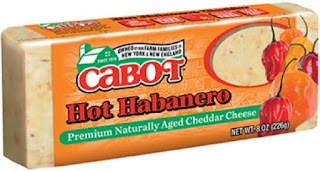
Cabot hot habanero cheddar, grated in slivers
freshly-grated pecorino
(no salt, no black pepper)
Preparation

Sauté the garlic in the oil until it is "blond" (not brown).  Shut the heat.  While the penne are cooking, grate the cheddar and pecorino.  When the penne are cooked al dente, drain them, combine everything, and Buon Appetito!


Musica, vino, e pasta


Si penserebbe che l’ordine delle cose sia la pasta, poi il vino, poi la musica.  Stasera è stato il contrario.

Mi hanno chiamato per accompagnare il concerto di un tenore in una chiesa locale. Uno studente.  Uno studente.  Pianista quarantenne che sono, dopo decenni dell’accompagnamento dei tenori di alto professionalismo ... Be’, sono entrato nella situazione con le piccole speranze.

Foto: Maria Nunes
Invece, è stata una grandissima esperienza.  Nel 1918, Enrico Caruso disse a Rosa Ponselle, “Un cantante deve avere qualcosa qua (indicando la fronte), qua (indicando la gola), e qua (indicando il cuore).” Questo gentiluomo trinidadiano, di nome Stephan Hernandez, allievo alla Eastman School of Music (la miglior scuola di musica negli Stati Uniti, inclusa la Juilliard), possiede tutte le tre cose che il Caruso prescrisse.  Ha il potenziale di diventare un gran tenore, e il concerto di stasera è stato per me un’esperienza ricca e gratificante.

Alla fine del concerto, il sig. Hernandez mi ha regalato una bottiglia di “Deadly Zins.” Secondo me, la varietà di vino californiano più pregiata è old vine Zinfandel, cioè lo Zinfandel della “vecchia vite.”  Alcuni vinificatori californiani fanno un buono Zinfandel “old vine” (Bogle, et al.).  Però questo vino di Michael & David Phillips (Graton, California) è il miglior che ho mai assaggiato. Che meravigliosa sorpresa!

Il sapore potente ma soave di questo vino ha portato il desiderio di una pasta semplice ma ardita.

Ingredienti 

500 g penne
olio d’oliva extravergine
1 o 2 spicchi d’aglio, tagliati fine
cheddar all’habanero, marca Cabot (oppure, qualsiasi formaggio cremoso che vi piace, più il peperoncino secco), grattugiato a scaglie
pecorino frescamente grattugiato
(niente sale, niente pepe nero)
Preparazione

Fate friggere l’aglio nell’olio finché biondo-biondo (non rosolato).  Spegnete.  Mentre cuociono le penne, grattugiate il cheddar e il pecorino.  Quando è cotta al dente, scolate le penne, combinate tutto, e Buon Appetito!


giovedì 20 giugno 2013

Totò "La Donna" ("The Woman")

Foto: AntonioDeCurtis.com

Nnapulitano

Chi l’ha criata è stato nu grand’ommo,
nun ’o vvoglio sapè, chi è stato è stato;
è stato ’o Pateterno? E quanno, e comme?
Ch’avite ditto? ’O fatto d’ ’a custata?
Ma ’a femmena è na cosa troppo bella,
nun ’a puteva fà cu ’a custatella!
Per carità, non dite fesserie!
Mo v’ ’o ddich’io comm’è stata criata:
è stato nu lavoro ’e fantasia,
è stata na magnifica truvata,
e su questo non faccio discussione;
chi l’ha criata è gghiuto int’ ’o pallone!
Italiano

Chi l’ha creata è stato un grande uomo,
non lo voglio sapere, chi è stato è stato;
è stato il Padre Eterno? E quando, e come?
Che avete detto? Il fatto della costola?
Ma la donna è una cosa troppo bella,
non la poteva fare con la costoletta!
Per carità, non dite fesserie!
Adesso ve lo dico io come è stata creata:
è stato un lavoro di fantasia,
è stata una magnifica trovata,
e su questo non faccio discussione;
chi l’ha creata è andato in pallone!

English

Whoever created her was a great man,
I don't want to know; whoever it was, it was;
was it the Eternal Father? And when, and how?
What did you say? Something about a rib?
But a woman is too beautiful a thing,
you couldn't make her with a lousy rib!
For heaven's sake, don't say stupid things!
Now I will tell you how she was really created:
it was a work of fantasy,
it was a magnificent discovery,
and about this I cannot argue;
whoever created her must have fallen to pieces!

(Italian & English translations by L.C.)


Translator's note: There is no English-speaking comedic actor who can be compared to Totò.  To use a singing metaphor, Totò was the Caruso, the Sinatra, the Elvis: the absolute king.  And as you can see, he also wrote beautiful poetry in Neapolitan!  He was the illegitimate son of a prince, and only Totò possessed that seamless coexistence of silliness and regalness.

The final phrase, "andare in pallone," is quite impossible to translate.  If tomorrow you have a final exam and you haven't studied all semester, you would "andare in pallone" (go crazy, fall to pieces, freak out).  But in another context, if all of a sudden you unexpectedly saw an ex-lover whom you hadn't seen in many months, you might "andare in pallone." It is closer to the latter context that Totò the Super-romantic intended. God (or whoever) created woman, saw what he had make — and he went nuts!

mercoledì 19 giugno 2013

La Festa del Papà / Father's Day


Last Sunday was Father's Day. On Facebook I wrote of a very special gift, given to me by my dear wife, Jeanette. I decided to share it with you.

Domenica scorsa è stata la Festa del Papà, che qua in America celebriamo la terza domenica di giugno. A Facebook ho scritto di un regalo molto speciale, datomi da mia cara moglie, Jeanette. Ho deciso di condividerlo con voi. Nota bene che i lawn, cioè i prati rasati oppure “prati all’inglese”, che qua sono molto comuni, hanno le radici molto tese e forti. Si rompono solo con sforzo.

Questo deve certamente essere un candidato per il Regalo Più Unico e Pensieroso per la Festa del Papà.

Jeanette sapeva che io avevo voluto piantare un giardino di zucchine (più per i fiori che per la frutta!), ma sapeva anche che il mio polso non era abbastanza forte per sfondare le radici dell’erba, e che non sapevo il posto migliore per metterlo, e che noi non avevamo i recinti, bla bla bla. Beh, per diverse sere sentivo qualche suono strano nel cortile — le pietre in collisione, ecc. Pensavo che Jeanette si dasse alle bocce. Un fatto che non mi dispiaceva, solo che temevo che lei diventi fumatrice di sigaro.

Poi, la mattina della Festa del Papà, il mistero si è rivelato: lei ha disseppellito un lungo appezzamento di erba (un lavoro faticoso!), ha spazzato via tutte le erbacce e i detriti intorno ai rosai, ha utilizzato le pietre stesse che ha scavate dalla terra (lei sapeva che non mi piaciono le pietre troppo uniformi), li ha disposti lungo il nuovo recintuccio nero che ha comprato a Home Depot (il tipo che sapeva che mi piace), e ha piantato le zucchine (e una pianta di melanzana, per essere sicura). E ha mostrato a Matteo come annaffiarlo! Sono rimasto un po’ senza parole, ma basti dire che forse sia il regalo più speciale ch’io abbia mai ricevuto. Grazie, Jeanette! Ogni volta che guardo quel rosaio rosso, penserò a te e a quel che hai creato.
This must certainly be a contender for Most Unique & Thoughtful Father's Day Gift. 

Jeanette knew that I had wanted to plant a zucchini garden (for the blossoms more than for the fruit!), but that my wrist wasn't strong enough to break through the grass roots, and I didn't know the best place to put it, and we didn't have the fencing, yada yada. Well, for several evenings I heard some strange sounds in the backyard — rocks colliding, etc. I just figured Jeanette had taken up bocce. Which I didn't mind, except that I feared it would lead to cigar-smoking. 

Then, on Father's Day morning, the mystery was revealed: she dug through a long plot of grass (which is strenuous!), cleared away all the weeds and debris around the rose bushes, used the actual rocks that she dug from the ground (she knew I don't like rocks that are too uniform), arranged them along the new little black fence that she bought at Home Depot (the type that she knew I liked), and planted zucchini (and one eggplant, for good measure). And she showed Matteo how to water it! I was sort of speechless, but suffice it to say that it is perhaps the most special gift I've ever received. Thank you, Jeanette! Every time I look at that red rose bush I will think of you and what you created.


martedì 18 giugno 2013

Un momento di poesia abruzzese / A moment of Abruzzese poetry

LI POPULISCE
di Cesare De Titta

Ogne ffratte è na sélve, e ogne vvìe
è nu trafore vérde che ffiurisce.
Magge mo n’à che ne fà’ cchiù, pazzie
tra li sammuche nche li populisce,

e tti fa créde’ ca ’m mèzz’a le fronne
le fate bbianche aàpre li ’mbrelline,

e jjètte, mèntre ride e ss’annasconne,
nu ’ddore che sturdisce gne lu vine.
   THE ELDERBERRY BLOSSOMS
by Cesare De Titta

Every thicket is a forest, 
and every street is a green tunnel in bloom. 
May has nothing more to do than play 
among the elderberry blossoms, 

and make you believe that among the branches 
white fairies open their umbrellas, 

and, as they laugh and hide, 
shoot out a fragrance that stuns like wine.
Sant’Eusanio del Sagro (CH). “Fiorinvalle di Terra d’Oro,” la villa in cui Cesare De Titta viveva.
Sulla sinistra è uno scorcio della sua casa natale.
Sant'Eusanio del Sagro (province of Chieti). "Fiorinvalle di Terra d'Oro," the villa in which Cesare De Titta lived.  
On the left is a partial view of the house where he was born.
(Photo: Wikipedia)

giovedì 13 giugno 2013

In luogo d'un contest ...

In luogo d’un contest ... v’invito di partecipare in una piccola attività nella quale nessuno perde, e le uniche vincitrici sono le nostre beneamate nonne.

Il 24 giugno sarà il 79esimo anniversario del matrimonio dei miei nonni siciliani. In onore di loro, cerco una ricetta autentica di vostra nonna.  Le regole:

(1) Dovete presentarci:
   (a) una ricetta autentica di vostra nonna, una per la quale vi sentite molta nostalgia.
   (b) un racconto o un ricordo di questa ricetta
   (c) quale frase biografica su vostra nonna (Dovete includere la data e il paese della nascita di Nonna.)
   (d) almeno una foto del piatto
   (e) almeno una foto di vostra nonna

(2) Dovete mettere il banner sulla pagina in cui presentate la vostra ricetta.

(3) Dovete scrivere, nei comment di questa pagina, il fatto che avete fatto così.

(4) I vecchi post sono permissibili. Comunque, sarò rigidissimo con le regole sopraelencate (foto di Nonna, ecc.).

(5) La scadenza è il 23 giugno alle ore 23.59 tempo italiano (le ore 17.59 tempo bostoniano).

Poi, pubblicherò tutte le ricette che potrò!

Grazie per la vostra partecipazione in quest’attività che, spero, vi sarà nostalgica e rincuorante.